

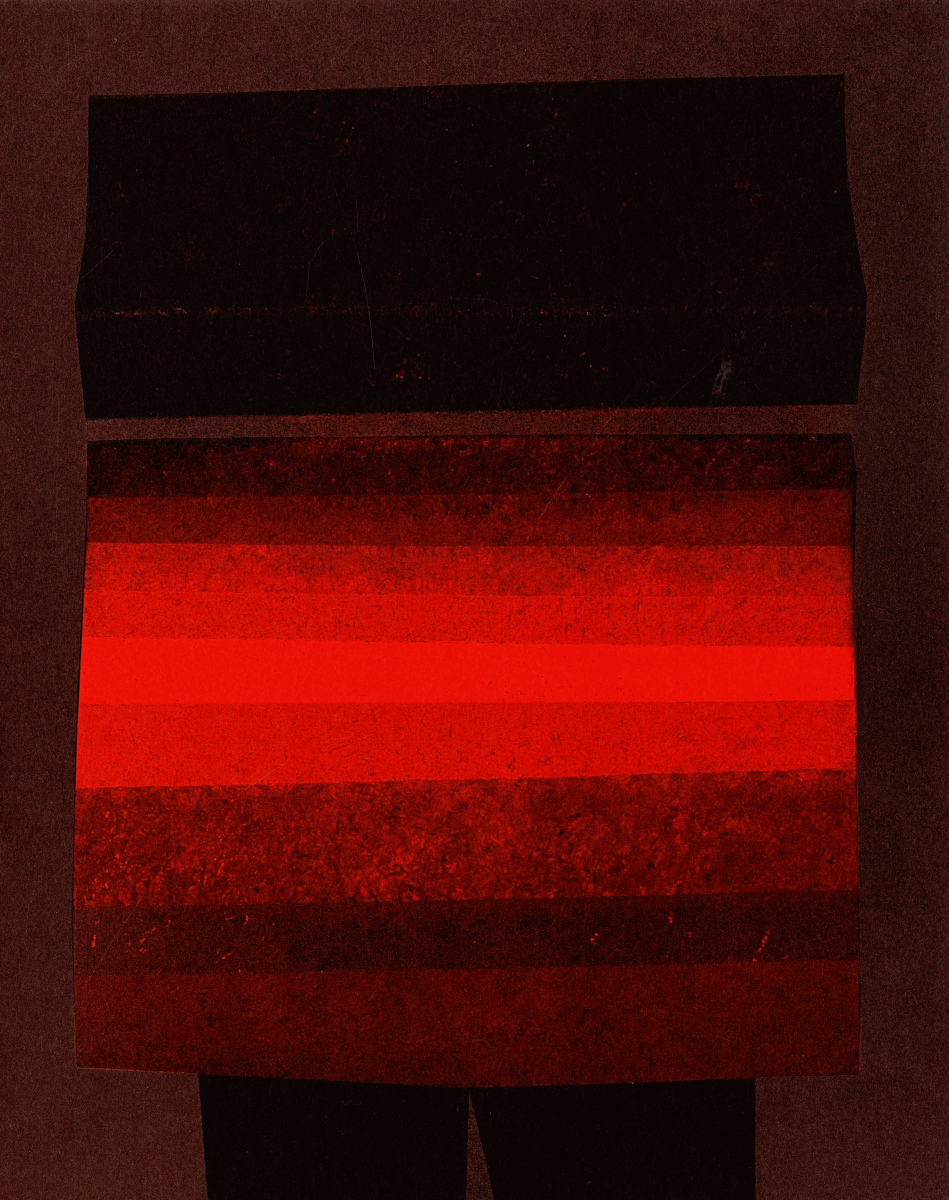
“And I’m still painting. One continues to feel a curiosity about painting. (…) Suddenly, something… fascinating emerges. And it opens up a path for me.”
—Ricardo Yrarrázaval1Ricardo Yrarrázaval, conversation with the author, Santiago, 2025. Author’s notes.
Introduction
Ricardo Yrarrázaval’s work occupies a unique place in the history of contemporary Chilean art. Over the course of more than seven decades, his practice has spanned ceramics, drawing, painting, pastel, wood, enamel, and digital media. Each of these techniques has introduced specific working conditions and reactivated lessons the artist learned from past experiences. This continuity reveals a sustained exploration of the relationship between body, matter, and time, developed through surfaces that receive, channel, and transform the gesture.
This essay proposes a material reading of this trajectory, understanding materiality not as a set of technical procedures, but as the field within which the meaning of Yrarrázaval’s work is organized. This field encompasses the resistance of the supports, the pressure of the tools, the density of color, strategies for constructing volume, and the duration inherent in each procedure. From this perspective, technical decisions also shape the configuration of the figures, their silences, and the ways they occupy the pictorial space. Ceramics train the hand to recognize weight and internal tension; drawing provides a structure; the palette knife displaces and shapes the pigment; pastel brings the hand closer to the support; and the digital interface expands the possibilities for superimposition, correction, and recomposition of the image.
Surface, edge, volume, and silence constitute a conceptual vocabulary that recurs throughout this essay: the surface receives the body’s actions and reveals the effects of the work; the edge regulates the relationship between figure and ground, contains the material, and lends consistency to the presence; volume preserves the tactile memory of ceramics and is projected onto the plane through modeling, gradation, and contour; and silence emerges in areas of indefiniteness, in the distance between bodies, and in the expressive restraint of figures whose identity remains suspended. These four concepts or dimensions of Yrarrázaval’s work span diverse techniques and periods. In this sense, one of the central questions guiding this research is how to interpret an extensive and technically heterogeneous body of work without fragmenting it into autonomous stages or reducing it to a linear evolutionary narrative. In light of this difficulty, this essay proposes understanding Yrarrázaval’s career as a material biography, in which each technique leaves a mark that is not exhausted at the moment of its production but remains available to be reactivated over time.
The methodology of this research combines a visual and material analysis of Yrarrázaval’s work with the study of primary and secondary sources. These include conversations with the artist, interviews, letters, press clippings, exhibition catalogs, and other documents that form part of the Il Posto Foundation Archive, as well as critical and historiographical texts. The intersection of these materials allows us to examine Yrarrázaval’s work from different perspectives: from the intimacy of the studio and the memory of the creative process to its circulation within the national and international art world.
Chapter I
Echoes of Interpretation: Critique, Circulation, and the Art World
Ricardo Yrarrázaval’s work has been interpreted and discussed by local and international art critics over the course of more than six decades. These interpretations, produced at diverse times and in varied contexts, form a field of reception that allows us to observe how the artist’s work has been understood and valued within the art world. Beyond the discursive variations characteristic of each era, a significant portion of this reception has emphasized formal, iconographic, historical, and social aspects, though it has also addressed the materiality of Yrarrázaval’s work—particularly in relation to color, modeling, impasto, contour, and the tools employed by the artist. This chapter traces the gradual emergence of this focus on material processes and establishes the critical context from which we will examine the relationship between gesture, surface, and time in Yrarrázaval’s work.
Yrarrázaval’s first solo exhibitions date back to the mid-1950s. Dibujo, presented in 1954 at the Chilean-North American Institute of Culture, was followed by two ceramic exhibitions held at Galería Taller 14 and Galería Beaux Arts2Museo Nacional de Bellas Artes, “Ricardo Yrarrázaval”, in Artistas Visuales Chilenos, accessed August 18, 2026, https://www.artistasvisualeschilenos.cl/658/w3-printer-40296.html. A decade later, the artist’s paintings entered the international art scene thanks to the exhibition The Emergent Decade: Latin American Painters and Painting in the 1960s, a joint project of the Solomon R. Guggenheim Museum and Cornell University. To prepare for this exhibition and its accompanying publication, Thomas M. Messer, an art historian and then-director of the Guggenheim, traveled through eight Latin American countries in 19643William H. MacLeish, foreword to Thomas M. Messer and Cornell Capa, The Emergent Decade: Latin American Painters and Painting in the 1960s, New York, Cornell University Press, 1966, p. ix; Thomas M. Messer, introduction to the same volume, p. xiii.. During a three-day visit to Santiago, and thanks to a recommendation from painter Jorge Elliott—then director of the Institute of Plastic Arts at the University of Chile—he visited Yrarrázaval’s studio. Yrarrázaval was included in the project and became the only Chilean artist to whom the exhibition catalog dedicated an individual profile.
In a letter sent to Elliott from Lima on September 10, 1964, Messer distinguished the works created by Yrarrázaval in the 1950s—which he linked to the painting of Nicolas de Staël—from those produced at the beginning of the following decade. “From the early 1960s,” he wrote, “possibly influenced by his experience as a ceramist, [Yrarrázaval] seemed to arrive at his own solutions in form and color that clearly foreshadowed his current phase”4Thomas M. Messer, letter to Jorge Elliott, Lima, September 10, 1964, in Ricardo Yrarrázaval: 1952–2014, Santiago, Ediciones y Producciones Foramen Acus Ltda., 2014.. Here, Messer suggests a continuity between Yrarrázaval’s experience as a ceramist and his pictorial work, positioning ceramics as a precursor to certain solutions in form and color present in his painting. He then refers to the latent figuration, the pre-Columbian references, and the color palette of this work:
“His work is abstract, although the female form (which he explores almost obsessively in his drawings) seems to underlie his images. The pre-Columbian and indigenous connotations cannot be overlooked. These are evoked in part by forms that bear a distant resemblance to ceramics, but even more so by the luminous, sun-scorched colors that make up his palette and enliven his surfaces. It would be difficult to imagine that such a painting could have originated in Paris or New York. Yrarrázaval is manifestly—though unintentionally—Latin American, and he achieves that identity without pictorialism, through purely formal means and from within”5Messer, letter to Elliott, September 10, 1964..
Messer’s interpretation links the color in Yrarrázaval’s painting to the construction of a Latin American identity. The phrase “bring his surfaces to life” also assigns color a constructive function, linked to the painting’s internal energy and to the way in which the forms relate to one another within the pictorial plane. This analysis thus focuses on the visible results of Yrarrázaval’s work, without addressing the tools used to create it or its physical composition. This observation allows us to pinpoint the specific scope of his interpretation and, at the same time, to recognize the material issues it leaves unresolved.
The photographic and textual profile created by Cornell Capa for the exhibition catalog The Emergent Decade adds a temporal dimension to this interpretation. Capa refers to Yrarrázaval’s journey through the highlands of Peru and Bolivia in the early 1960s, to the subsequent suspension of his painting practice—which lasted approximately three years—and to the gradual return of the colors of the Andean landscape to his work6Cornell Capa, profile of Ricardo Yrarrázaval, in Messer and Capa, The Emergent Decade, pp. 74–75.. Color thus emerges as a visual experience retained and reactivated after a period of settling. Capa’s interpretation thereby establishes a relationship between territory, memory, and the pictorial surface, which we will revisit in the next chapter of this essay, where we will examine Yrarrázaval’s travels as part of a material and sensory formation.
A letter from Jorge Elliott to Thomas Messer, sent on April 15, 1965, reaffirms certain points of this interpretation. Elliott characterizes Yrarrázaval’s work as decidedly pictorial and observes in it “figures that underlie its abstraction, simplified into elementary forms, earthy like Chimú pottery or striped like indigenous textiles”7Jorge Elliott, letter to Thomas M. Messer, Santiago, April 15, 1965, reproduced in Ricardo Yrarrázaval: 1952–2014.. His description thus acknowledges a restrained figuration associated with ceramic, textile, and pre-Columbian references, linked to two qualities of the pictorial surface: the earthy compactness of the forms and their rhythmic division by lines8Elliott uses “Chimú vessels” to refer to a pottery tradition from the northern coast of Peru characterized by black ceramics and mold-based production. The term “striped indigenous textiles” remains open-ended and alludes to a visual organization based on stripes. See Larco Museum, “Chimú,” accessed August 18, 2026, https://www.museolarco.org/exposicion/exposicion-permanente/exposicion-en-linea/culturas-del-antiguo-peru/chimu/. Once again, form, color, and cultural identity appear at the center of the reflection. Furthermore, in both Elliot’s and Capa’s commentaries, the references to pottery and the surface provide an initial vocabulary for delving deeper into the material dimension of Yrarrázaval’s pictorial work.
Among the works that may have inspired these early interpretations, we can highlight the painting Presencia (“Presence”) (1964) (Fig. 1). In this work, the rectangular fields, variations in opacity, and concentration of earthy tones organize a central form: a figure that remains contained within—or even integrated into—the painting’s architecture, situated between the vertical line descending from the upper field and the chromatic block located in the lower area. On the other hand, in Cabeza (“Head”) (1969) (Fig. 2), the horizontal bands and the vertical axis direct this organization toward a more recognizable anthropomorphic structure. The expanse of the red and violet fields evokes the experience of the Andean landscape while simultaneously grouping its sections around a frontal presence. These two works allow us to observe how, in Yrarrázaval’s early paintings, the figure begins to take shape through chromatic planes, their interruptions, and shifts in density.
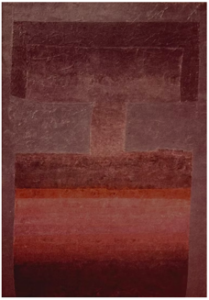
Figure 1. Ricardo Yrarrazaval, Presencia, 1964
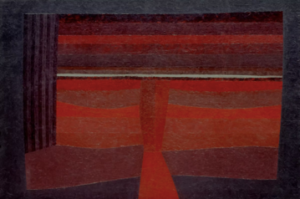
Figure 2. Ricardo Yrarrázaval, Cabeza, 1969.
By the mid-1970s, critical reception of Yrarrázaval’s work began to shift its focus toward the techniques employed in the construction of the image. The first traceable text that explicitly attests to this shift is the one written by art critic Nelly Richard for the Ricardo Yrarrázaval Pastel Exhibition, held at Galería Época in Santiago in April 1976. There, the author argues that “two artistic techniques are specific to [Yrarrázaval’s] work as factors of (suggestion): modeling and the gradation of values”9In this context, modeling refers to the creation of a sense of volume through transitions of light and shadow; gradation of values refers to the progressive shift between tonal intensities. Nelly Richard, untitled text, in Exposición de pasteles de Ricardo Yrarrázaval, Santiago, Galería Época, April 1976, n.p., exhibition catalog, Nemesio Antúnez Foundation Archive. Richard observes how these techniques are brought to life through oil and pastel, a new medium that allows the artist to reinterpret previously used techniques and alter the degrees of definition in the figures.
The vocabulary employed by Richard focuses on the way in which Yrarrázaval’s painting constructs volume and manages the transition between different tonal intensities, emphasizing how material techniques directly contribute to the gradual emergence of the bodies. His interpretation relates modeling and gradation to a tension that operates by “combining (…) opacity and transparency”—terms that describe distinct effects of visibility, that is, how certain areas acquire consistency while others fade or remain suspended. The critique thus shifts from the material dimension of Yrarrázaval’s work toward its optical effects. The composition of the pastel, the characteristics of the paper, the fixation of the pigment, and the physical constitution of the layers of paint remain, however, issues yet to be explored through the analysis of other works and documentary sources.
In De cuello y corbata (“With Collar and Tie”) (1976) (Fig. 3), a dry pastel on paper created around the same time as Richard’s text, one can observe the relationship between modeling, gradation, opacity, and transparency that the author discusses. There, the gradual color transitions blur the features of the human face, while the clothing—the shirt and tie—is rendered in compact, saturated, and well-defined chromatic areas. Volume is concentrated in the head, neck, and shoulders, especially in the striped tie, which introduces a clear axis that anchors the composition. The pastel thus distributes varying degrees of presence. The technique organizes the tension between the indeterminacy of the body and the firmness of public appearance.
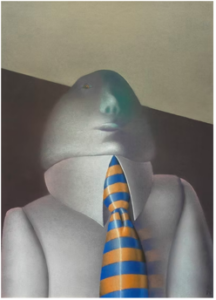
Figure 3. Ricardo Yrarrazaval. De cuello y corbata, 1976
In 1977, Yrarrazaval’s participation in the group exhibition Contemporary Chilean Painting, held at the Las Condes Cultural Institute, gave rise to another set of critical interpretations. In the exhibition catalog, art historian and critic Víctor Carvacho Herrera described the work titled Los blandos sueños de Elvira (“Elvira’s Soft Dreams”) (1975) (Fig. 4) in the following terms:
“The figure lies slumped in an armchair. Through a play on perspective distortions—the arms in foreshortening and the legs magnified by an imaginary camera lens—the figure achieves an obsessive presence. The dreamlike quality is accentuated by the shadow cast by the armchair and the sleeping ‘Venus.’ The exquisite and superlative use of pinks and greens in the upholstery borders on realistic preciousness”10Víctor Carvacho Herrera, “Pintura contemporánea chilena,” in Pintura contemporánea chilena, Santiago, Instituto Cultural Las Condes, 1977, p. 20.
Carvacho’s text focuses on perspective, foreshortening, proportions, shadow, and chromatic organization. The “imaginary photographic lens” allows him to explain the enlargement of the legs and the visual pressure the body exerts on the foreground. The shadow outlines the armchair and defines the figure’s contour, while the pink and green stripes of the upholstery organize the volume through a continuous sequence that envelops the object. Carvacho’s reference to “chromatic variations” may serve as the starting point for a material reflection on the way in which oil paint constructs densities, transitions, and different textures on the pictorial surface.
In the same catalog in which this text by Carvacho appeared, the critic Giorgio Vomiero stated that Yrarrázaval “portrayed the faceless man of the big cities, the urban man without identity”11Giorgio Vomiero, “Plástica de hoy en Chile” in Pintura Contemporánea Chilena, Santiago, Instituto Cultural Las Condes, 1977, p. 30. This formulation directs the reader toward the social and iconographic meaning of the artist’s painting, foreshadowing an issue that would become increasingly relevant in later writings on his work. Like Carvacho’s, this text reflects the predominance of formal and thematic categories characteristic of the critical reception of the period, along with an emerging focus on color and the visual constitution of the pictorial surface. The material reading we propose in this essay takes up these indications and links them to specific techniques that Yrarrázaval developed in his studio.
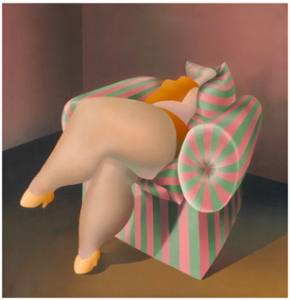
Figure 4. Ricardo Yrarrazaval, Los blandos sueños de Elvira, 1975
The interpretations we have just reviewed circulated within a heterogeneous art scene, in which the return of figurative painting coexisted with the proliferation of visual practices that experimented with the body, photography, printmaking, everyday objects, spatial interventions, and publications12Around 1976 and 1977, the figurative work of Roser Bru, Juan Dávila, Benjamín Lira, Francisco Smythe, and Yrarrázaval coexisted with the body art and objects of Carlos Leppe; the graphic, photographic, and editorial explorations of Eugenio Dittborn, Catalina Parra, and Ronald Kay; the photography of Carlos Altamirano; and the printmaking of Luz Donoso and Eduardo Vilches. See Centro Nacional de Arte Contemporáneo Cerrillos, “Galerías de arte en dictadura”, October 17, 2018, https://centronacionaldearte.cultura.gob.cl/glosario/galerias-de-arte-en-dictadura/; and Biblioteca Nacional de Chile, “Nelly Richard (1948),” Memoria Chilena, https://www.memoriachilena.gob.cl/602/w3-article-92611.html. Yrarrázaval’s continued engagement with the fields of painting and figuration—particularly human figuration—must be situated within this broader context, in which galleries, catalogs, and the press provided spaces for circulation and discussion. It was precisely in this context that art historians Gaspar Galaz and Milan Ivelic published an article in the journal Aisthesis that documented how the artist understood his own practice. There he stated: “I think by painting because I don’t know how to think any other way. That’s the truth!” He described a process of drawing, erasing, and the gradual emergence of form13Gaspar Galaz and Milan Ivelic, “La pintura: su candente realidad”, in Aisthesis, no. 9 (1975–76), p. 190. —in which the image arose as a product of the work and each painting opened up the possibilities for the next. Shaping, refining, erasing, defining, and starting over thus formed a continuous process that organized the relationship between surface, figure, and identity; and thought took place in the practical relationship with the support and was verified through successive decisions.
During the early 1980s, figures from urban and workplace settings took on a more explicit presence in Yrarrázaval’s work. While works such as De cuello y corbata (1976) or El pragmático visitante (“The Pragmatic Visitor”) (1974) (Fig. 5) already contrasted the definition of attire with the distortion of the face, problematizing the relationship between identity, public appearance, and social convention14El pragmático visitante won first prize in the painting competition held by the Colocadora Nacional de Valores in 1975. See Servicio Nacional del Patrimonio Cultural, “El pragmático visitante”, SURDOC, record 2-620, accessed August 18, 2026, https://www.surdoc.cl/registro/2-620., in the artist’s later paintings the isolated figure transforms into a collective typology. This is the case in Circuito Cerrado (“Closed Circuit”) (1983) (Fig. 6), where two men in suits and ties traverse the urban space as anonymous bodies, distinguished only by the ways in which they occupy and stretch the pictorial surface. A horizontal strip crosses their faces and links their bodies within a shared atmosphere, reinforcing the serial nature of these presences.
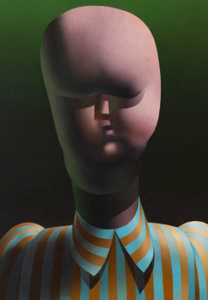
Figure 5. Ricardo Yrarrázaval, El pragmático visitante, 1974.
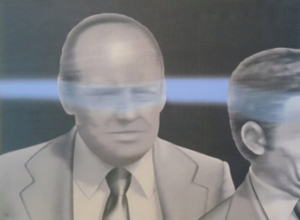
Figure 6. Ricardo Yrarrázaval, Circuito Cerrado, 1983
In the works produced by Yrarrázaval during this period, contingency manifests itself in the stiffer lines of the clothing, the loss of definition in the faces, and the appearance of bodies whose presence oscillates between volume and blurring. Galaz and Ivelic refer to this in their book Chile, arte actual, published in 1988. In examining Yrarrázaval’s work, they identify “simulatory or distorting strategies” that produce varying degrees of resemblance. Returning to the example of El pragmático visitante, they observe that the shirt retains an unmistakable identity, while the neck and head lose that sense of clarity. The authors link this distribution to an identity crisis externalized in social rituals—“clothing as fashion and status”—and urban conventions15Gaspar Galaz and Milan Ivelic, Chile, arte actual, Valparaíso, Ediciones Universitarias de Valparaíso, 1988, pp. 285–286..
Galaz and Ivelic’s reflections on Yrarrázaval’s work also address its material dimension. Indeed, the authors define this painting, “in its craftsmanship and impasto,” as “an autonomous signifier in its physicality,” thereby highlighting the painting’s physical and manual presence, perceptible in the way the pigment sustains volume and directs light16Galaz and Ivelic, Chile, arte actual, p. 286.. This interpretation also refers to the modeling achieved with the palette knife and to how forms “are concealed or revealed” through meticulous control of light and shadow, giving rise to “intense corporeal forms” and “volumetric images that invite touch.” The apparent tactility intensifies the figure’s presence while its distortion destabilizes its identity, as if Yrarrázaval were seeking to underscore the distance between a corporeality close to the sense of touch and a face that eludes identification. From this perspective, the pictorial surface also contributes to the undermining of identity. This integrates the social reading with the concrete conditions of the image and grants the material an active role in the production of meaning.
In 2002, art historian Pedro Celedón Bañados, then director of the School of Art at the Pontifical Catholic University of Chile, revisited some of these issues in “The Aesthetics of Silence,” a text written for the exhibition Retrospective: 50 Years. Ricardo Yrarrázaval, presented at the Fundación Telefónica Art Gallery. The temporal distance afforded by the retrospective allowed him to survey fifty years of the artist’s work and connect techniques developed at different times, among which he highlighted the “ongoing work on defining contours,” through which Yrarrázaval created contrasts “between the planes of a single figure, and between the figure and its background”17Pedro Celedón Bañados, “La estética del silencio”, in Retrospectiva 50 años. Ricardo Yrarrázaval, Santiago, Sala de Arte Fundación Telefónica, 2002, pp. 6–7.. Like Galaz and Ivelic, Celedón also refers here to the artist’s work with the palette knife, noting that “in his ceramics, it is the palette knife that delineates, polishes, extracts the material, and displaces it,” while in his painting this tool “achieves shading, volume, and depth.” The author also notes that his planes are constructed on “surfaces that are never impastoed. They contain little paint, and all of it has been dragged and spread under pressure”18Celedón Bañados, “La estética del silencio”, pp. 6–7.. This observation defines pictorial corporeality as the result of the displacement of pigment, the blending of colors, and the control of transitions, while also clarifying the scope of the “thickness” already recognized by Galaz and Ivelic: the sensation of body arises from pressure, dragging, and the modulation of color; the surface presents the result of these operations and preserves the differences in density necessary to sustain the image.
In his text, Celedón characterizes Yrarrázaval as an “intense explorer of his silences” and recognizes in his figures “a space of indefiniteness, left to the viewer’s interpretation”19Celedón Bañados, “La estética del silencio”, p. 7.. Silence thus takes on a material form in the areas where the pigment loses definition, where the edge is interrupted, and the volume remains suspended. While in Sobre el hombro (“On the shoulder”) (1984) (Fig. 7) the modeling of the face coexists with the precision of the glasses, the neck, and the tie, in A media voz (“In a low voice”) (1984) (Fig. 8) a horizontal strip crosses the body and blurs the boundaries of the upper area. Celedón identifies this technique again in Estrategias y pronósticos (“Strategies and forecasts”) (1983), where he notes “half-erased faces” and a metallic tie that is “absolutely defined, immaculate.” The pigment, the edge, and the modeling determine which elements take on presence and which remain on the threshold of appearing. This indeterminacy opens up a space for the gaze and offers the viewer the possibility of actively participating in the construction of the figure.
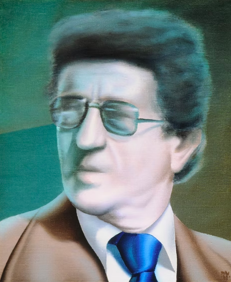
Figure 7. Ricardo Yrarrázaval, Sobre el hombro, 1984.
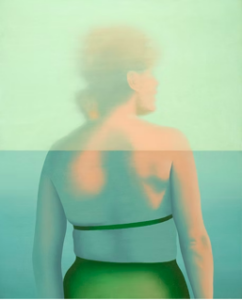
Figure 8. Ricardo Yrarrázaval, A media voz, 1984.
A review of all these critical texts on Yrarrázaval’s work allows us to outline an intermittent line of interpretation. Richard was the first to identify the specific techniques used in this artist’s work during the 1970s; a decade later, Galaz and Ivelic linked the physical dimension of his painting to the production of social meaning; and, well into the 2000s, Celedón emphasized this point by referring to the tools employed by the artist and their constructive effects. The contributions of all these authors allowed a critical discourse initially focused on form, color, and the identity of the painting to evolve toward a more complex interpretation, attentive to pressure, dragging, modeling, and the definition of contours. In the following chapters, we will attempt to delve deeper into this particular line of interpretation, examining how volume, edge, and silence constitute the material conditions through which Yrarrázaval’s figures not only acquire presence but also begin to lose it.
Chapter II
Biography of Matter: Training, Travel, and Sensitivity to the Edge
Ricardo Yrarrázaval’s career can be read as a material biography, understood not as a succession of techniques or styles, but as a sustained process of training the eye and the hands through drawing, ceramics, and painting. This process follows a precise sequence: drawing organizes the structure; clay provides a tactile understanding of volume; and the palette knife transfers operations of pressure, dragging, and modeling to the canvas. Each experience introduces specific conditions that shape the artist’s sensibility and a way of understanding form that is projected into the subsequent stages of his work.
Yrarrázaval’s early training outside Chile proved decisive in consolidating this relationship with the material. In 1952, at the age of twenty, the artist traveled to Europe and enrolled at the Academy of Fine Arts in Rome, where he remained for nearly a year and was exposed to an educational approach centered on the rigor of academic drawing. He then spent about eight months in Paris, where he took art classes, visited museums, and continued to draw. The value of these stays lies in the structural discipline that the artist acquired and maintained throughout his career. In a conversation with art critic José Zalaquett, he put it clearly: “For me, drawing, composition, and structure have always been fundamental. I’m also very interested in volume”20Ricardo Yrarrázaval, conversation with José Zalaquett, in Ricardo Yrarrázaval: 1952–2014, Santiago de Chile, Ediciones y Producciones Foramen Acus Ltda., 2014, pp. 24 and 26.
Yrarrázaval’s relationship with ceramics, on the other hand, began in Chile. Upon his return from Europe, he began working with this material and, together with the sculptor Raúl Valdivieso, installed a high-temperature kiln in the house-studio where he lived with his wife, Isabel Echenique. The first pieces he created were utilitarian, and their sale allowed him to financially sustain the studio while he continued to paint. In 1957, he traveled with his family to Vallauris, a town in southern France with a tradition of pottery, where he stayed for several months and was able to delve deeper into this craft he had already begun21Yrarrázaval, conversation with Zalaquett, pp. 24–25. Raúl Valdivieso’s identification as a sculptor, the founding of the ceramics workshop in Chile, and his subsequent further study in Vallauris are also discussed in Waissbluth, Grandes artistas contemporáneos chilenos. Ricardo Yrarrázaval, Santiago, Ediciones Cecilia Palma, 2012, pp. 14 and 58–60., without ever stopping drawing (Fig. 9).
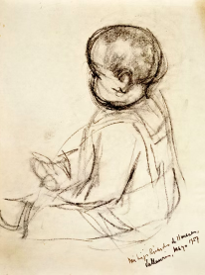
Figure 9. Ricardo Yrarrázaval, Untitled, 1957. In the handwritten note: My 11-month-old son Ricardo, Vallauris, May 1957.
The experience of working with the potter’s wheel established a physical relationship with volume. Yrarrázaval recalls that the mass of clay, shaped by his hands, “rose and took on form, almost magically,” and adds: “It’s very special to feel it in your hands. Perhaps my attraction to that effect is the source of the evolution toward volume that occurs in my paintings.” This is even reflected in the treatment of the disfigured faces that appear in his later work: “Those distortions (…) one could say they yearn for the moisture, texture, and opaque sheen of the clay22Yrarrázaval, conversation with Zalaquett, pp. 26–27.“.
Yrarrázaval’s account precisely defines the transition from clay to pigment. The memory of ceramics becomes a manual skill that requires recognizing thicknesses, maintaining a form, altering a surface, and preserving the internal consistency of the body. It is the palette knife that seems to enable this continuity within Yrarrázaval’s painting studio. Art critic Gaspar Galaz identifies in his works from the 1960s a “material density” produced precisely by the “rigorous work of the spatula” and notes that while painting, the artist analyzes “the possibilities that different spatulas offer for organizing the material on the surface of the canvas.” According to the author, this exploration of the possibilities of the palette knife is also linked to—or reflected in—the treatment of faces in Yrarrázaval’s later paintings, where the material displaces or blurs certain features and regulates the distance between the focused areas and the blurred areas. Even in later stages of the artist’s work, it is possible to recognize how the screen-printing squeegee extends this principle of distribution and dragging across the surface23Gaspar Galaz C., “La soledad del joven pintor”, foreword to Verónica Waissbluth, Grandes artistas contemporáneos chilenos. Ricardo Yrarrázaval, p. 8. For the subsequent use of the screen-printing squeegee, see Waissbluth, p. 52..
In line with these reflections, Pedro Celedón also describes the spatula as a tool that forces one to “rub, scrape, and drag the material,” noting that, in his painting, Yrarrázaval places two separate colors and then unites them—that is, he works with “a small amount of paint” that has been “dragged and spread under pressure”24Celedón Bañados, “La estética del silencio”, p. 7.. This procedure produces shading, volume, and depth through the precise application of pigment. Dragging, compressing, uniting, and removing are thus fundamental operations in the construction of the image.
Yrarrázaval’s 1960 journey through Argentina, Bolivia, Peru, and northern Chile introduces a new dimension to this material biography. For four months, the artist traveled through mountain villages without taking notes, at a time when his relationship with painting was in crisis. Of the altiplano, he recalls: “That gray altiplano moved me deeply—to which the indigenous people respond with strong colors. As if to survive the dullness, their masks, ponchos, and feathers come to life”25Pedro Celedón Bañados, “Bitácora”, in Retrospectiva 50 años. Ricardo Yrarrázaval, Santiago, Sala de Arte Fundación Telefónica, 2002, pp. 12–13.. His observation of clothing, textiles, and their color schemes—as well as the altitude, the dryness of the air, the intensity of the light, and the mineral vastness of the Andean landscape—altered his perception of the relationship between body, color, and territory.
The hiatus caused by the artistic crisis and this journey can be interpreted as a phase of reflection on experience within Yrarrázaval’s artistic trajectory. The absence of notes documenting the journey implies that the territory is incorporated into the body before being translated into image, shifting the focus of the journey toward bodily perception and memory. According to Celedón, upon his return to the studio, Yrarrázaval felt the need to extract the experience he had lived through on the Andean highlands through the practice of painting, activating memory as a process of selection, condensation, and reorganization of that experience. In practical terms, this involved working in layers, allowing the color to settle, and building up the surface through controlled acts of addition, smudging, and subtraction. Verónica Waissbluth describes the process: “He [Yrarrázaval] thickened the paint with successive layers of pigment; beneath a light color he applied a darker one, which also gave the surface the appearance of stone or earth”26Waissbluth, Grandes artistas contemporáneos chilenos. Ricardo Yrarrázaval, pp. 32–34..
In the paintings produced by Yrarrázaval following his journey through the Andean region, each pictorial layer thus modifies the internal relationships within the painting and produces varying degrees of depth, opacity, and vibrancy. The lived experience is transformed into a stratum, and the duration of the work acquires material density, transforming the pictorial surface into a field of sensitive and controlled accumulation. Color takes on a structural role here: mineral and earthy tones—compact ochres, deep reds, muted greens, and dense blues—condense the presence of the territory. The layering regulates the intensity of these color ranges and allows the light colors to retain the depth of the dark tones beneath them. The painting thus functions as a surface of sedimentation where bodily and temporal experiences, translated into chromatic matter, are deposited.
Within this chromatic depth, the body begins to emerge. The vertical structures, bands of color, and geometric cuts gradually reveal torsos, limbs, and heads. This transformation can be observed in Presencia Ancestral (“Ancestral Presence”) (1965) (Fig. 10), where the figure emerges from a vertical structure traversed by bands of color, and in Monólogo (“Monologue”) (1969) (Fig. 11), where the vertical and oblique planes of the “head” incorporate suggestions of eyes and a mouth. Both works reveal the transition through which the geometry and material density of the Andean landscape become a body. Here, the form takes on a more defined presence, while retaining the geometric and volumetric dimension of the earlier phase of Yrarrázaval’s painting27Waissbluth, Grandes artistas contemporáneos chilenos. Ricardo Yrarrázaval, pp. 32–34..
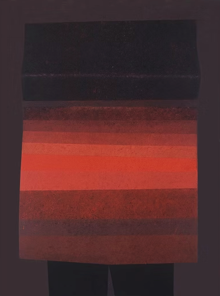
Figure 10. Ricardo Yrarrázaval, Presencia Ancestral, 1965.
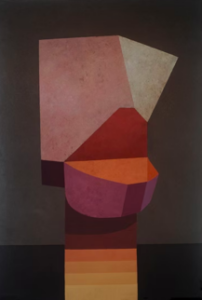
Figure 11. Ricardo Yrarrázaval, Monólogo, 1969
In this phase of Yrarrázaval’s painting, the edge takes on a structural and sensory function. It is here that the material pauses, accumulates, changes direction, and establishes relationships between the different planes. While in Presencia Ancestral the edges contain the horizontal expansion of the chromatic bands and affirm the figure’s verticality, in Monólogo they separate the planes of the face, articulate the volume of the head with the neck and torso, and regulate the figure’s relationship with the background. This early focus on the edge lays the groundwork for the contour work that will define Yrarrázaval’s later oeuvre. The Andean palette can thus be conceived as a sensitive matrix for the presences that emerge there.
Chapter III
Material Drift and Processual Continuity. From Volume to Plane, from Plane to Interface
Based on everything noted thus far, it is possible to argue that Ricardo Yrarrázaval’s practice unfolds as a sustained processual continuity across diverse techniques and media. The first core of this continuity takes shape in his work with ceramics, which began in the 1950s. The potter’s wheel, as we have seen, trains the pressure of the hands, bodily coordination, and the immediate reading of the clay’s resistance. Later, the abstract painting of the 1960s transferred that learning to the application of pigment with a palette knife. And later still, in the 1970s, pastel introduced another form of contact: the stick deposits pigment from the hand and allows its density to be adjusted through pressure, rubbing, and layering.
In the catalog for the group exhibition Cinco Expresiones de la Figuración en Chile, held at Galería Cromo in 1977 under the direction of art critic and curator Nelly Richard, Ricardo Yrarrázaval, in a conversation with his brother, the poet Renato Yrarrázaval, made the following observation on the subject:
“Among other things, …in the very act of creating the work, a very direct contact occurs—a sensation that manifests itself through various aspects of this process. I can point out that this happens very clearly when I work on the heads, when I use my entire hand, almost modeling with the color. Something truly physical takes place there; I become one with what I’m doing, even with a physical intensity. Pastel has allowed me to achieve this fluidity in this sense. For me, it is very important that the painting possess sensuality as a material in and of itself28Ricardo Yrarrázaval, interview by Renato Yrarrázaval, in Cinco expresiones de la figuración en Chile: Dávila, Lira, Yrarrázaval, Bru, Smythe, Santiago, Galería Cromo, July–August 1977, n.p.”.
These words confirm that Yrarrázaval’s work is structured around a sustained relationship between body, tool, and surface. While the gesture involves the hand, the arm, and the position the artist adopts in front of the support, the surface receives the contact, offers resistance, and guides each adjustment. In the case of pastel, the fingers distribute and blend the color onto the paper. In the work Untitled (1977) (Fig. 12), for example, these actions shape the oval of the face, define the boundaries of the clothing, and regulate the transition between figure and background. The gesture thus operates through blending and modulation: it spreads the pigment, regulates its density, and maintains the tension between the smoothness of the face and the geometry of the clothing.
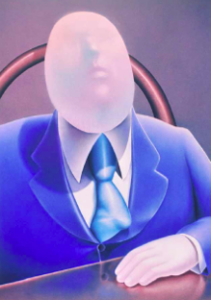
Figure 12. Ricardo Yrarrázaval, Sin título, 1977
In Yrarrázaval’s paintings from the 1970s, color constructs folds, smoothness, and volume, to the point that the pictorial surface takes on an epidermal quality. The painter and essayist Alberto Pérez described this material condition of the figures the artist painted during this period: “The recognizable form, the inflated or angular volume of the early portraits, the smooth, larval-like surfaces are corrugated into brief folds, into tight irregularities of the facial skin, which almost resemble stitches that have been made from within, behind the smooth, thin complexion29Alberto Pérez, La soledad en dos pintores chilenos: Mario Carreño y Ricardo Yrarrázaval, Santiago, Editorial Fértil Provincia, 1992, pp. 21–22.”.
In the years that followed, Yrarrázaval’s monotypes and enamels incorporated strategies of transfer, inversion, and filtration. In a series of enamel works produced in the early 1990s, the artist works with the mark left by the enamel as it passes through the paper, revealing porous silhouettes, partial impressions, or split forms (Figs. 13 and 14). In this regard, Celedón asserts that “it is the trace of the pigment that passes through the paper that will ultimately be the image presented as the artwork30Celedón Bañados, “La estética del silencio”, pp. 16–17.”. The support thus participates in the production of the image and renders the relationship between the initial gesture and the visible surface indirect—a material experience that takes on new dimensions with the subsequent incorporation of the computer into the production process of Yrarrázaval’s work31Waissbluth, Grandes artistas contemporáneos chilenos. Ricardo Yrarrázaval, p. 47..
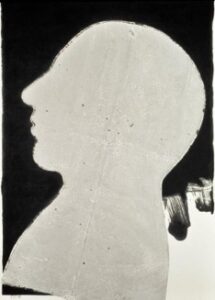
Figure 13. Ricardo Yrarrázaval, Untitled, 1991
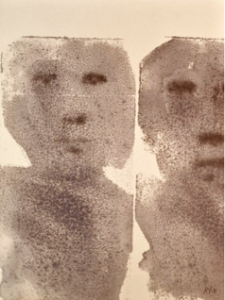
Figure 14. Ricardo Yrarrázaval, Untitled, 1991
In 1996, an allergy to turpentine forced Yrarrázaval to give up oil painting and begin experimenting with Adobe Photoshop. In a conversation with art critic José Zalaquett, the artist explained the origin of this practice in detail: “Turpentine became very toxic for me, so in 1996 I had to give up oil painting. A friend once showed me what could be done with Photoshop, and I was amazed. I began exploring that program. Since I can draw by hand on a tablet using a special stylus, the strokes retain both spontaneity and precision.” Verónica Waissbluth recounts that Yrarrázaval took his first digitally produced images on a CD to a copy shop to have them enlarged. Thus, the process of creating the work unfolded across two interconnected surfaces: on the one hand, on the screen, where the image is constructed and modified; and then, on the paper or aluminum that serves as its physical medium32Yrarrázaval, conversation with Zalaquett, p. 29..
Yrarrázaval’s first series of digital works was presented in 1999 at the A.M.S. Marlborough Gallery in Santiago. This was followed by Pintura y trabajos digitales, held at the Modigliani Gallery in Viña del Mar in 2001, and the exhibition Retrospectiva 50 años, held at the Fundación Telefónica Art Gallery in 2002, which incorporated these computer-generated works into a broader survey of the artist’s career. In his review of this retrospective, art critic Waldemar Sommer highlighted the work Perfil (“Profile”) (1999), recognizing in it a “chilly, almost ghostly dimension” linked to the digital print and its coloration33Milan Ivelic and Gaspar Galaz, Pintores chilenos: sus bocetos y dibujos, Santiago, Ediciones Cecilia Palma Galería de Arte y Cruz del Sur, 2002, p. 213. See also Waldemar Sommer, “Vicisitudes del hombre”, in El Mercurio, Crítica de arte, August 11, 2002.. These techniques were subsequently developed in works such as Luz sobre perfil (“Light on Profile”) (2007) (Fig. 15) and Perfil azul (“Blue Profile”) (2010) (Fig. 16): in the former, printed on paper, a face is constructed through translucent fields, rectangular interruptions, and variations in texture; in the second, printed on aluminum, the head combines areas of varying opacity, and the ear exhibits a higher degree of definition. The paper takes on ochre and earth tones, while the aluminum features cool-looking grays and blues. The choice of medium thus contributes to the luminous and material construction of each image34Waissbluth, Grandes artistas contemporáneos chilenos. Ricardo Yrarrázaval, p. 52..
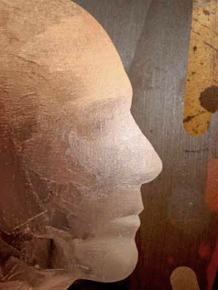
Figure 15. Ricardo Yrarrázaval, Luz sobre perfil, 2007.
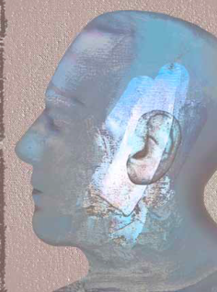
Figure 16. Ricardo Yrarrázaval, Perfil azul, 2010.
The digital experience significantly influenced Yrarrázaval’s return to physical painting. In an interview with journalist and art critic Cecilia Valdés Urrutia, the artist stated the following when referring to how he transitioned from oil to digital and, later, from digital to acrylic: “This change has meant discovering other qualities of the medium. Different elements have emerged—colors and textures specific to this technique that I’m beginning to use.” Years later, he clarified that digital media influenced the textures of his acrylics and added: “That’s why I began using rubber stencils with regular patterns on which to do frottage”35Cecilia Valdés Urrutia, «Me interesa la soledad del hombre», interview with Ricardo Yrarrázaval, in El Mercurio, «Artes y Letras», November 2, 2003, E10..
Paseando bondades (“Walking through kindness”) (2005) (Fig. 17), acrylic on canvas, reveals this intersection between physical painting and “digital painting”: the monumental figure, viewed from below, retains a volumetric modeling and appears traversed by a regular diagonal grid. The pattern crosses the body, alters the perception of its surface, and remains contained within a silhouette of great clarity. The interface introduces a logic of repetition and modulation that the frottage technique restores to the contact between pigment, stencil, and canvas36Waissbluth, Grandes artistas contemporáneos chilenos. Ricardo Yrarrázaval, pp. 50–51..
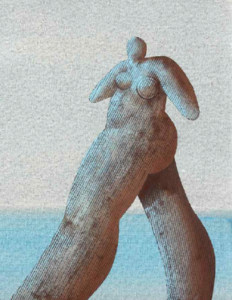
Figure 17. Ricardo Yrarrázaval, Paseando bondades, 2005.
From this perspective, Yrarrázaval’s digital work can be understood as an archaeology of return: a space where stratification, adjustment, restraint of gesture, and attention to the edge reemerge under new technical conditions and shed new light on earlier moments in his career. If each medium employed by the artist activates a way of thinking acquired through the act of making and preserves the experience of the materials that preceded it, the digital interface expands this journey, renewing the relationship between the hand, the gaze, and the surface.
Yrarrázaval’s career thus reveals itself as a living process, sustained by a persistent curiosity and a willingness to explore the possibilities that each material offers him. From volume to plane and from plane to interface, his work maintains a coherence rooted in the bodily memory of gesture and in the density of the surface. This continuity opens a possible path for continuing to interpret a body of work that remains active in the present, viewing each new surface as a provisional stage in a broader investigation, where procedures recur, shift, and take on unexpected meanings. From this perspective, the material becomes an open narrative that each work reexamines.
Bibliography
Books, monographs and articles
Gaspar Galaz and Milan Ivelic, Chile, arte actual, Valparaíso, Ediciones Universitarias de Valparaíso, 1988.
Gaspar Galaz and Milan Ivelic, Pintores chilenos: sus bocetos y dibujos, Santiago, Ediciones Cecilia Palma Galería de Arte and Cruz del Sur, 2002.
Gaspar Galaz and Milan Ivelic, “La pintura: su candente realidad.” Aisthesis, n.º 9, 1975–1976, pp. 185–202.
Thomas Messer, The Emergent Decade: Latin American Painters and Painting in the 1960’s, New York, Cornell University Press, 1966.
Alberto Pérez, La soledad en dos pintores chilenos: Mario Carreño y Ricardo Yrarrázaval, Santiago, Editorial Fértil Provincia, 1992.
Ricardo Yrarrázaval: 1952–2014. Santiago, Ediciones y Producciones Foramen Acus Ltda., 2014.
Antonio Romera, Historia de la pintura chilena, Santiago, Editorial Zig-Zag, 1968.
Waldo Vila, Pintura joven: la década emergente, Santiago, Editorial del Pacífico, 1973.
Verónica Waissbluth, Grandes artistas contemporáneos chilenos: Ricardo Yrarrázaval, Santiago, Ediciones Cecilia Palma, 2012.
Exhibition Catalogs and Publications
Cinco expresiones de la figuración en Chile: Dávila, Lira, Yrarrázaval, Bru, Smythe, Santiago, Galería Cromo, 1977.
Exposición de pasteles: Ricardo Yrarrázaval, Santiago, Galería Época, 1976.
Pintura contemporánea chilena, Santiago, Instituto Cultural de Las Condes, 1977.
Ricardo Yrarrázaval: pintura y gráfica, Santiago, D21 Galería de Arte, 2012.
Ricardo Yrarrázaval: retrospectiva 50 años, Santiago, Sala de Arte Fundación Telefónica, 2002.
Press
Waldemar Sommer, “Vicisitudes del hombre”, in El Mercurio, “Crítica de Arte”, August 11, 2002.
Cecilia Valdés Urrutia, “Me interesa la soledad del hombre.” Interview with Ricardo Yrarrázaval, El Mercurio, “Artes y Letras”, November 2, 2003.


