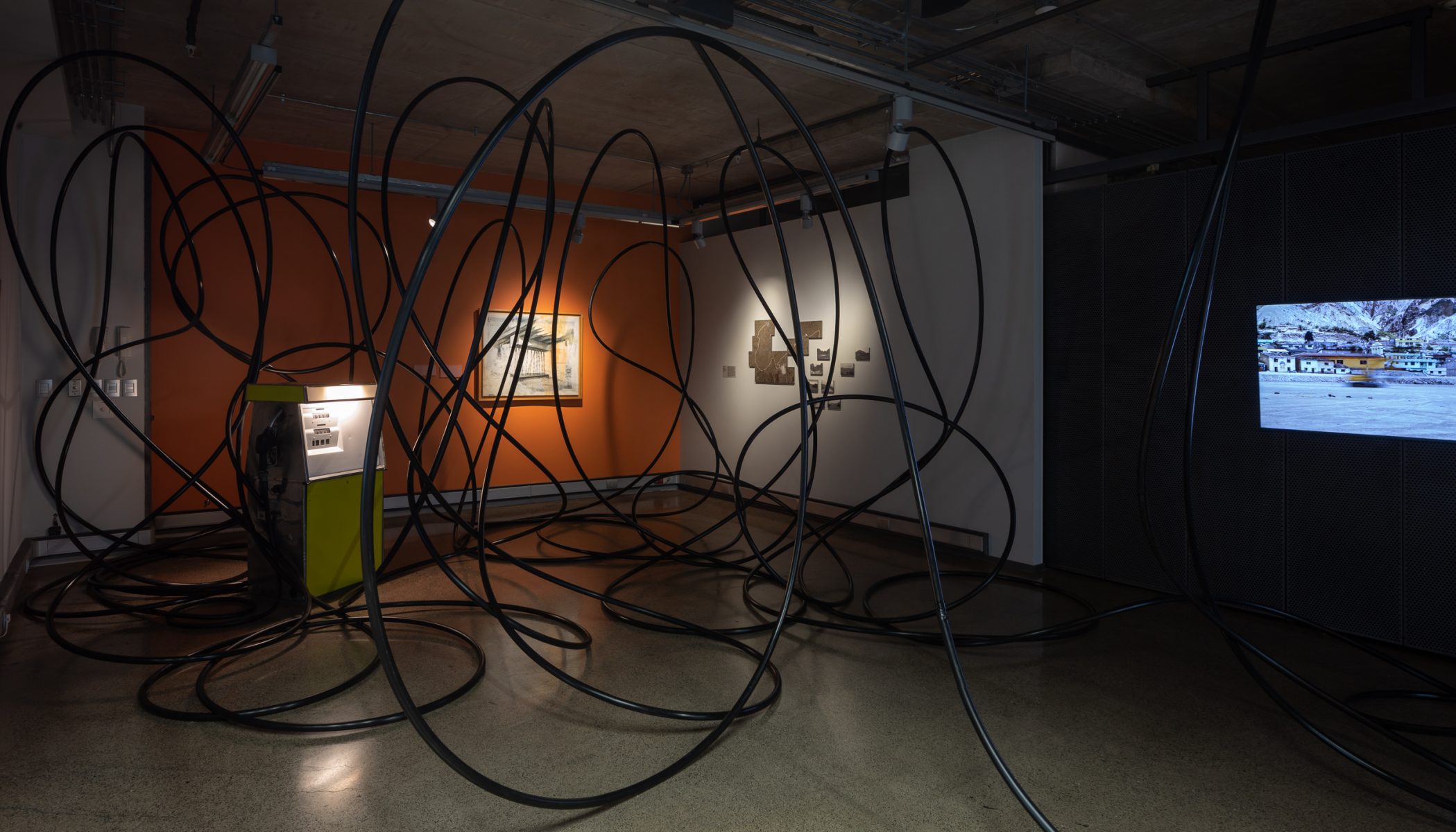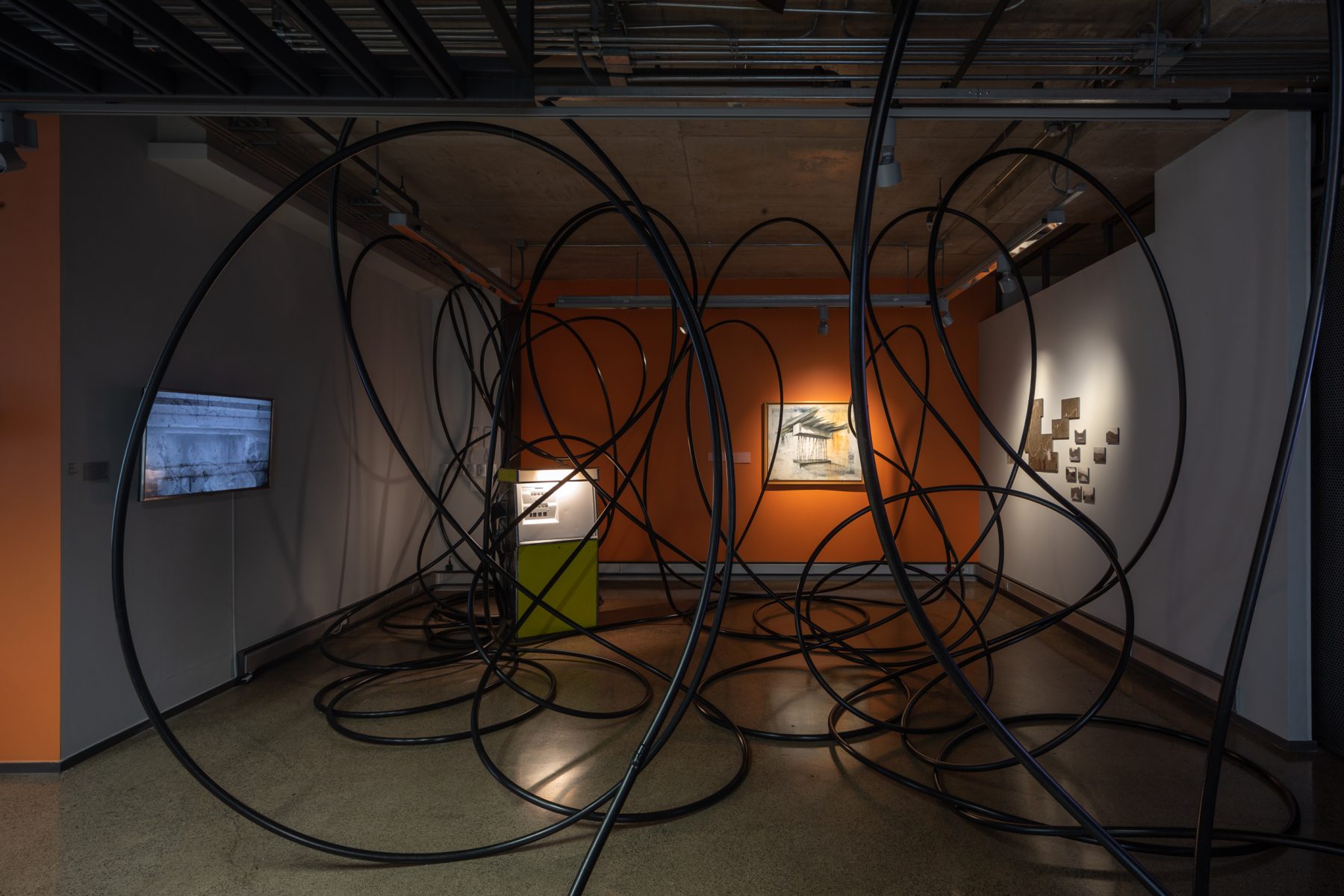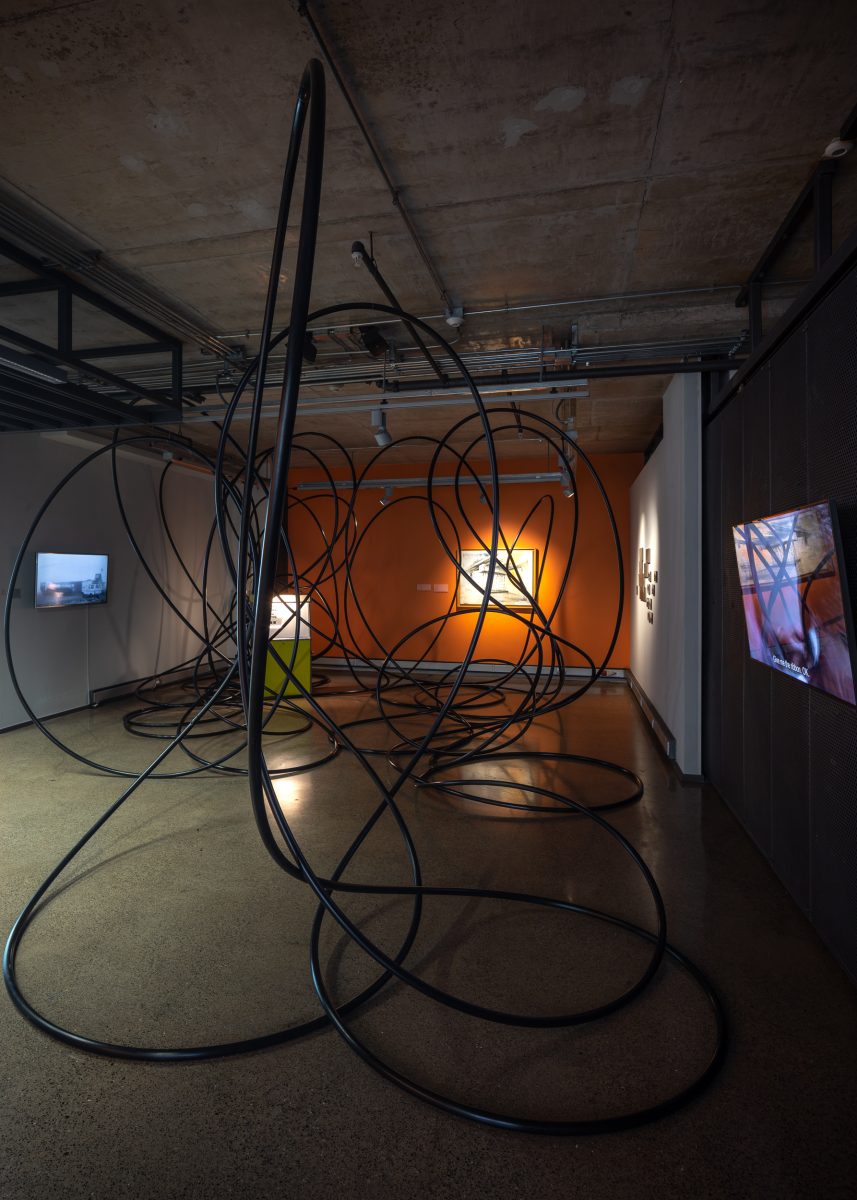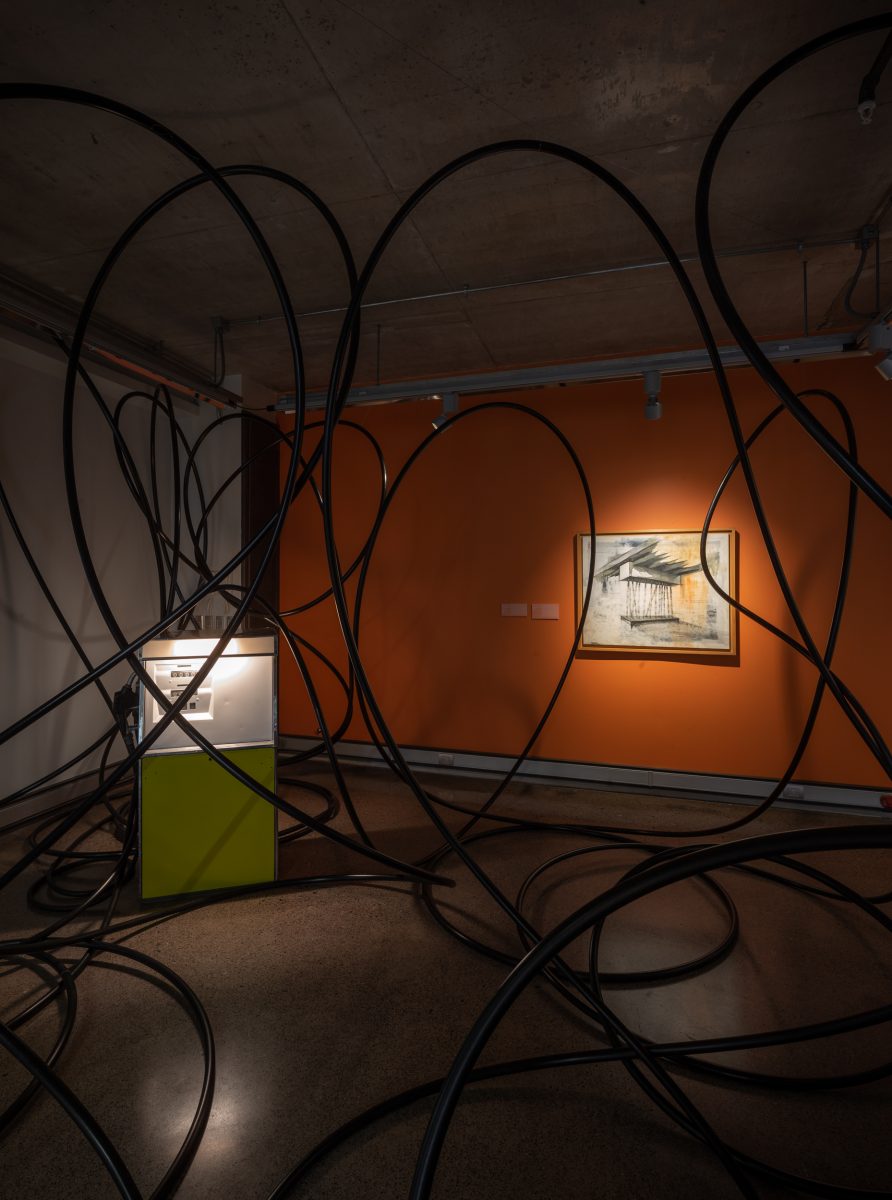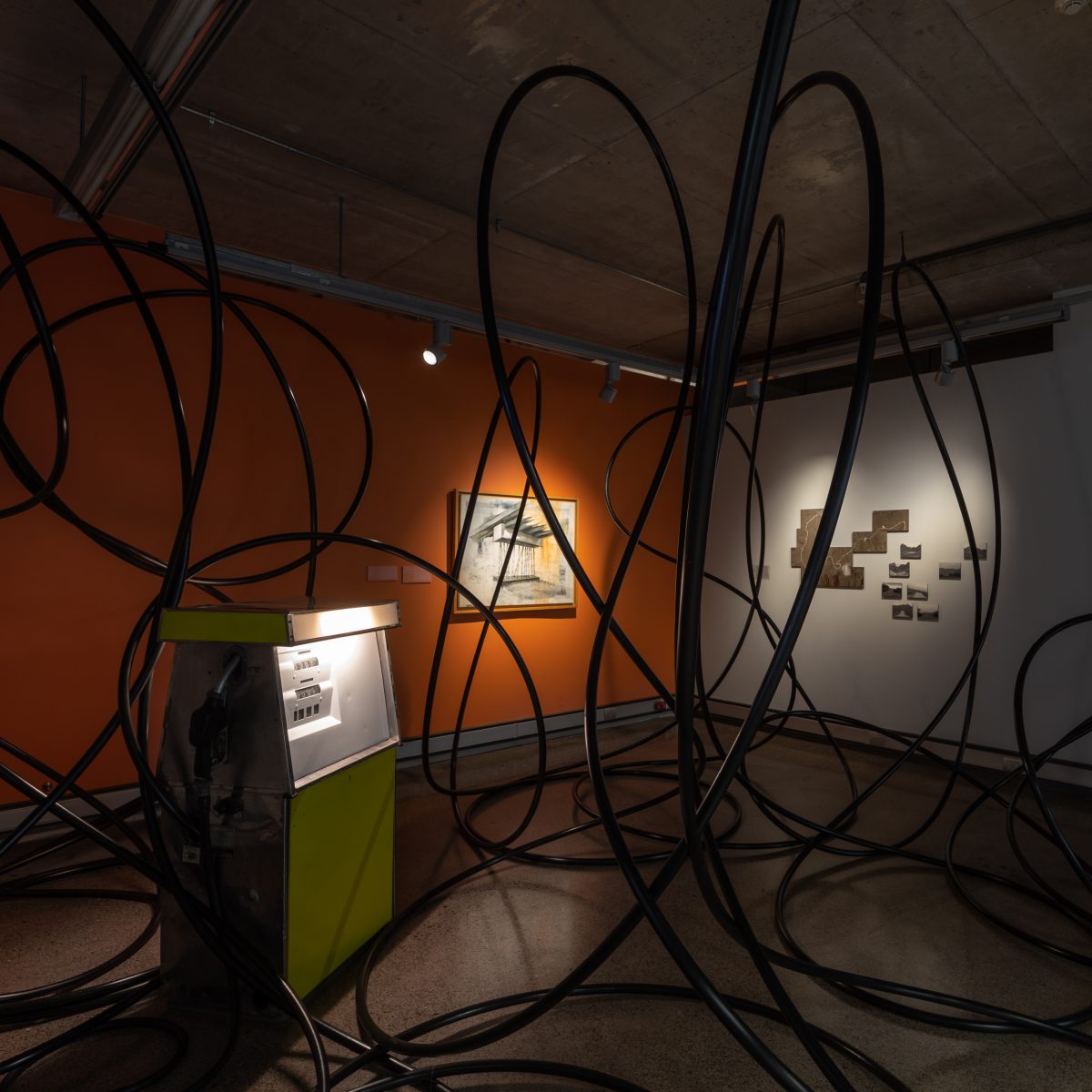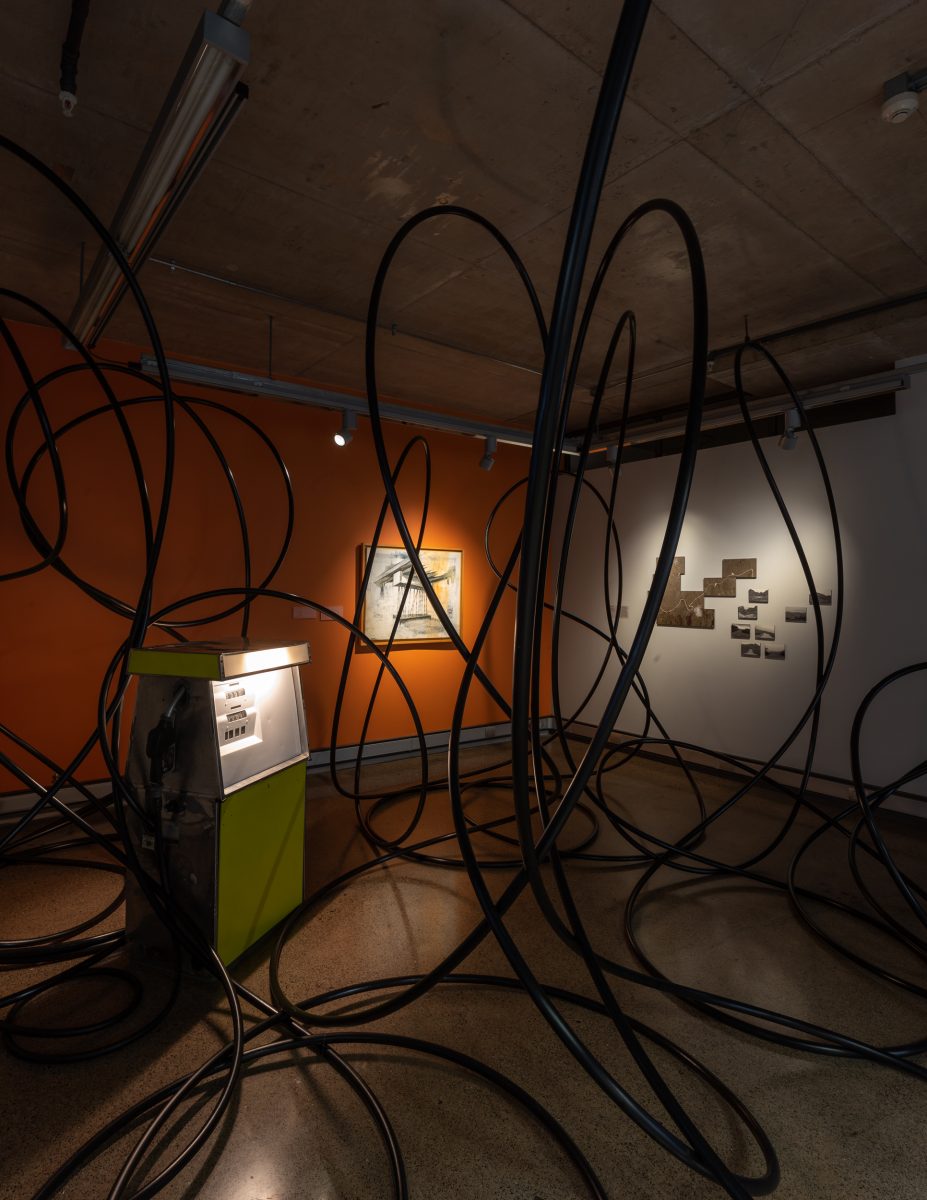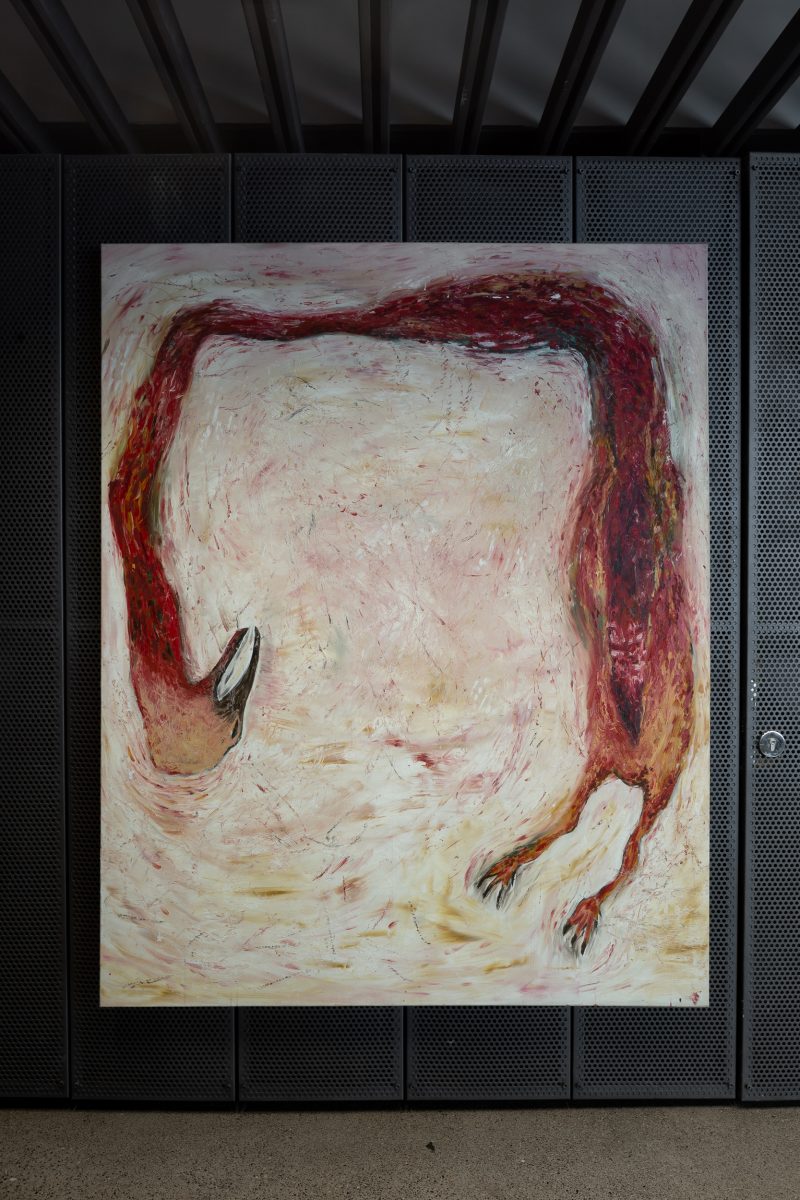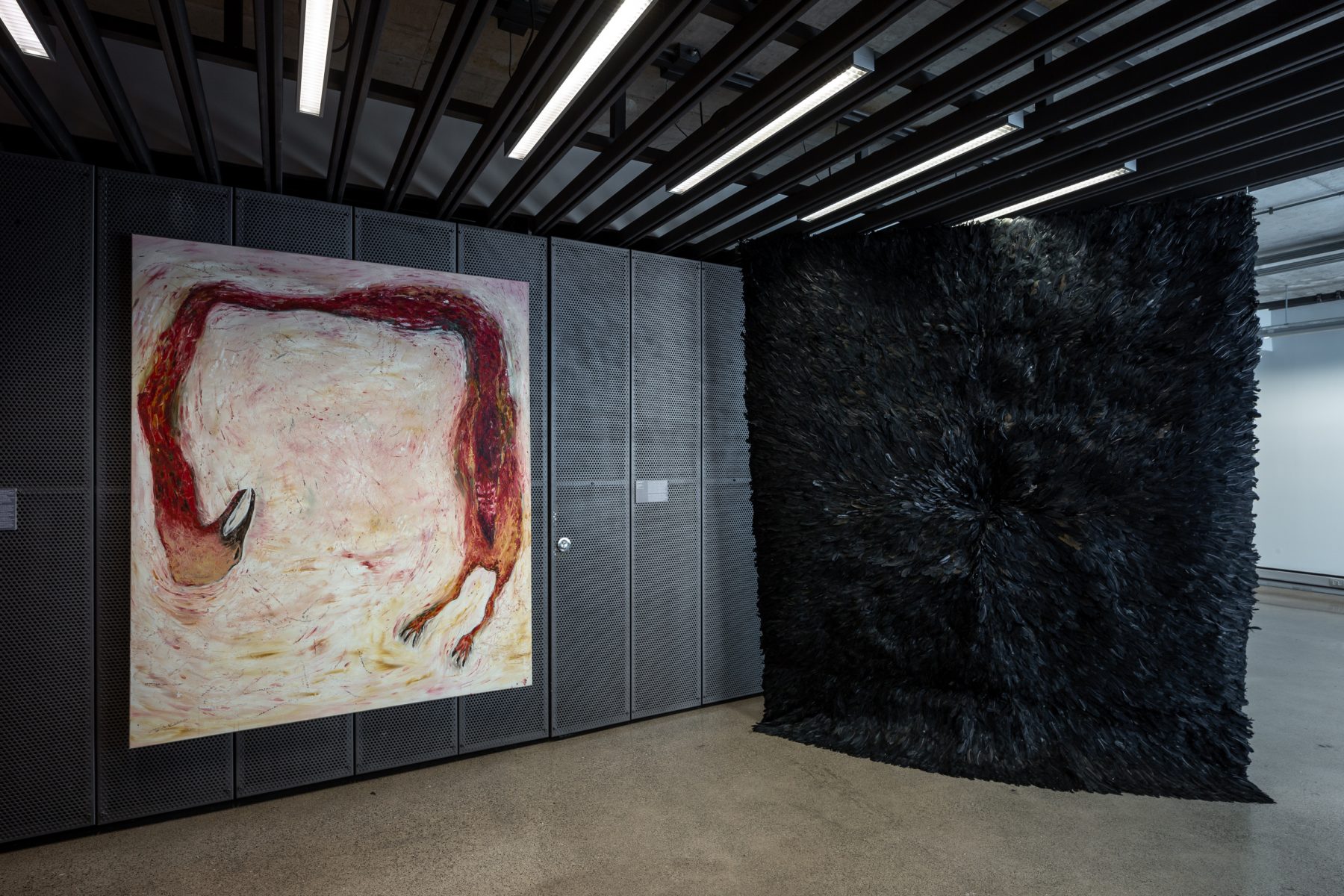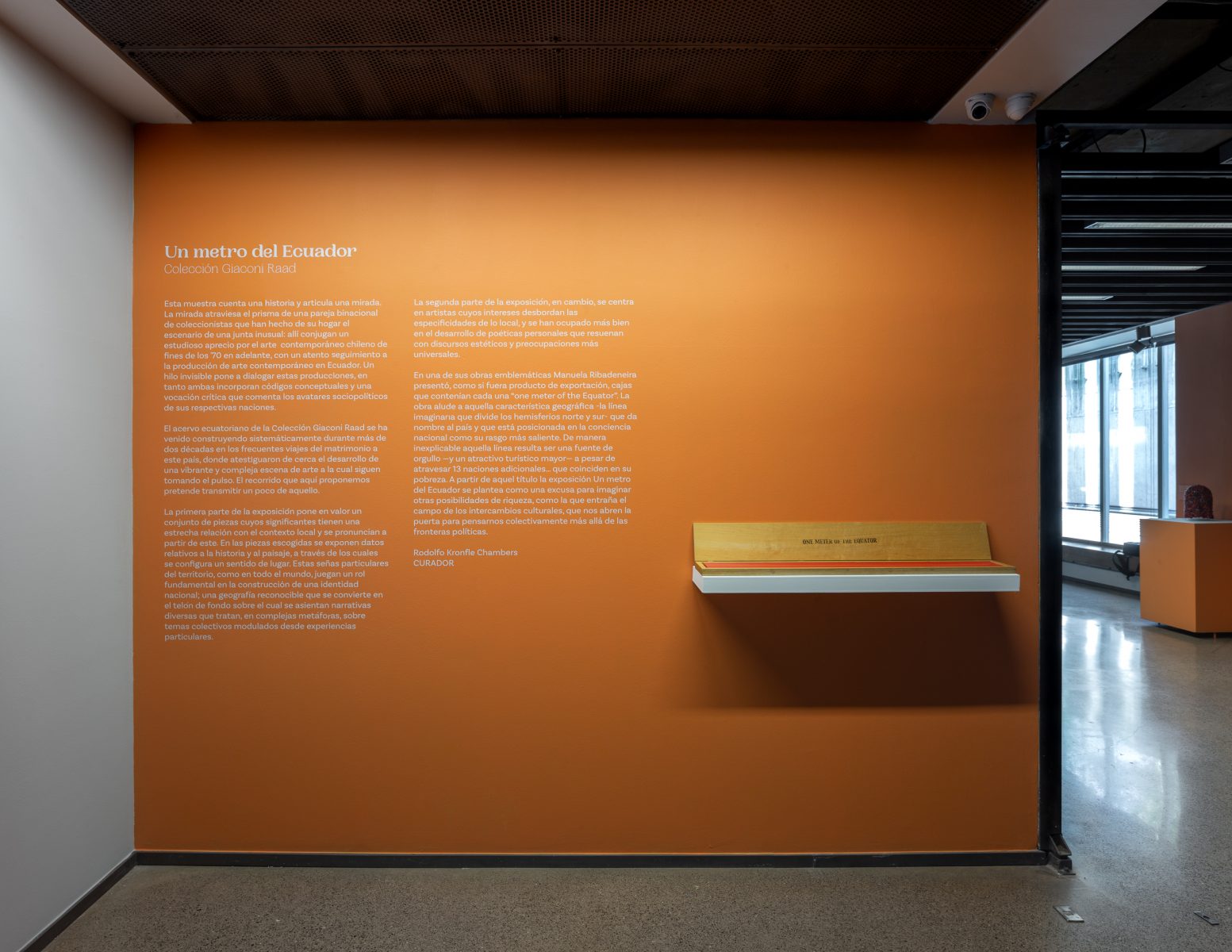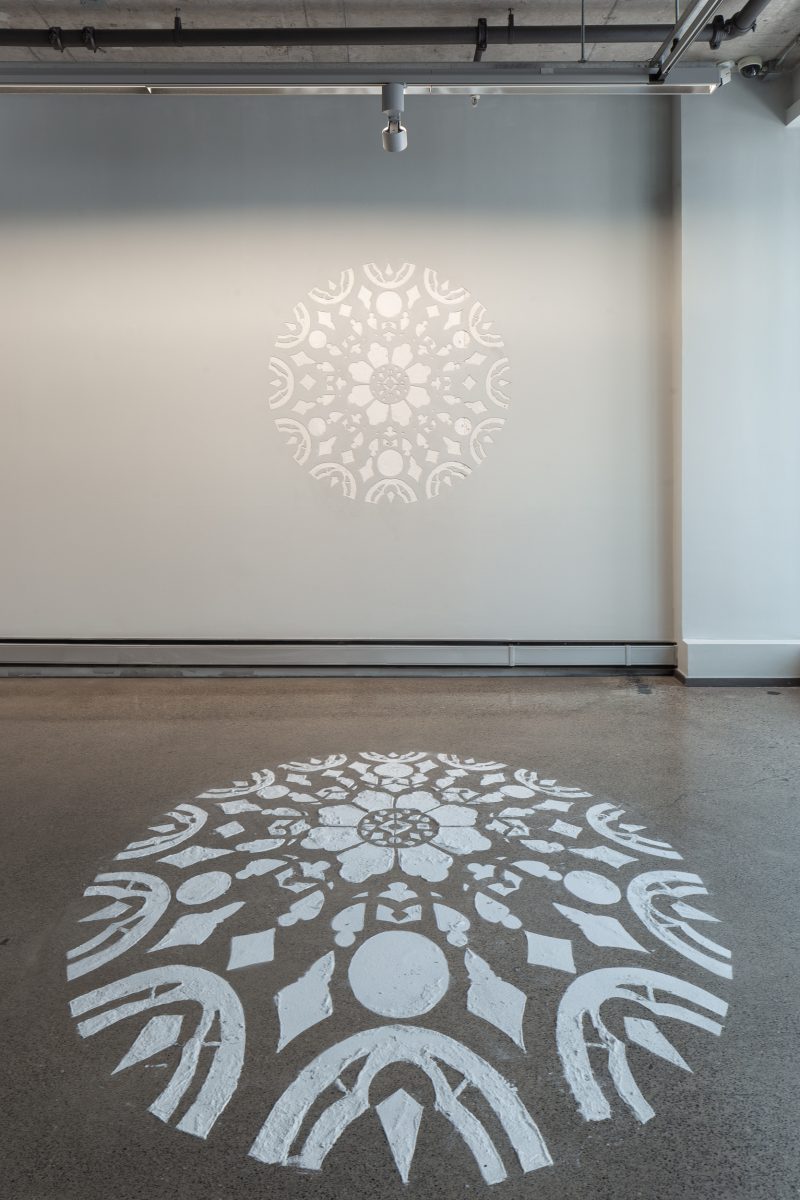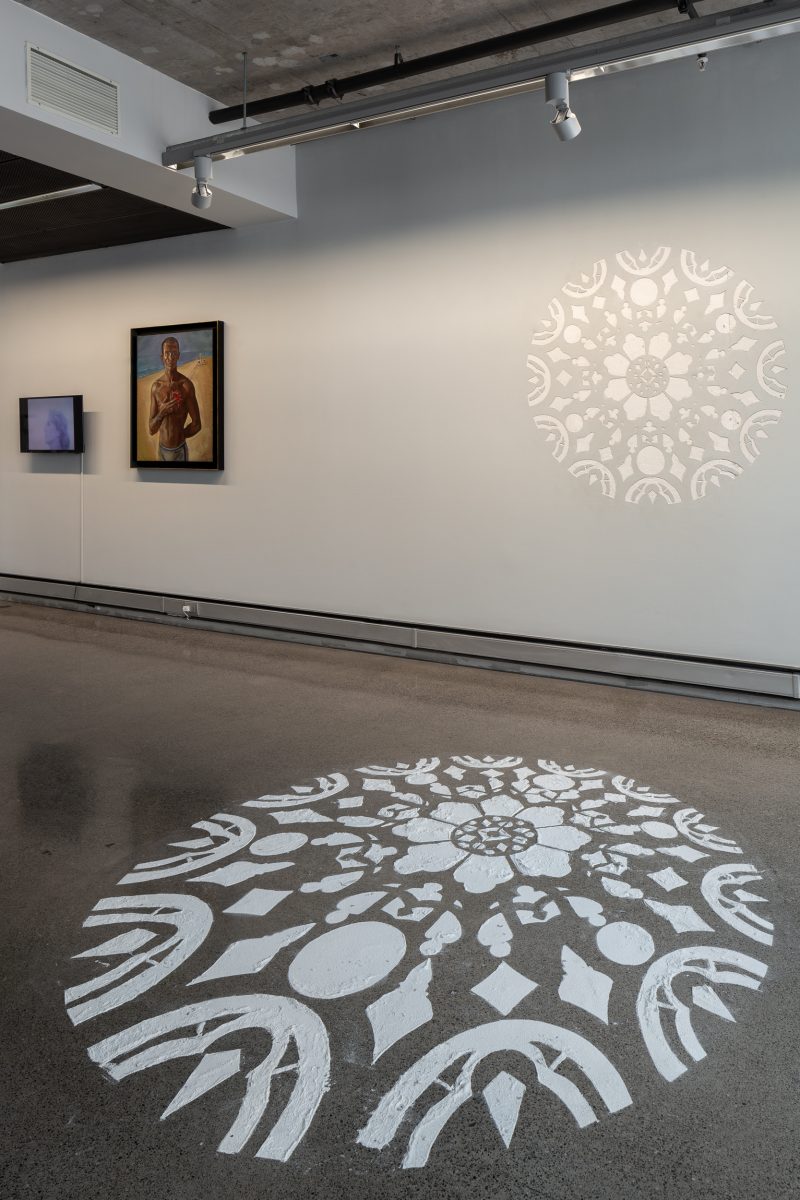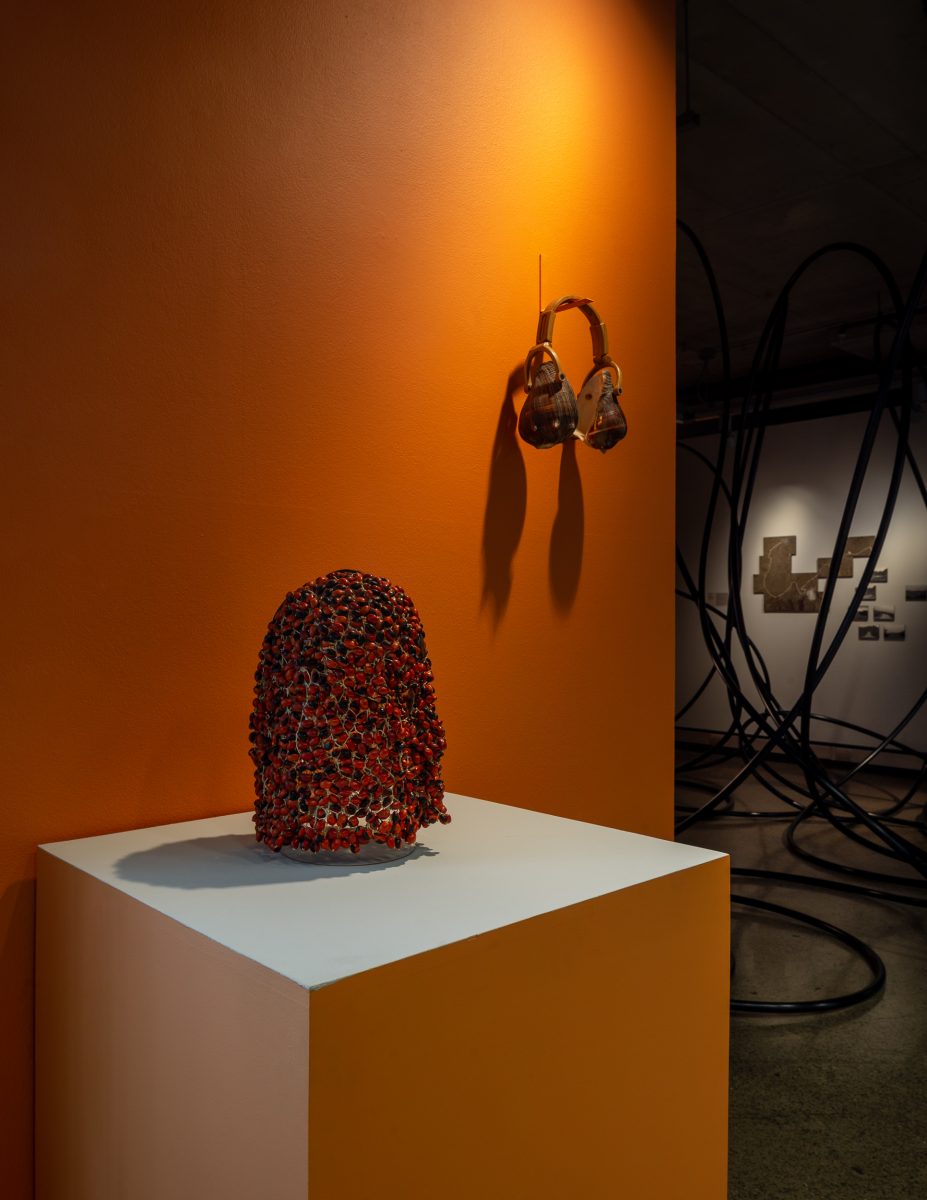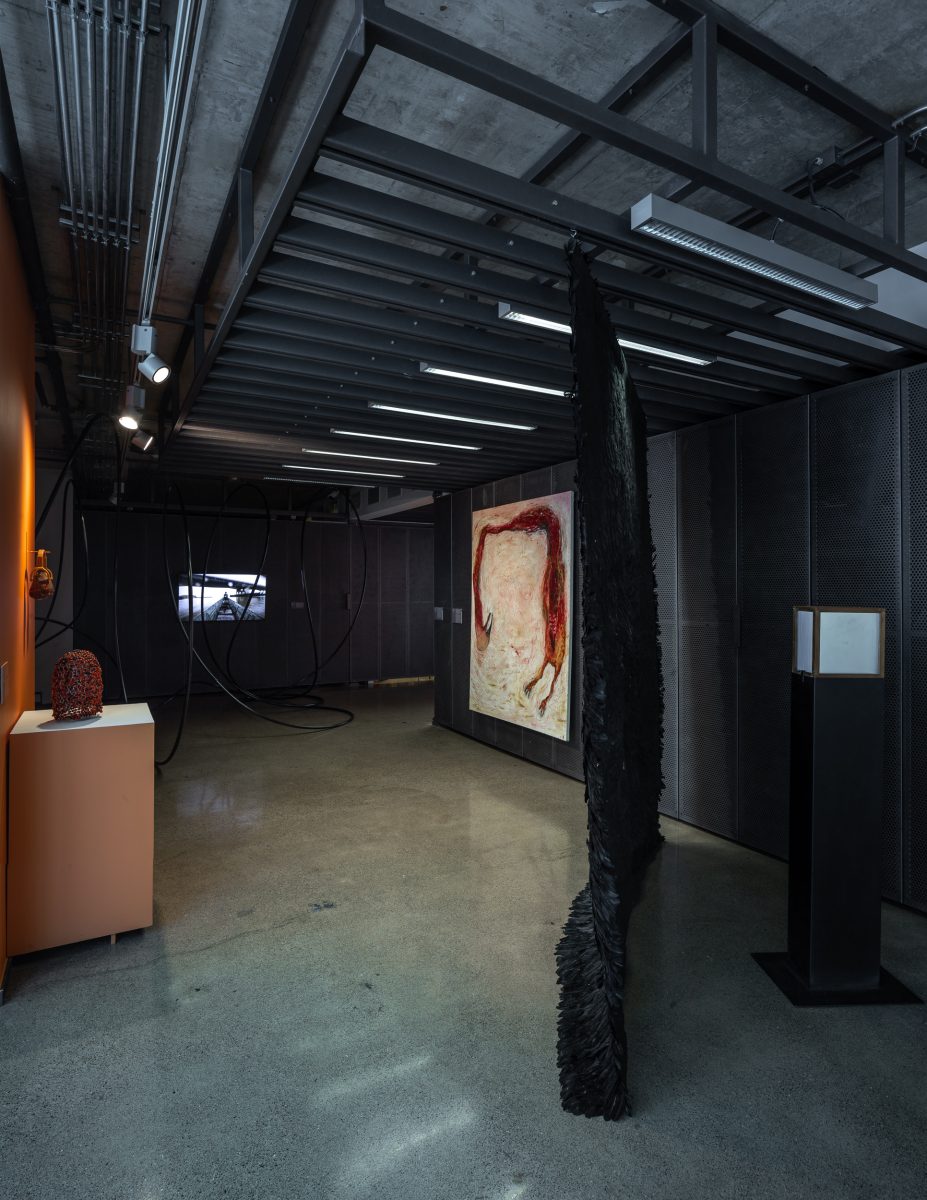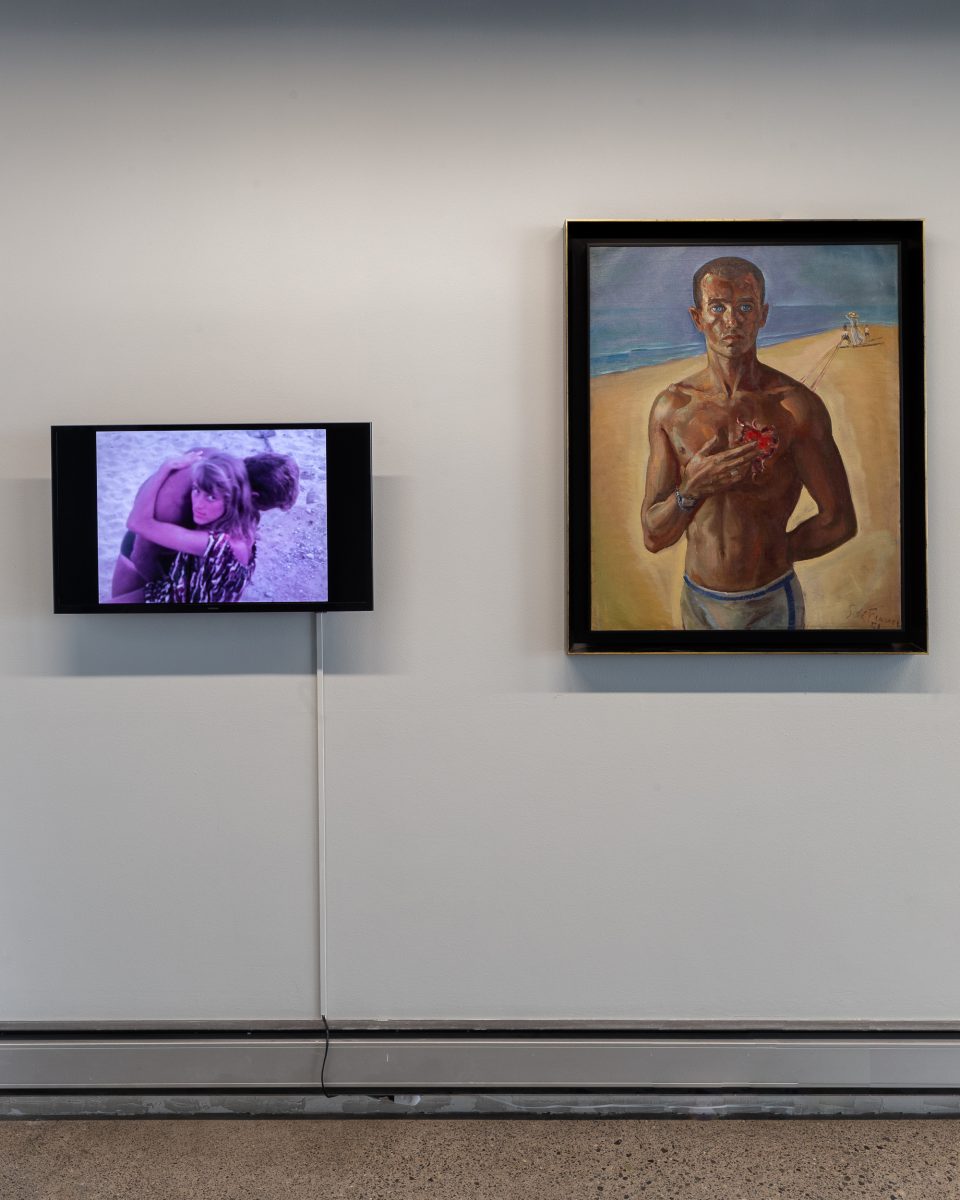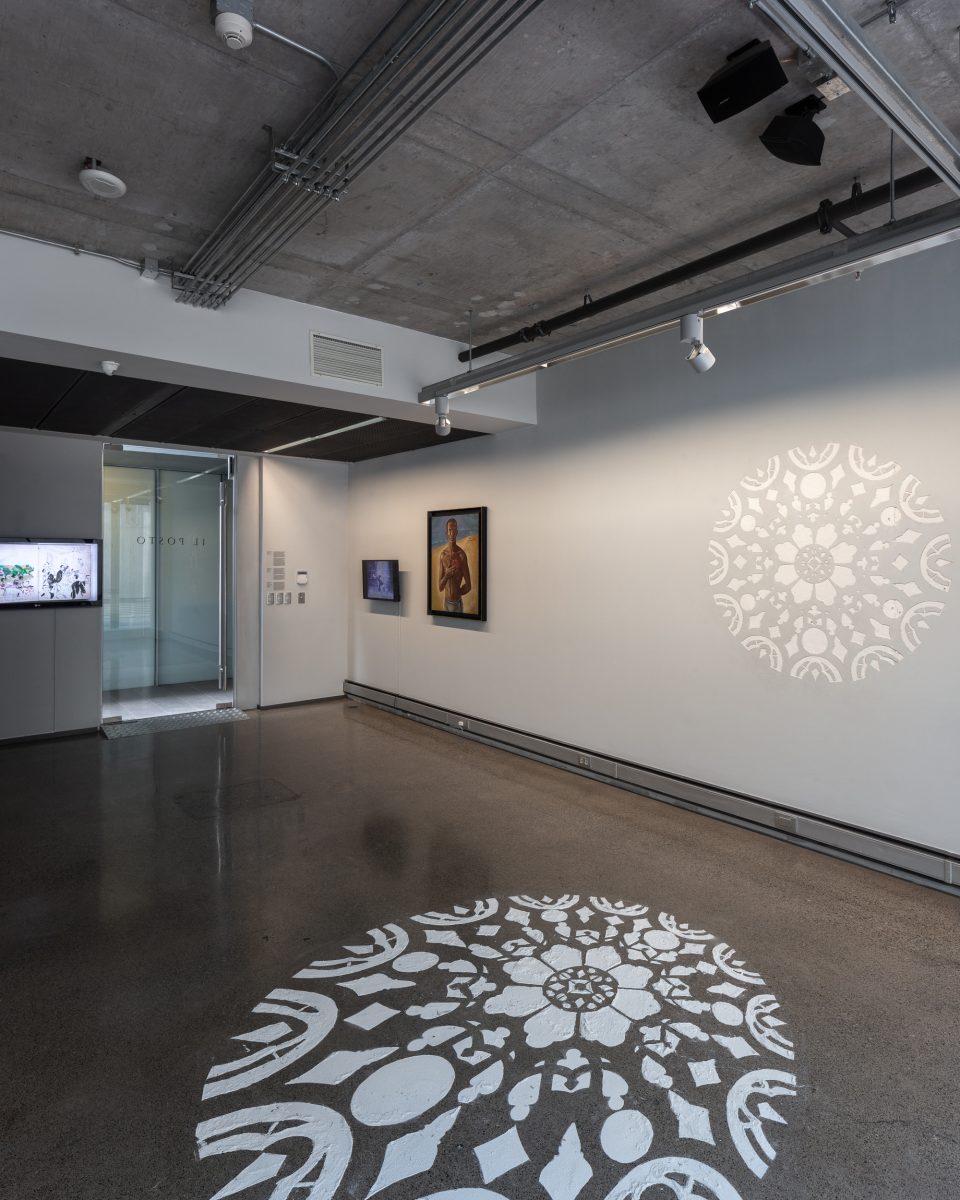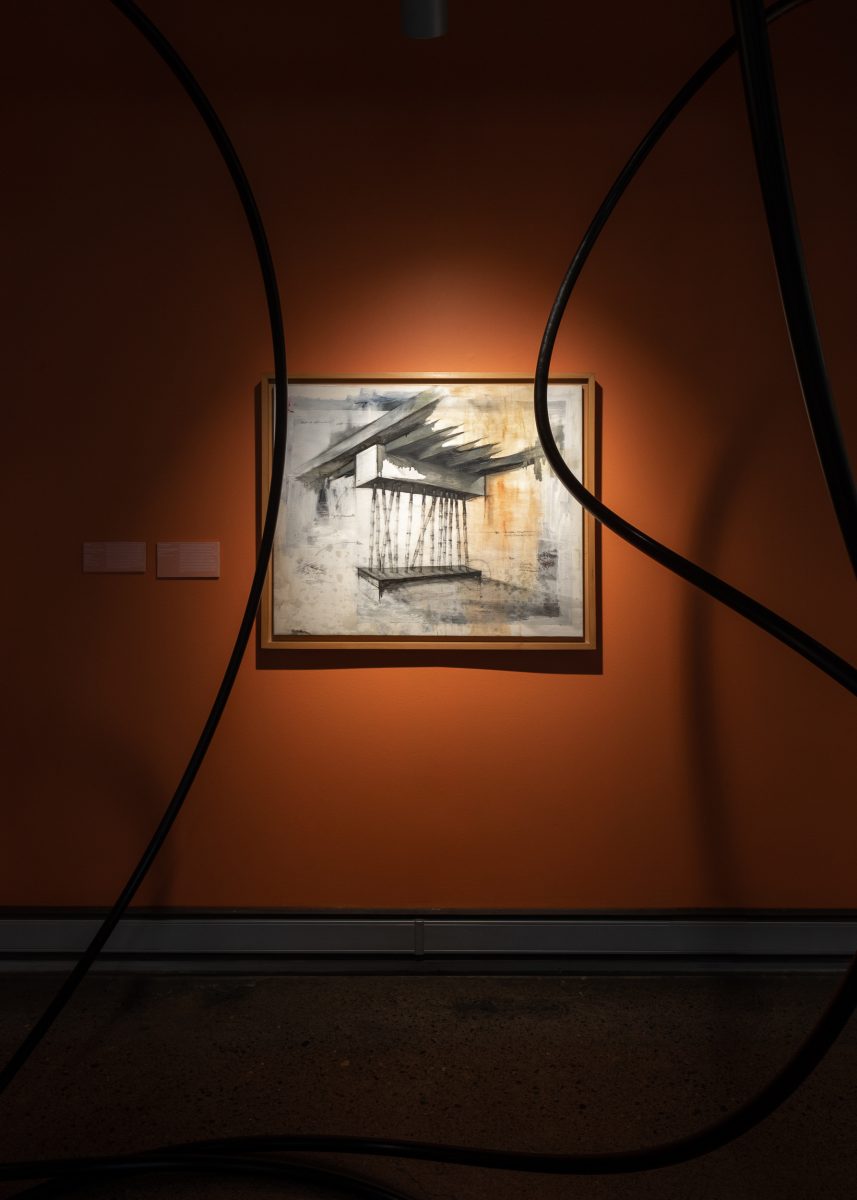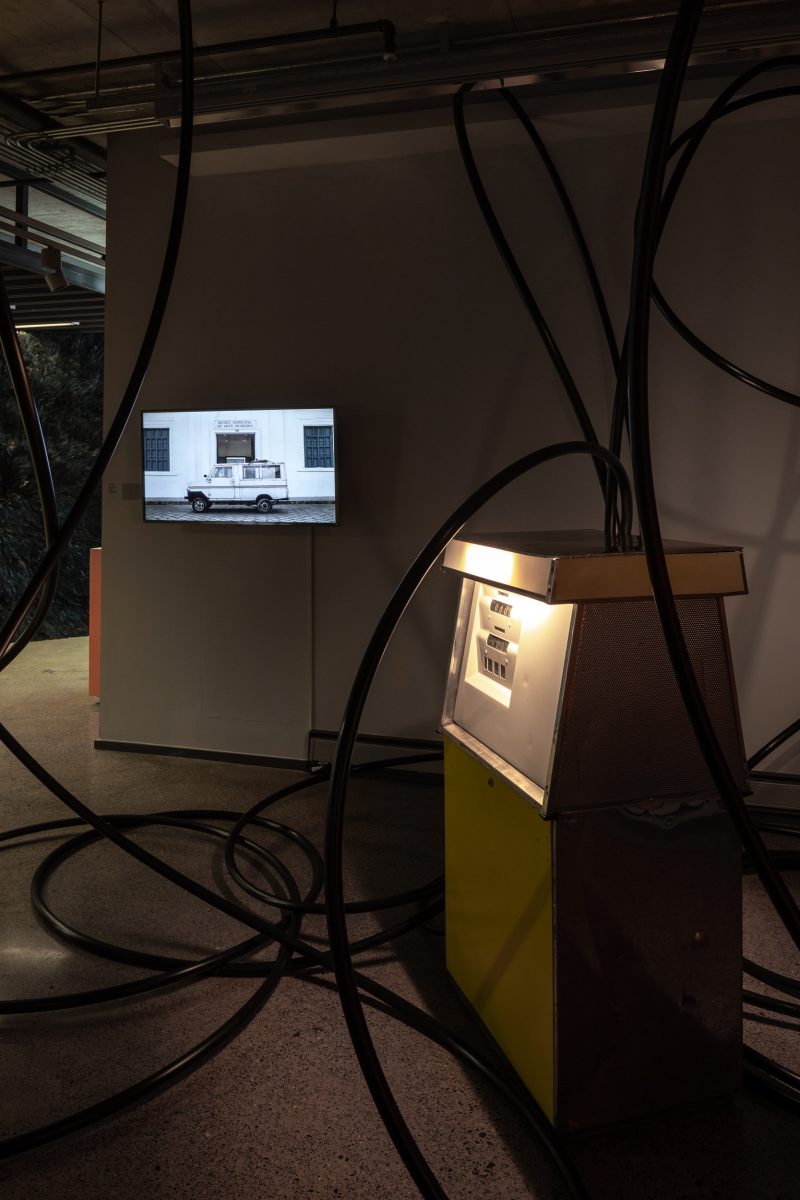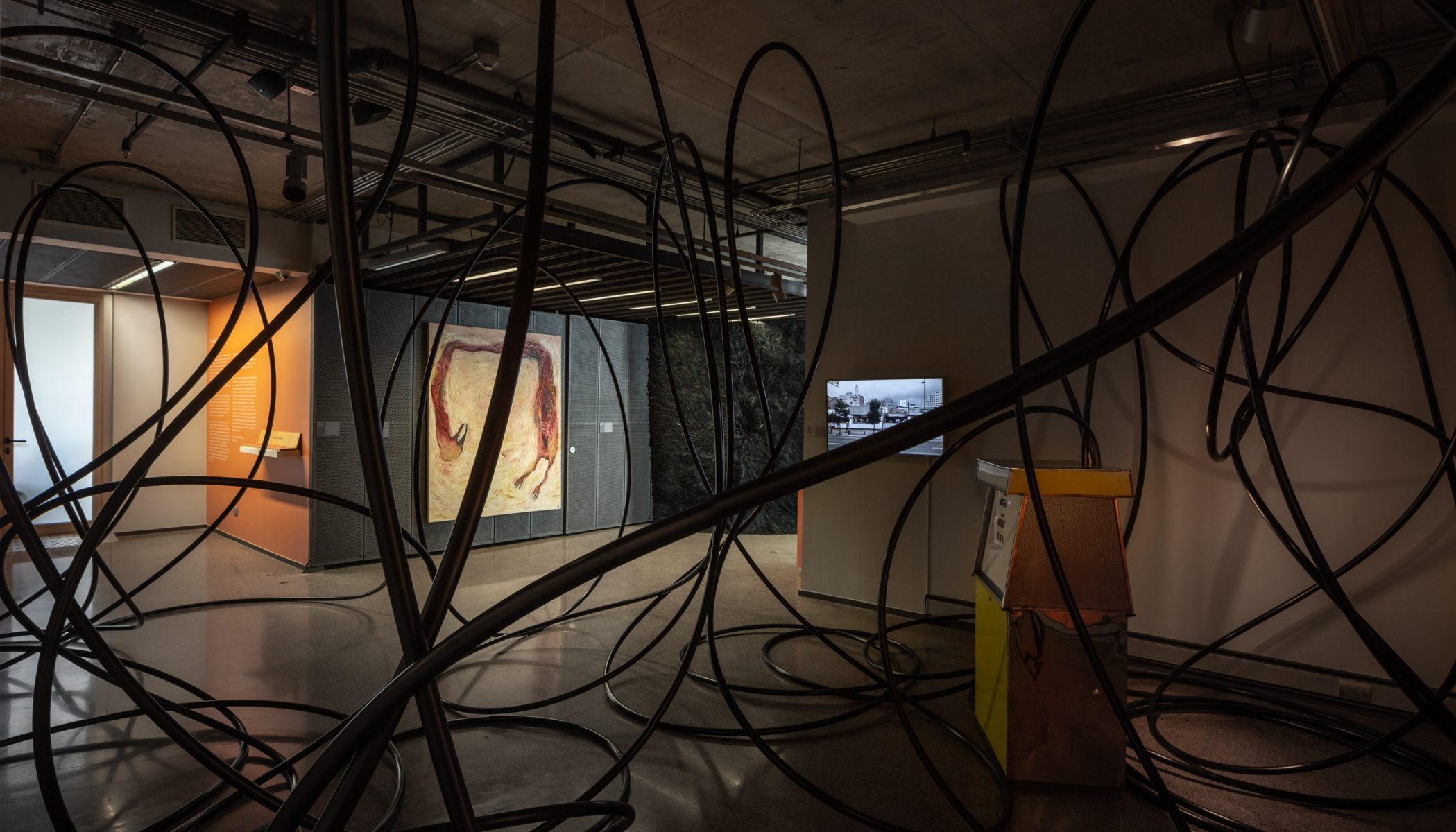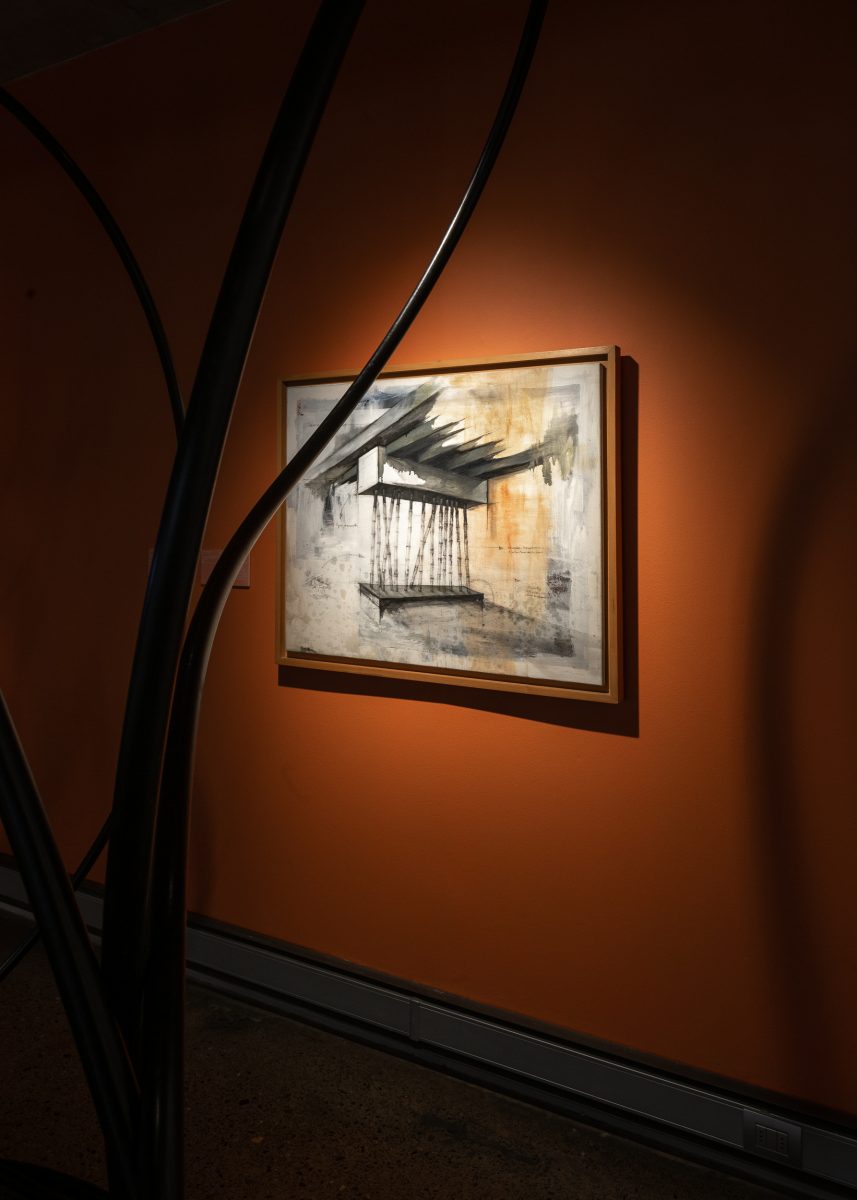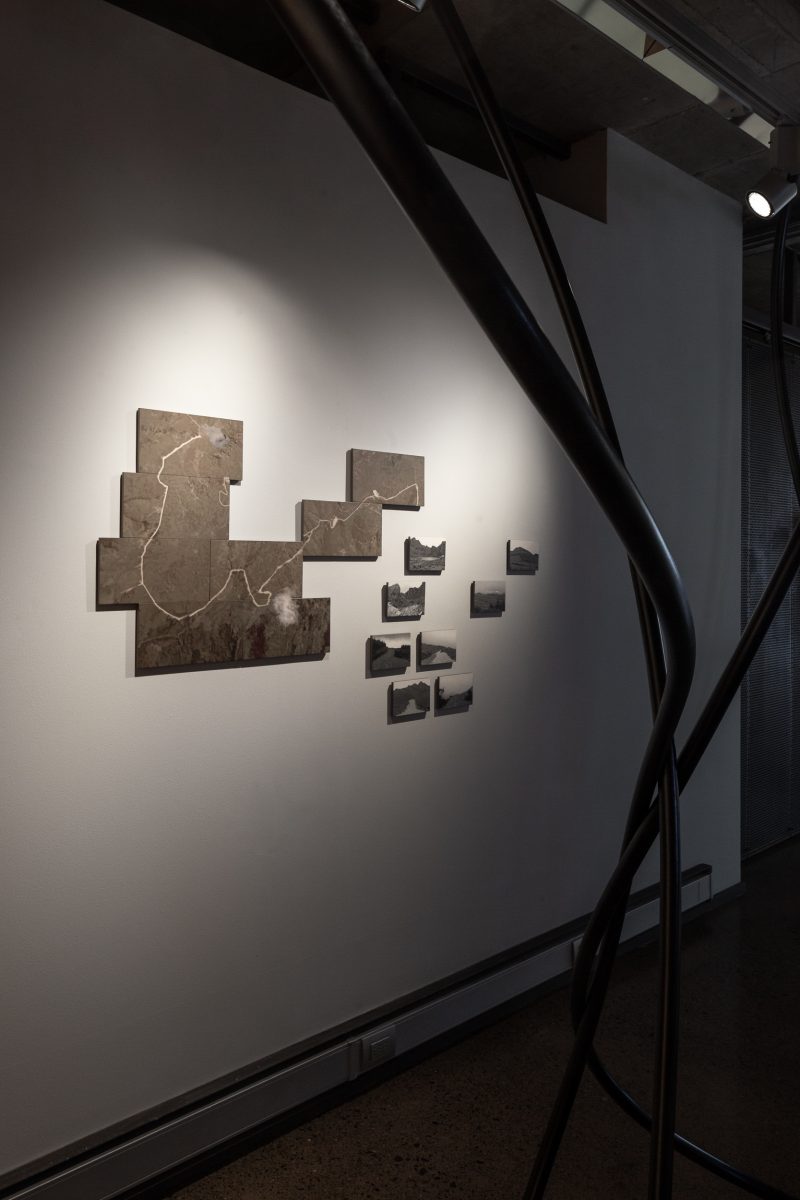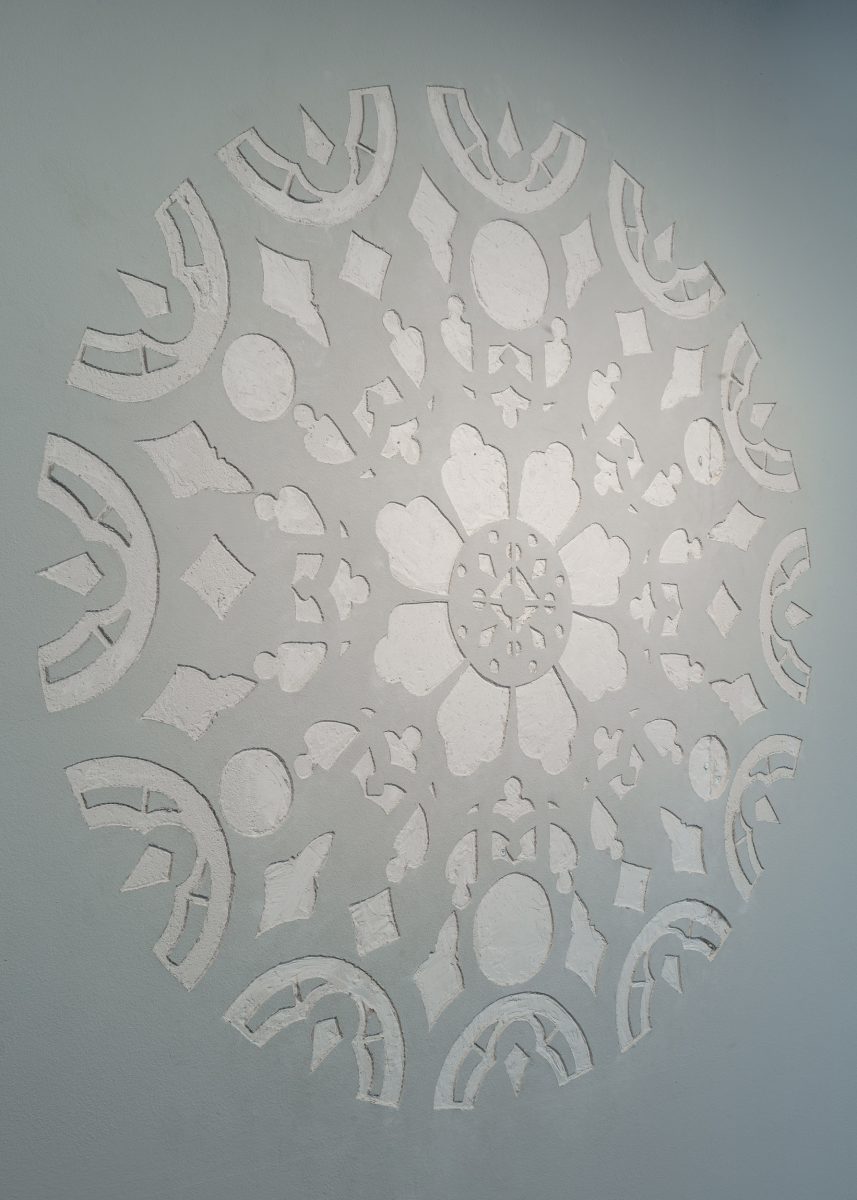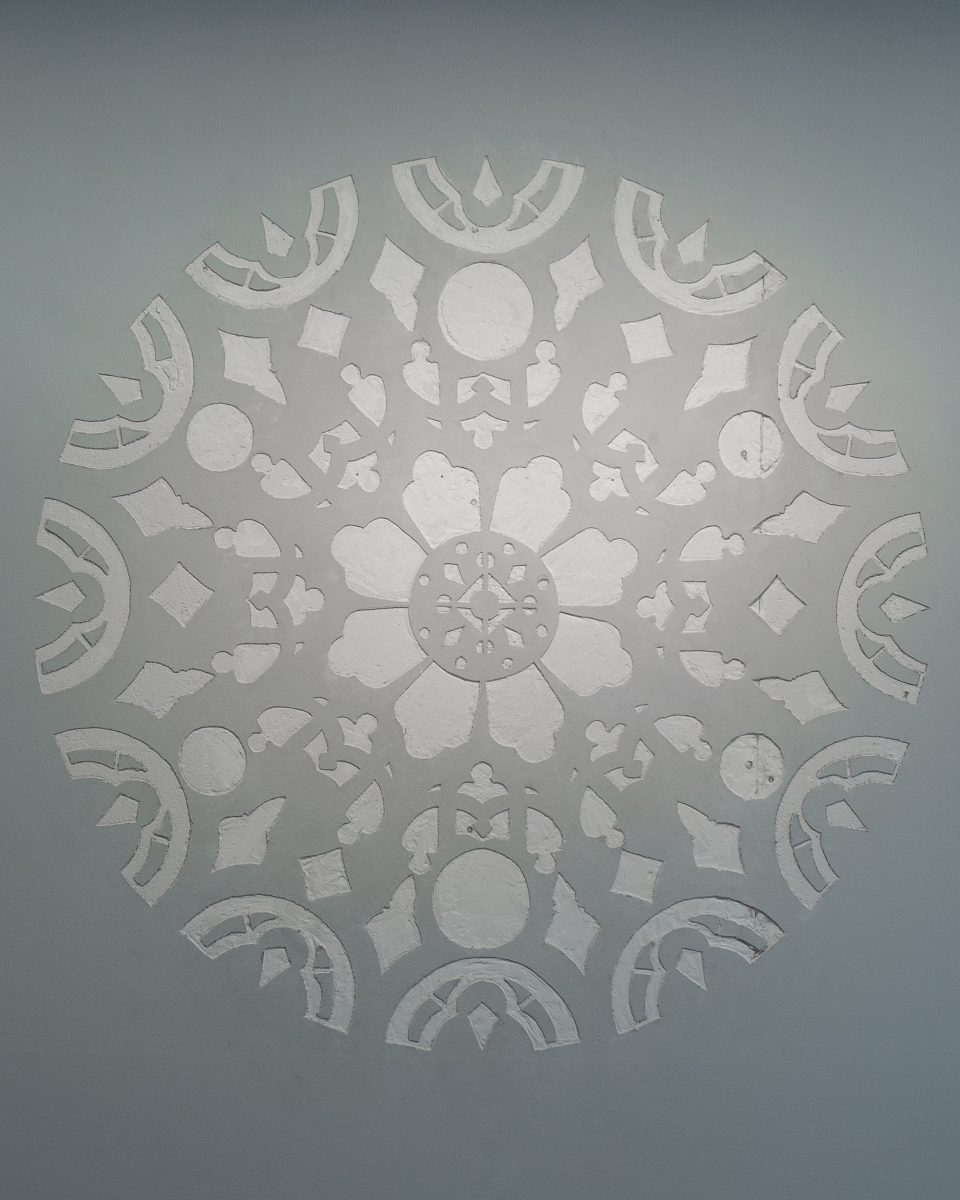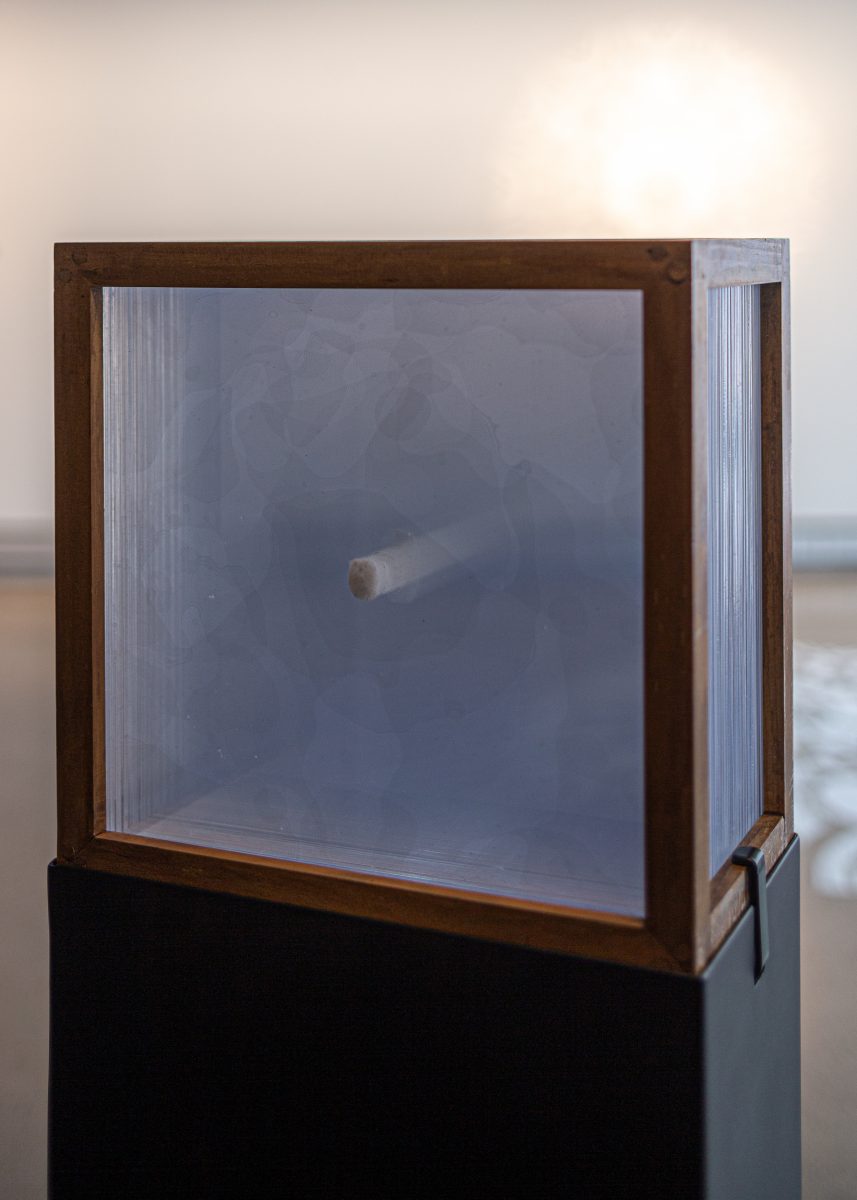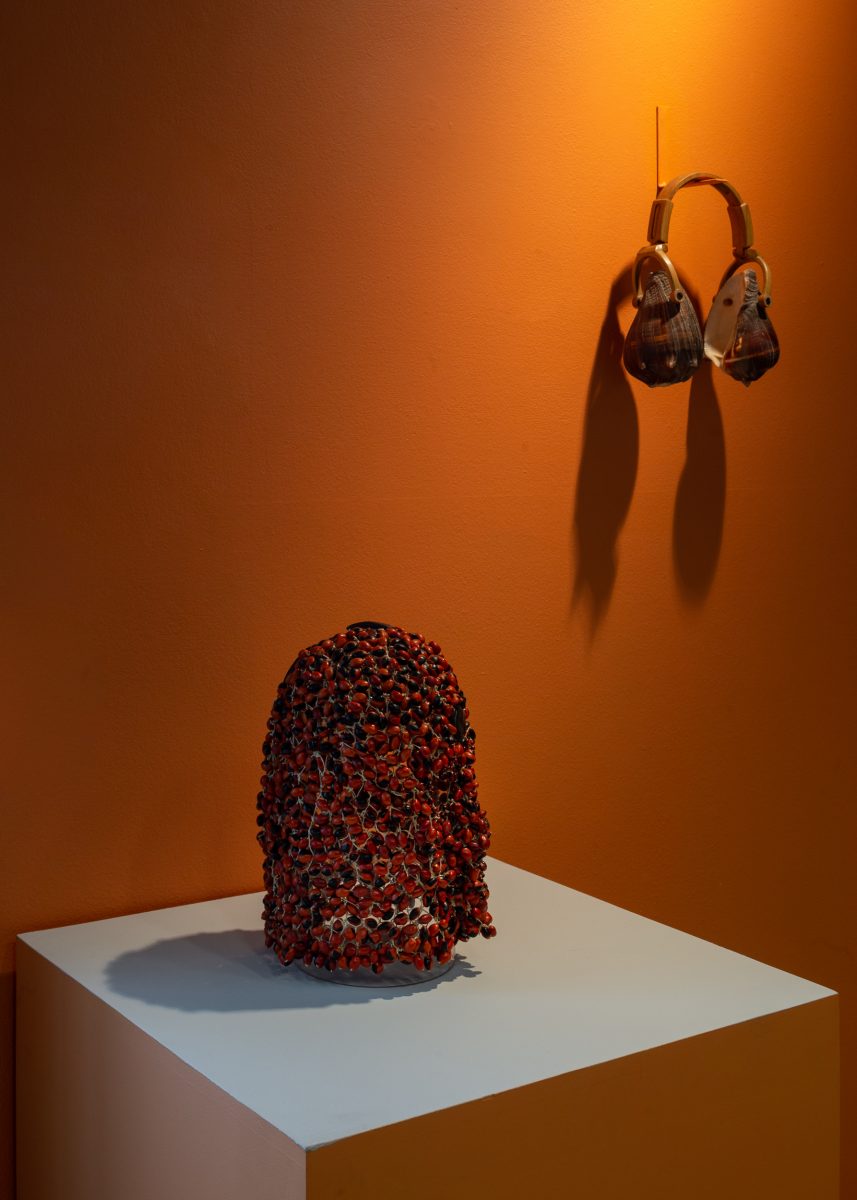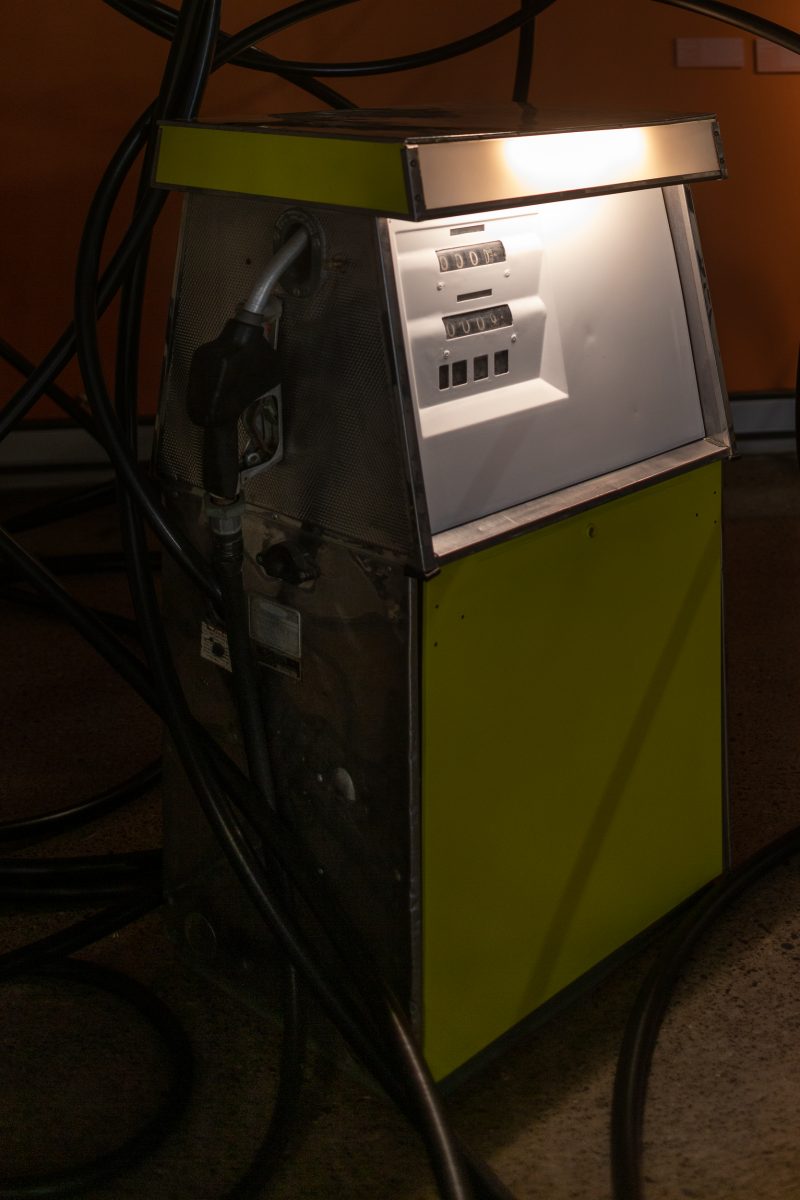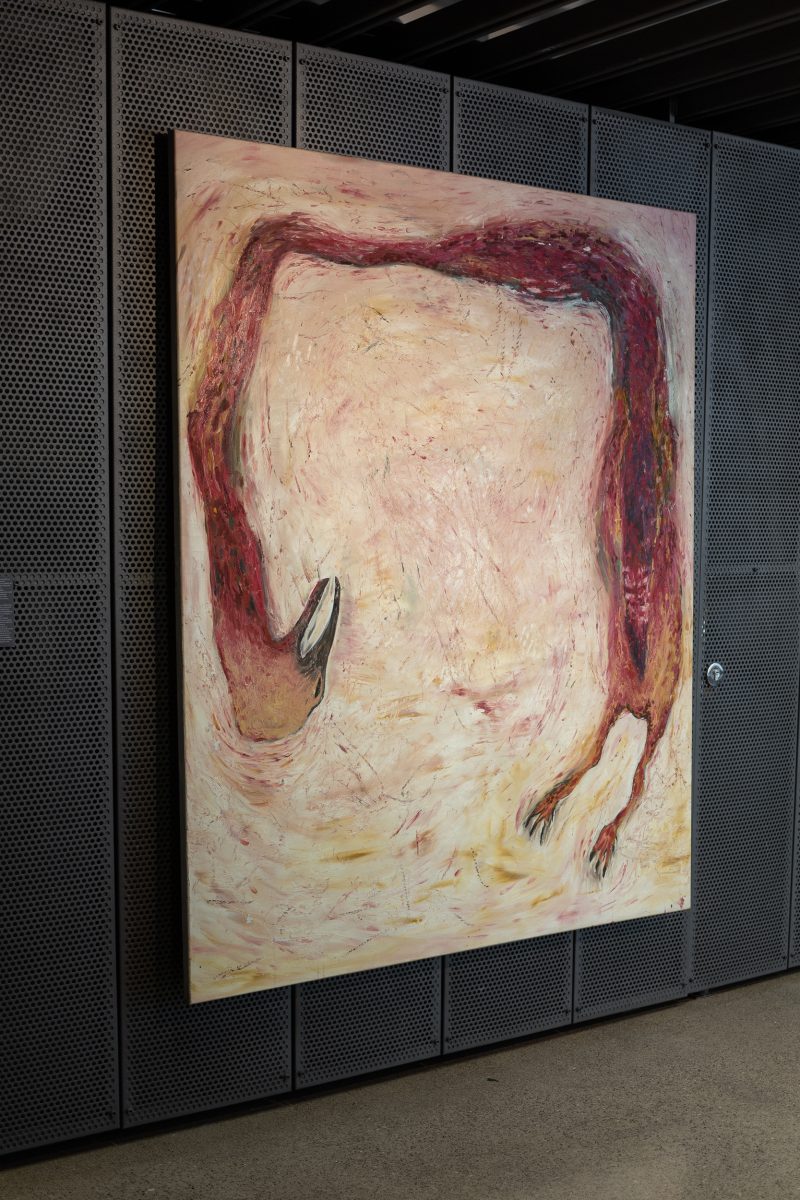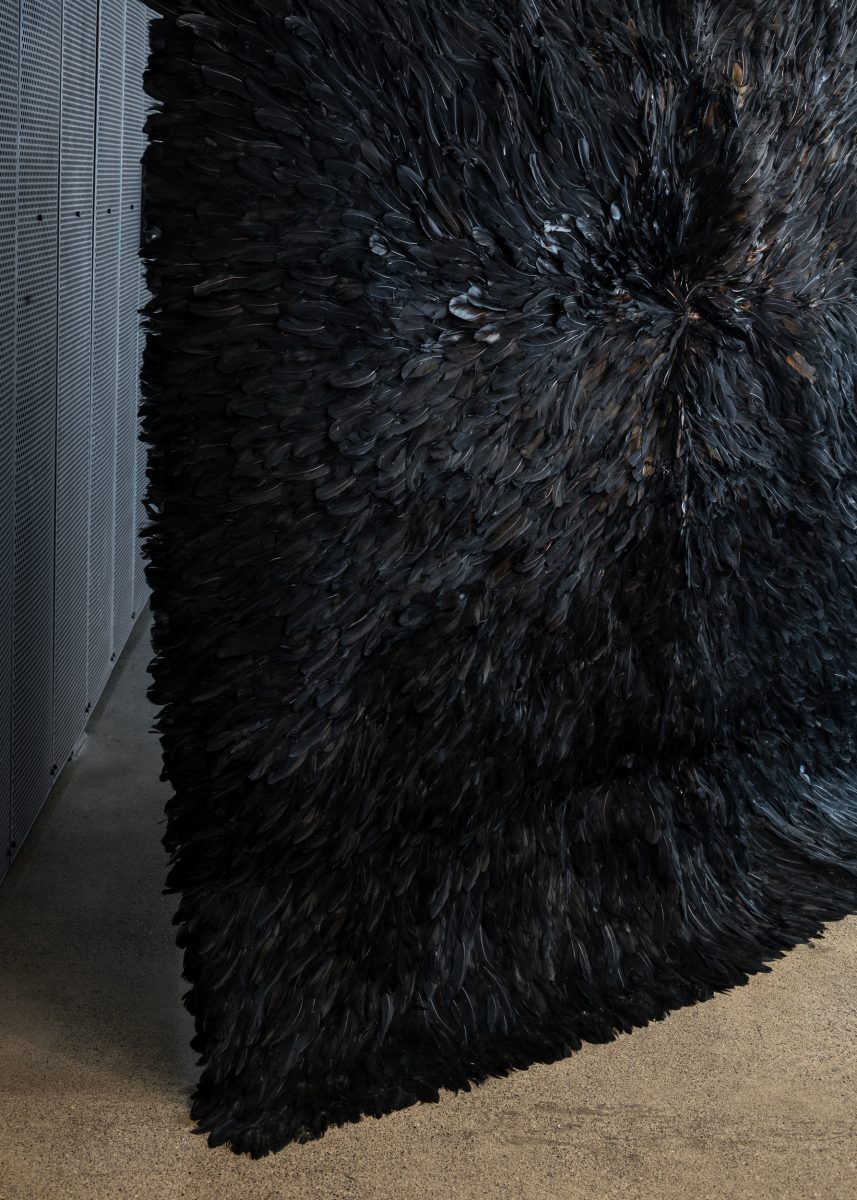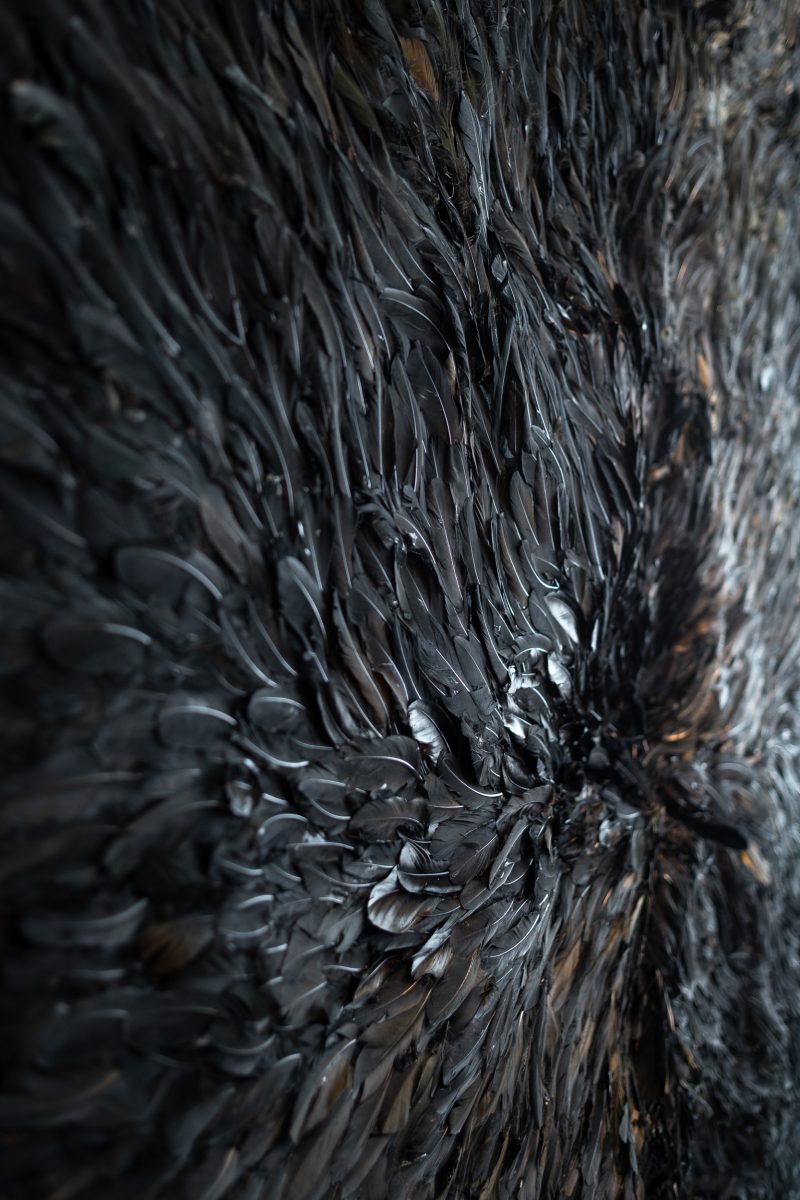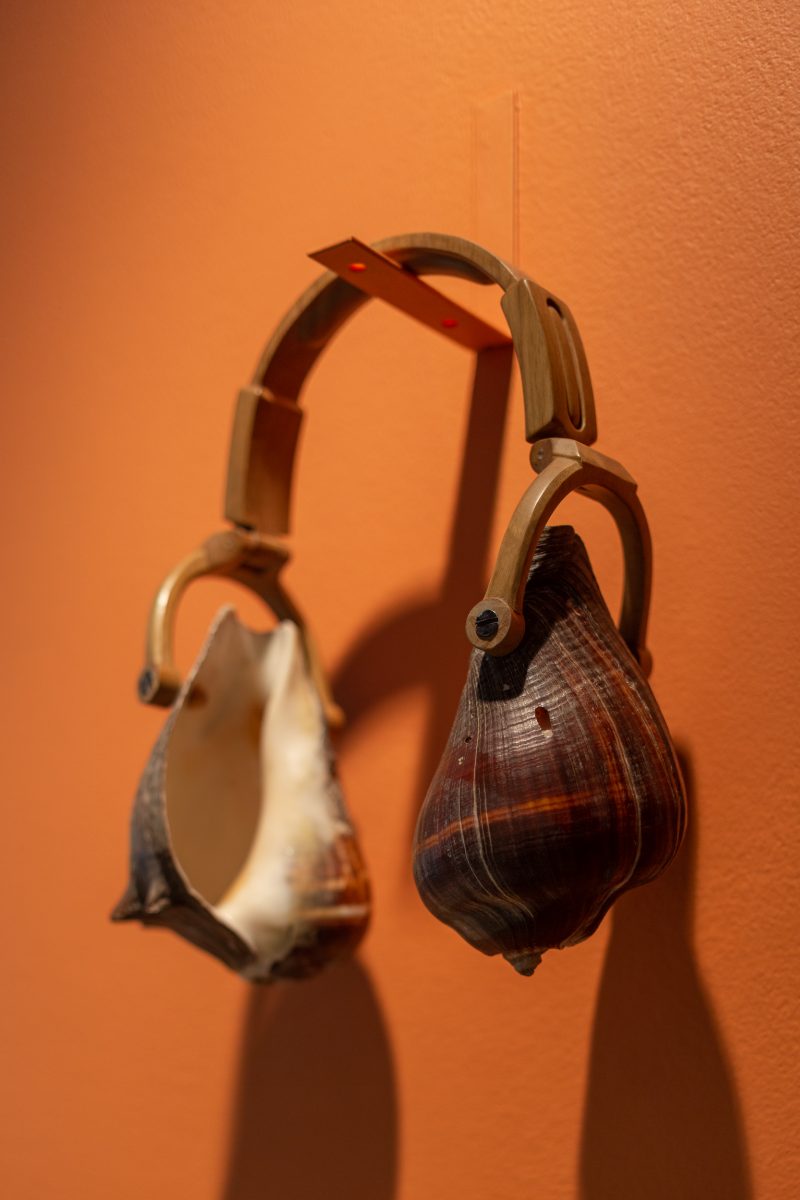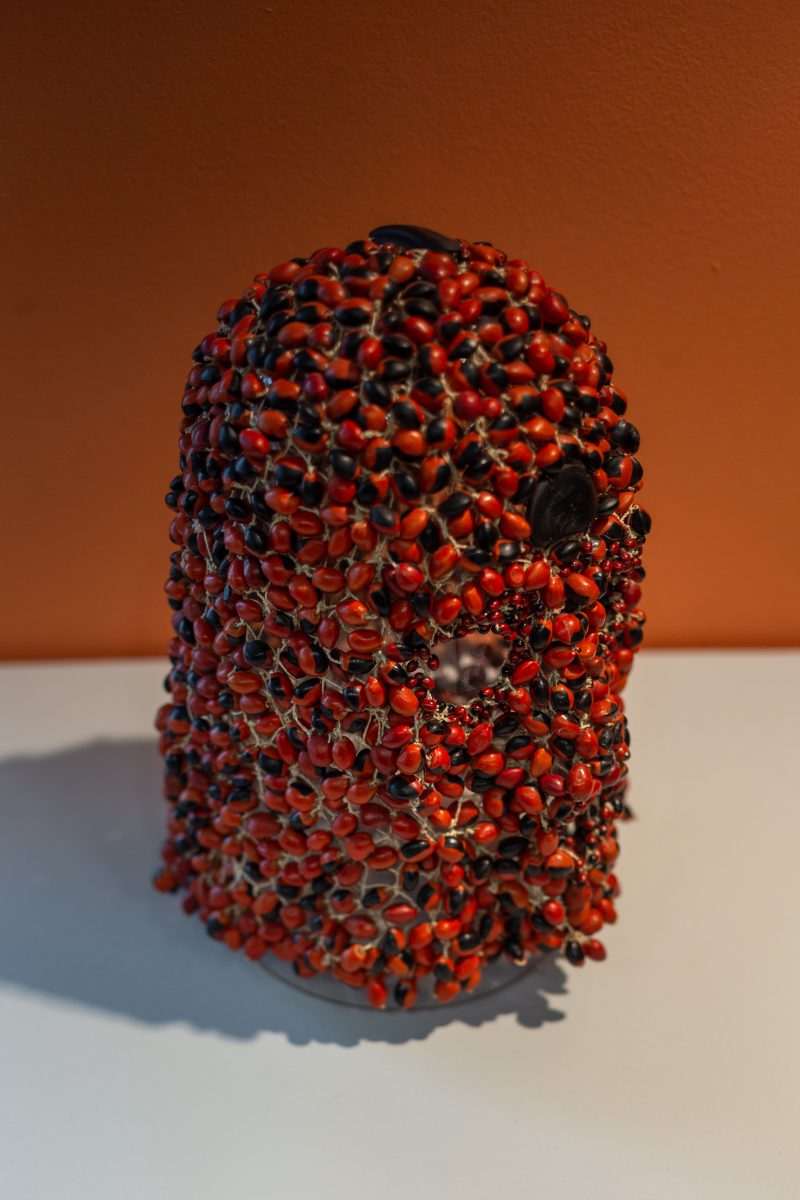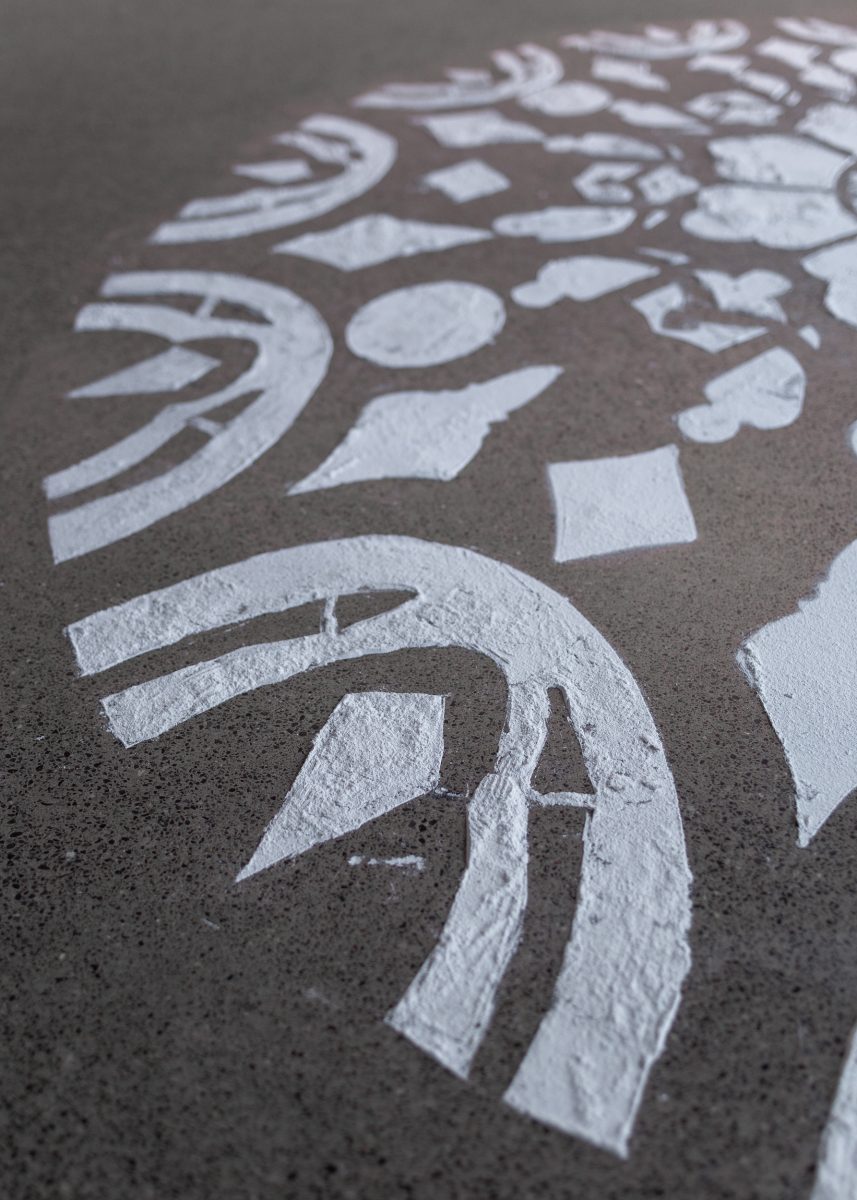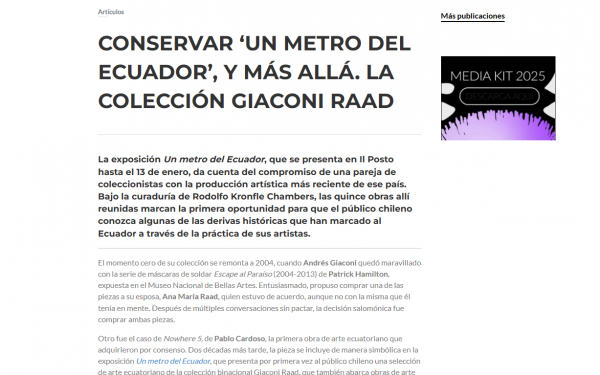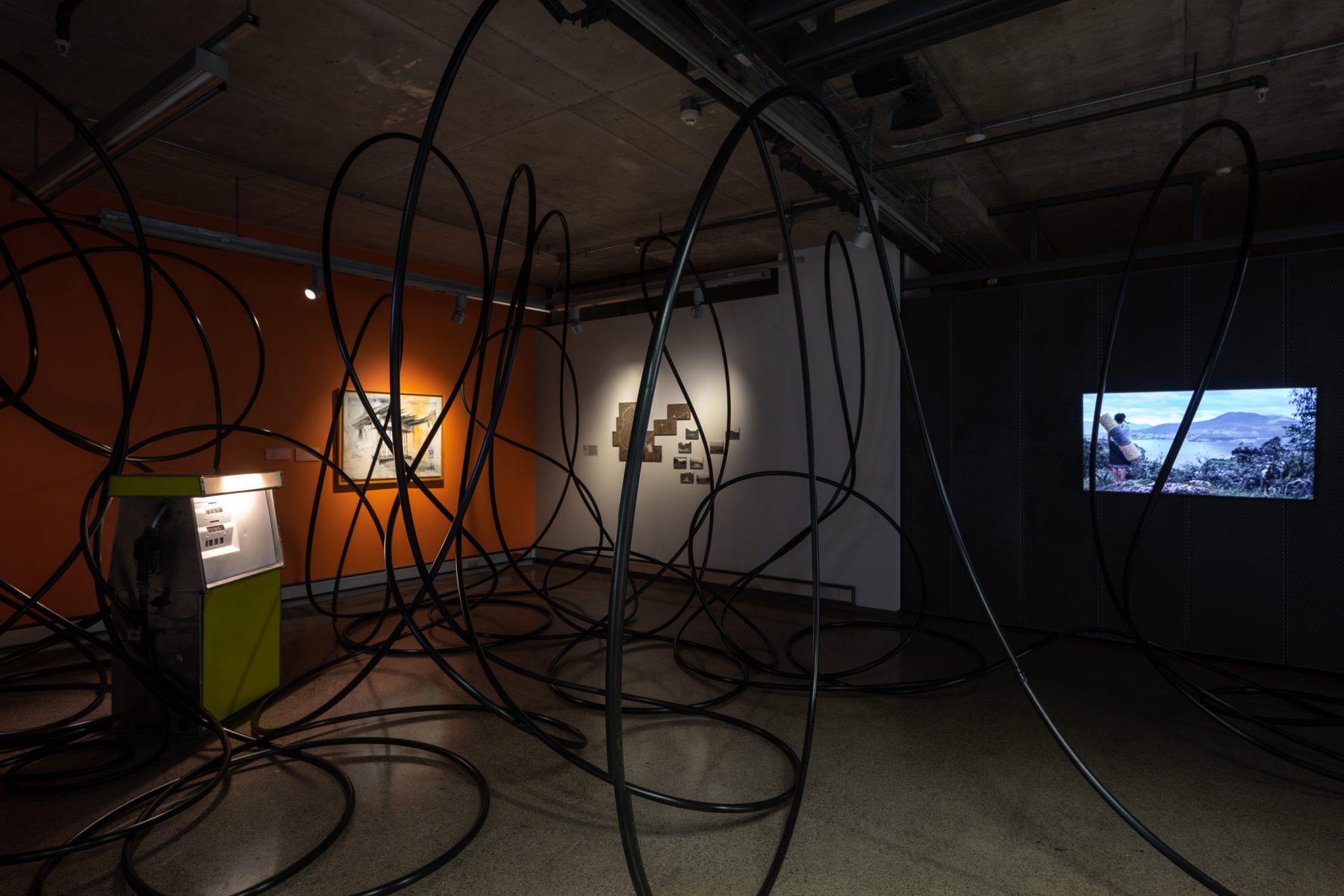
This exhibition tells a story and articulates a perspective. The perspective is filtered through the lens of a binational couple of collectors who have turned their home into the setting for an unusual gathering: there, they combine a scholarly appreciation for contemporary Chilean art from the late 1970s onwards with a close follow-up of contemporary art production in Ecuador. An invisible thread connects these productions, as both incorporate conceptual codes and a critical vocation that comments on the sociopolitical vicissitudes of their respective nations.
The Ecuadorian part of the Giaconi Raad Collection has been systematically built up over more than two decades during the couple’s frequent trips to this country, where they witnessed firsthand the development of a vibrant and complex art scene that they continue to follow closely. The tour we propose here aims to convey a little of that.
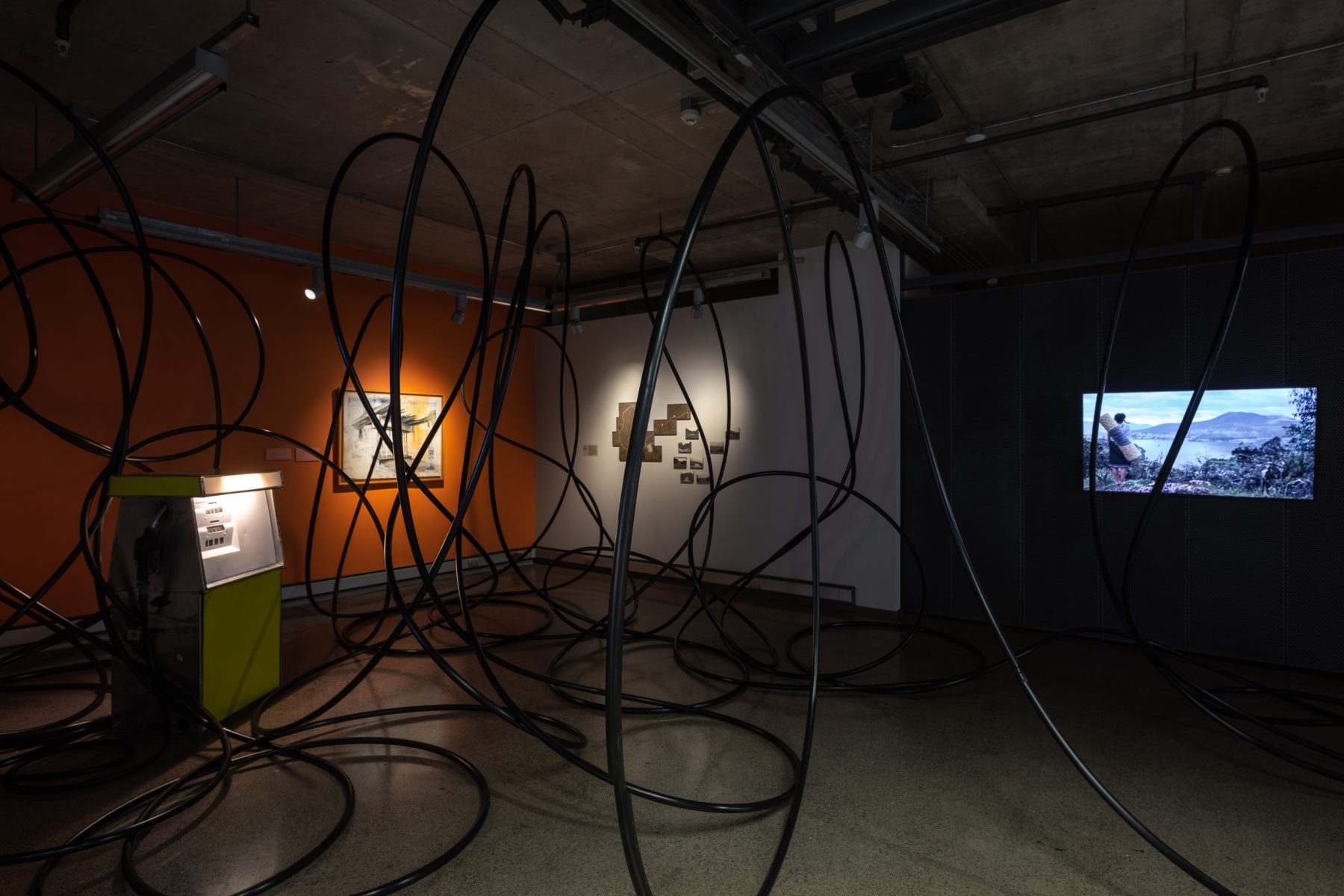
The first part of the exhibition highlights a group of pieces whose meanings are closely related to the local context and are expressed through it. The selected pieces present information related to history and landscape, through which a sense of place is created. These particular characteristics of the territory, as everywhere else in the world, play a fundamental role in the construction of a national identity; a recognizable geography that becomes the backdrop against which diverse narratives are set, dealing, in complex metaphors, with collective themes modulated from particular experiences.The second part of the exhibition, on the other hand, focuses on artists whose interests go beyond the specifics of the local, and who have instead focused on developing personal poetics that resonate with more universal aesthetic discourses and concerns.
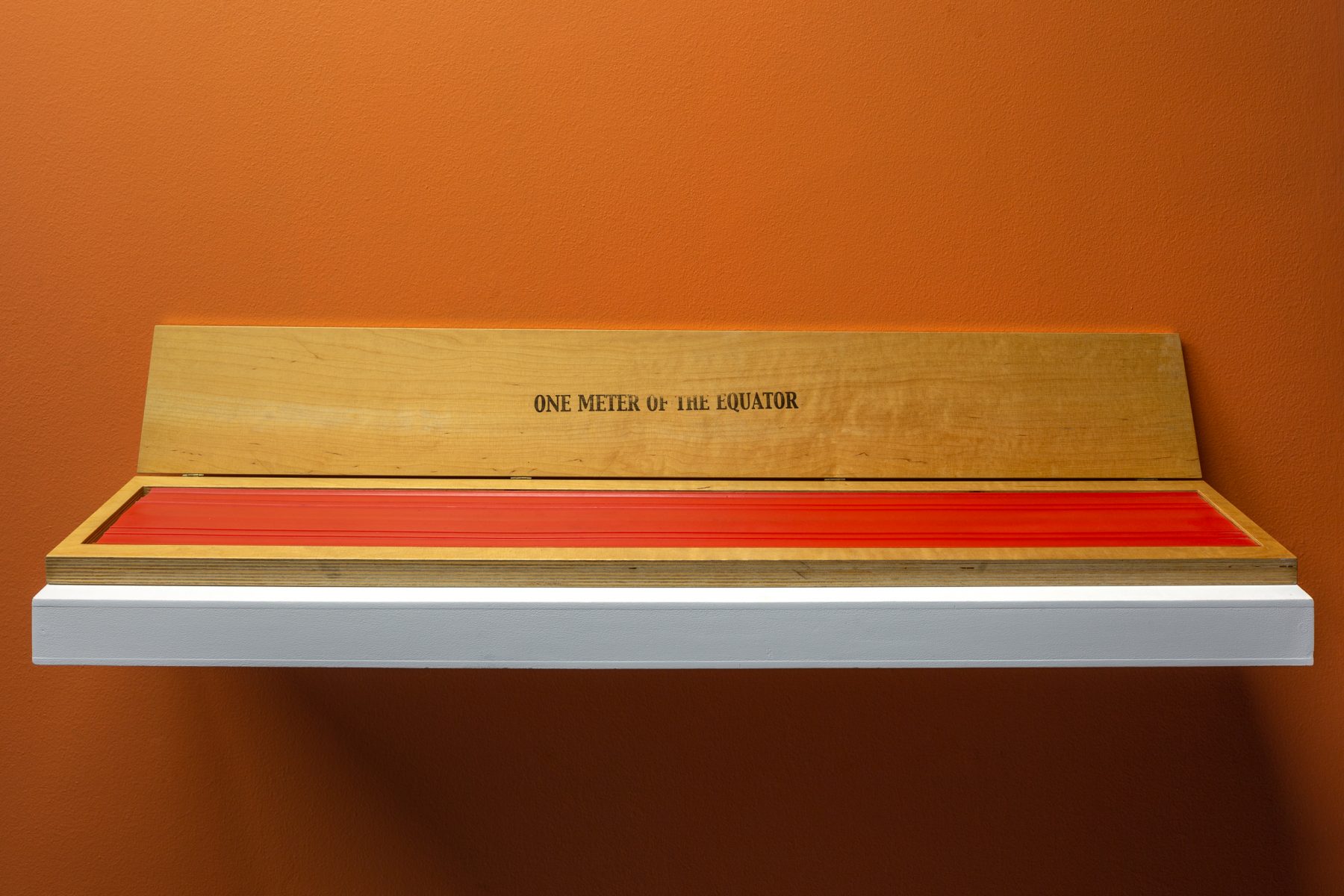
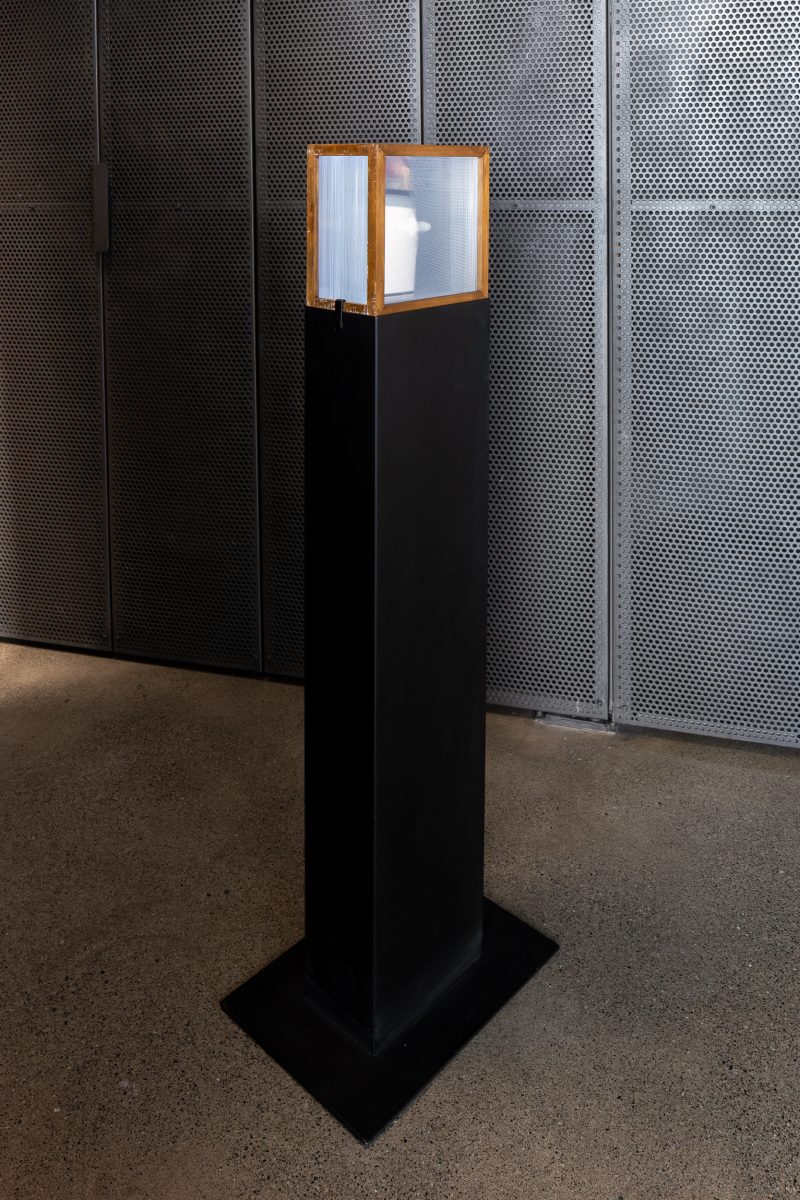
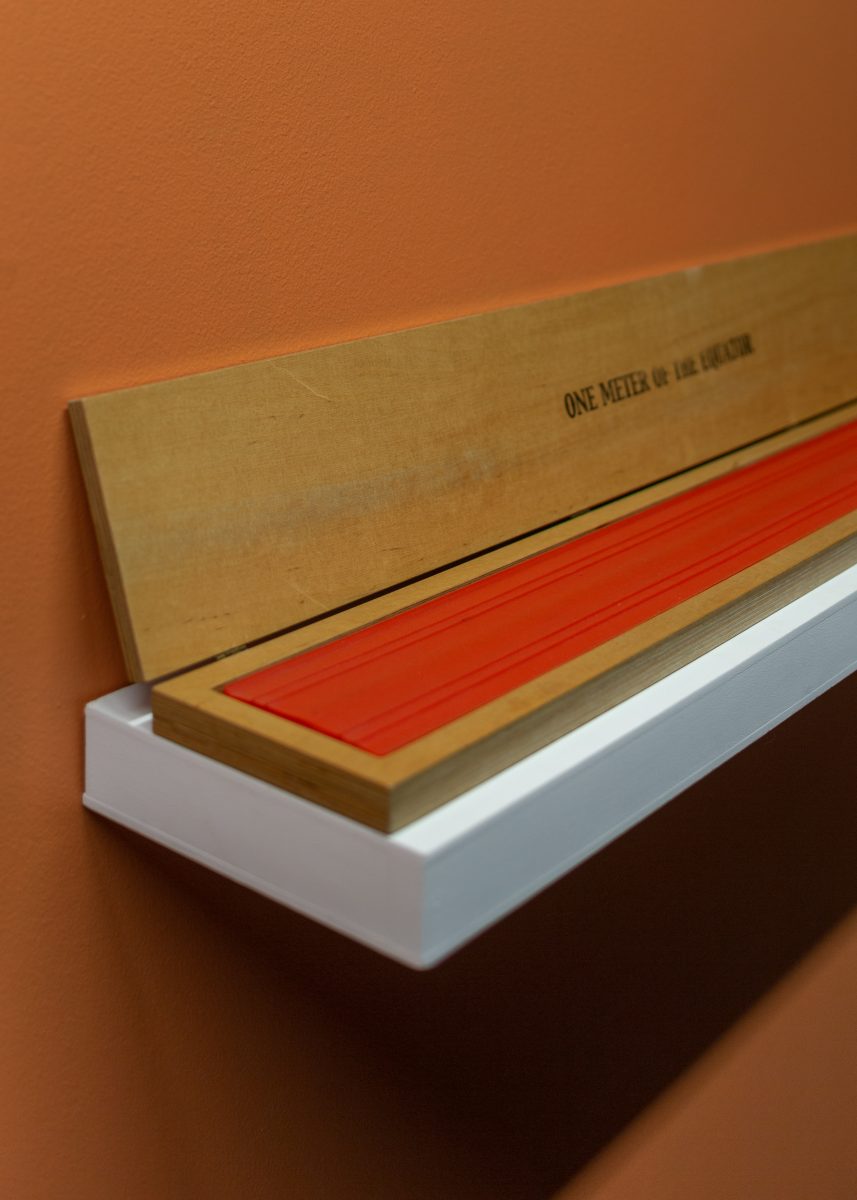
In one of her emblematic works, Manuela Ribadeneira presented boxes containing “one metre of the Equator” as if they were export products. The work alludes to that geographical feature—the imaginary line dividing the northern and southern hemispheres—which gives the country its name and is positioned in the national consciousness as its most salient feature. Inexplicably, that line is a source of pride—and a major tourist attraction—despite crossing 13 other nations… that share its poverty. Based on that title, the exhibition One Metre of the Equator is presented as an excuse to imagine other possibilities for wealth, such as those offered by cultural exchanges, which open the door for us to think collectively beyond political borders.
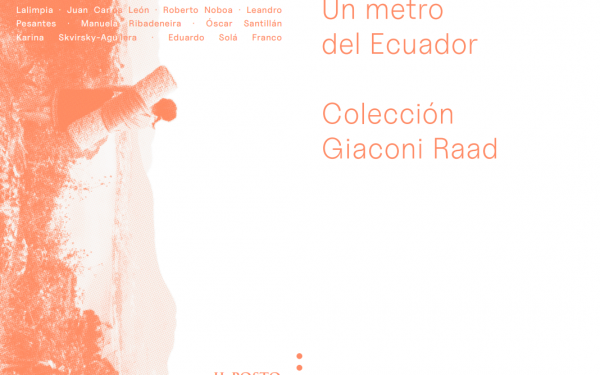
Artists: Adrián Balseca (Quito, 1989), Pablo Cardoso (Cuenca, 1965), Juana Córdova (Cuenca, 1973), Lalimpia (Guayaquil, 2002-2009), Juan Carlos León (Guayaquil, 1984), Roberto Noboa (Guayaquil, 1970), Leandro Pesantes (Guayaquil, 1986), Manuela Ribadeneira (Quito, 1966), Óscar Santillan (Milagro, 1980), Karina Skvirsky – Aguilera (Providence, 1970) y Eduardo Solá Franco (Guayaquil, 1915 – Santiago de Chile, 1996).