

Migration can be triggered by the angle of sunlight, which indicates a change of season in temperature, vegetation and food. Female monarch butterflies lay eggs along the route. Each story has more than one thread, each thread a story of division. The route is seven thousand seven hundred and seventy-three kilometres, longer than the length of this country. Monarchs flying south will no longer fly north. Each departure, therefore, is final. Only their daughters return; only the future revisits the past.
-Ocean Vuong, In the earth we’re briefly gorgeous.
In the first half of the 19th century, a couple of young German painters1Johann Moritz Rugendas and Robert Krause set out on a journey on horseback across the Andes Mountains. All we know of the vicissitudes of this adventure are fragments of letters, misplaced research and fictionalised writings. More than a century later, the Argentinean writer César Aira published his version of the events for the first time2César Aira, Un episodio en la vida del pintor viajero, Beatriz Viterbo Editora, Rosario, 2000. In the middle of the story, the author mentions that, at a certain point, this pair of travelling painters were suddenly enveloped in an air of an impossible distance. Perhaps this air of distance had been moved by the kilometres that separated them from their place of origin. Or perhaps this air, an invisible but quantifiable element, refers to the distance between the two painters and their environment, between their illustrations and their objects, or between the experience of the journey and the narration of it.
An air of distance brings together in Il Posto the work of seven artists who share the air of displacement, uprooting and impermanence. Each of the works exhibited here is enveloped in its own narrative singularity rooted in the drive to wander. They strain, each in their own way, the modern conventions of the discovery of lands and civilisations as forms of domination and purification3The ideas of the journey as domination and of the journey as purification refer, respectively, to the readings of Edouard Glissant and Claude Leví Strauss. See Edouard Glissant, Filosofía de la relación: poesía en extensión, Miluno Editorial, Buenos Aires, 2023 and Claude Levi Strauss, Tristes Trópicos, Ediciones Paidós, Barcelona, 2017. The exhibition is therefore articulated as a brief spatial essay that raises questions about the construction of the identity and imaginary of our region through the work of artists who not only illustrate and narrate, but at the same time conflict with, the experience of human transhumance.
This exhibition essay is divided into three sections. Each of them takes the form of a fold in which a hypothesis that is unveiled as a memory is addressed with singularity. The figure of the fold, which in this particular case comes from the practice and thought of the artist Eugenio Dittborn4What Dittborn proposes is that what is found in the fold is the memory of the journey. See “Bye Bye Love” Interview with Eugenio Dittborn published in Revista de Crítica Cultura N° 13, pp. 46-51, allows us to imagine a scenario in which the places and times inscribed in these sections collide, juxtapose and invert each other5Levi-Strauss’s way of referring to travel memories. See op. cit. pp. 58-59.
The first fold presents works by the artists Juan Dávila (1846), Eugenio Dittborn (1943) and Nury González (1960). In addition to sharing the nationality of their authors, these works are also related because they were produced in the 1990s. This does not mean that they are representative of Chilean art of that particular period, but I would argue that these works articulate a narrative that moves from a fiction of conquest to narratives of incomplete returns, and from which relevant reflections on global desires and their impossibilities emerge. The 1990s was the moment in which a postcolonial condition was configured from the “centres” of global contemporary art and its events. These institutional practices, in contrast to the homogenising tendency of the so-called “first” global exhibitions that developed in the previous decade, sought above all to signify the places of production6Okwui Enwezor, “Place – Making or in the “Wrong Place”: Contemporary Art and the Postcolonial Condition”, in Maria Hlavajova and Simon Sheikh (eds.), Former West: Art and the contemporary after 1989, MIT Press, Massachusetts, 2017, p. 49. It is therefore no surprise that between the explosion of international information, dissemination and communication networks – particularly those of contemporary art – and the rise of the valorisation of the singularity of places of production, the poetics of movement have become a recurring motif7Juan Martín Prada, “Arte, fronteras y nuevos nomadismos”, in Teoría del arte y cultura digital, Akal, Madrid, 2023, pp. 128-130.
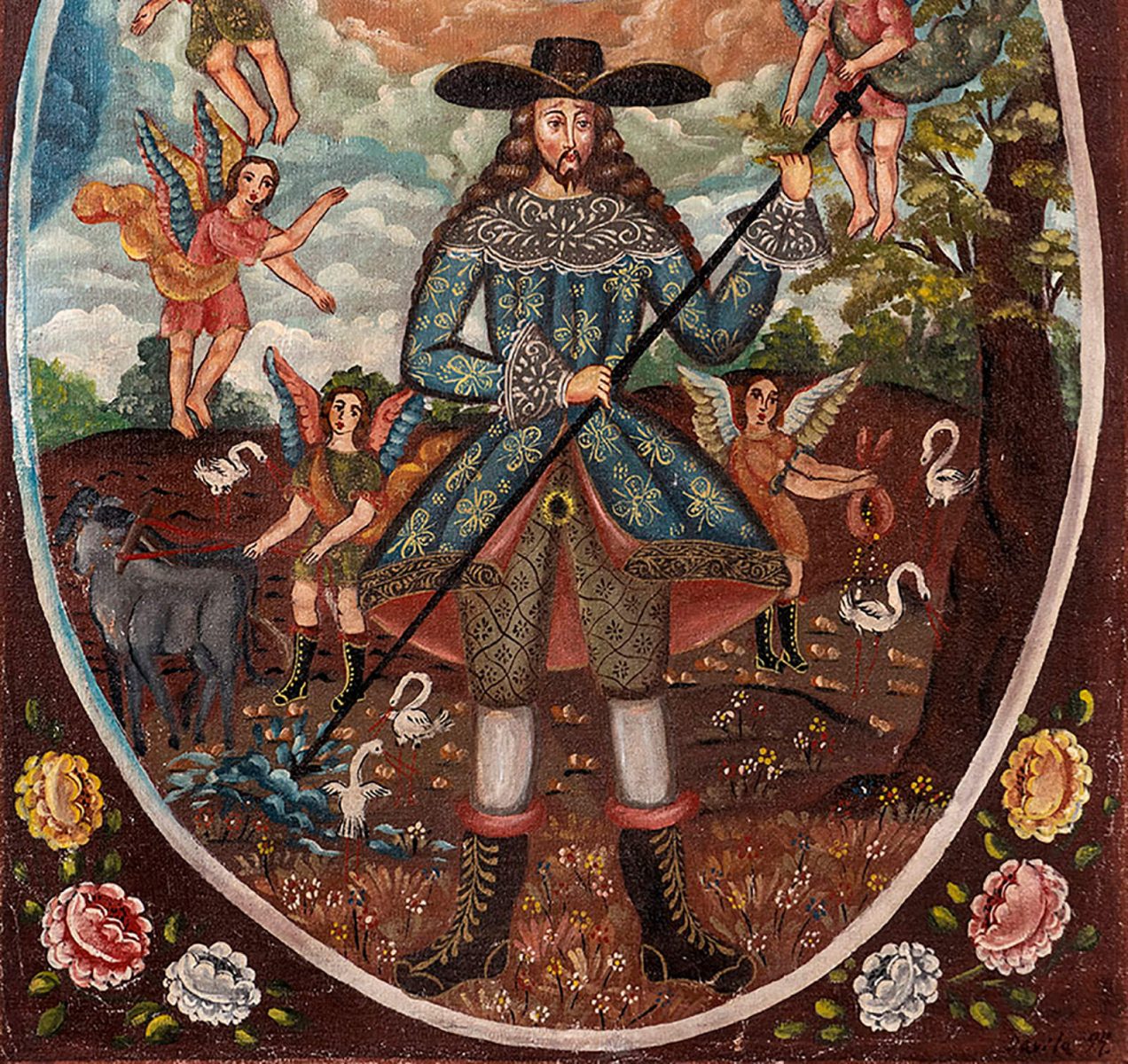
Untitled (Conquistador) (1994) by Juan Dávila, which could be considered the exhibition’s epigraph, presents us with a sort of original mythology of the western traveller. This conqueror, portrayed in the style of the colonial painting of the Cuzco School, looks at the new world he has discovered with a lost and absent gaze. He is surrounded by angels who protect and exalt him, but he has no weapon in his hands, nor a phallus between his legs8This observation was made by Josefina Lewin in the preparation of the exhibition.

Fig. 1. Juan Dávila, Untitled (Conquistador), 1994
The return to baroque aesthetics and the figure of the conqueror was a resource used by various artists in Chile and Latin America during the context of the production of this work. The dichotomy that resulted from the split between the figure of the colonizer and the colonized gave shape to various artistic manifestations, among which the reproduction of the figure of the young Fuegian whom Robert FitzRoy, captain of the Beagle, gave the name of Jemmy Button, who was captured to be taken to London in 1829 and returned to his homeland four years later, stripped of his language and customs, stood out9Carla Macchiavelo, “El darwinismo chileno: apropiaciones del sur del sur en el arte chileno de los noventa”, in Carla Macchiavelo, Magdalena Dardel, Stella Salinero Rates, Manuel Cárdenas Castro, Ensayos sobre artes visuales: A la intemperie. Recomposiciones del arte en los años 90 en Chile. Volumen VI, LOM Ediciones, Santiago, 2018, pp. 43-129. 43-129. Button’s face as portrayed by Charles Darwin is printed on Eugenio Dittborn’s Airmail Painting Return (MIA) (1993), which is displayed in the exhibition room. Alongside the reproduction of this portrait, a text briefly tells its story. In this large-format Airmail Painting, a kind of fatal and timeless correspondence is unleashed. Dittborn himself states that the only piece of cloth in the work that illustrates a happy return is the one that presents the photograph of the envelopes of other of his Airmail Paintings on their return in 1992, which “go and return in a happy manner”10Conversation between Ana María Risco and Eugenio Dittborn on the occasion of the exhibition Trabajos: 1969-2017 (Il Posto, 2017): https://www.youtube.com/watch?v=KdyIKhAERh0. The other illustrated subjects that return – lost sailors, wreckage, arctic travellers, satirical drawings and personal objects – do so in the form of death. For example, the African mask – the only image, apart from the returned Airmail Paintings, that belongs to Dittborn’s personal archive – is accompanied by a text narrating the illness and subsequent death of the artist’s sister, Alejandra, on a stopover en route from Benin back to Santiago de Chile. The mask, a gift from Alejandra to her brother Eugenio, was among other objects that returned to the country in her suitcase after her death.
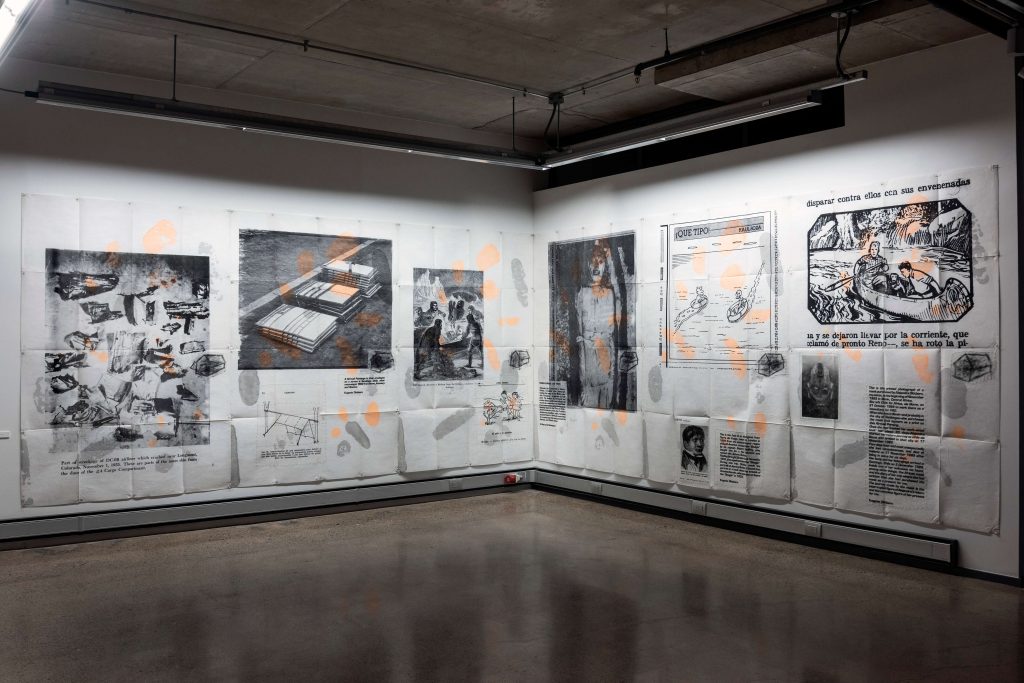
Fig. 2. Eugenio Dittborn, Retornar (MIA), 1993
This familiarly distant object evokes a similar sensation to that which unfolds in the narrative and objects that make up Nury González’s El Mercado negro del Jabón (1999), which is located next to Eugenio Dittborn’s Airmail Painting. This piece reconstructs the migration of her mother, uncle and grandmother from Spain to France through the border crossing at the Catalan coastal town of Port Bou in 1940. The same journey, made at the same time but in the opposite way, by the German philosopher Walter Benjamin, is illustrated in one of the pieces that make up the work. Benjamin, after learning that he would be deported back to Nazi-occupied France, took his own life at the Hotel Francia in Port Bou, the same place where, before leaving for Toulouse, the artist’s grandmother, Josefa Berenguer, stayed for two nights. In the last of the ten paintings that make up a fragment of González’s work, we see his grandfather, Modesto Andreu, carrying a basket of wickerwork in which he moved the soaps made clandestinely by the family in the refugee house in Toulouse. The same basket is now on the right-hand side of the work, on the floor of the room.
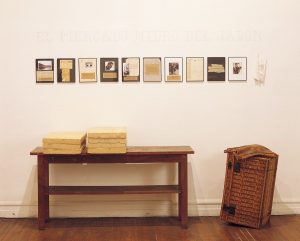
Fig. 3. Nury González, El mercado negro del jabón, 1999
In this first fold, then, the paradox of roots and returns extends. These works, diverse in their discursive and material resources, articulate a kind of image that runs through the entire exhibition: that of the exote. Willy Thayer, Chilean philosopher and academic, develops the above idea to refer to the work of Dittborn and González (among other artists):
“Exote, then, figures that which would be in no place at all; or which would be in that paradoxical non-place which is the “between… neither at the beginning, nor in the middle, nor at the end”, “beyond all immobility, finality and rigidity”, at the crossroads of many roads although far from all, in the transhumance of the felt which in each bellón overflows simultaneously in many directions, in continuous turbulence, where it is impossible to establish points of origin, sojourn and destination: the journey par antonomasia, in which everything travels mutates, varies, becomes another: another the traveller, another the road, another the journey itself; no same journey, no same traveller, no same road then”11Willy Thayer, Imagen exote, Palinodia, Santiago, 2019, pp. 10-11.
In the second fold we approach the images through winding and distant paths that border on fiction. On the borderline between portraying a series of epic figures and becoming one of them are the works of the German Johann Moritz Rugendas (1802 – 1858) and the Venezuelan artist Christian Vinck (1978). Separated by nearly two hundred years, both artists travelled across part of the American continent seeking to capture pictorially the image of the unknown, either through their bodies or their territory.
In his work La cuesta de Lo Prado entre Santiago y Valparaíso (1838 – 1942), Rugendas portrays a traveller on horseback who, on his way from the country’s main port to the capital, stops to ask directions to three people who are resting in the middle of the road. Beyond the zigzagging road ahead, the valley of the central part of the country is clearly visible, and beyond that, the Andes Mountains. For his part, between 2015 and 2016, Christian Vinck travelled and recorded in paintings and drawings the route taken by Rugendas, which is narrated in the above-mentioned novel by César Aira, entitled “Un episodio en la vida del pintor viajero”. These more than thirty-five illustrations of Vinck’s journey would be included in the publication ‘ueelvdpv’, dedicated to Rugendas’ journey and Aira’s narrative, and published by Ivorypress and the Library Council of the Museum of Modern Art (MoMA).
This artist’s book, displayed on the table in front of Rugenda’s painting, is the intermediary between the German artist’s work and the twenty-nine paintings by Vinck that make up the second chapter of his Historia no oficial de la aviación latina (2019-2020). The ensemble portrays and enumerates small underground stories of aviation in our region. The work interweaves the stories of unknown aviators who in most cases are remembered through the popular culture of each of their countries. Thus, Writers/Pilots, Filmmakers/Pilots, Musicians/Pilots, Actors/Pilots and Artists/Pilots, nourish Vinck’s anthology with fiction. The twenty-fourth number in this chapter, painted in a pasty black on a deep fuchsia, corresponds to the infantryman known as “Lieutenant Bello”, who on 9 March 1914, the day on which he was to obtain his military pilot’s certificate, disappeared in the central zone of Chilean territory without being found to this day. Hence the saying “More lost than Lieutenant Bello” is heard in the streets of Santiago when someone loses his orientation.
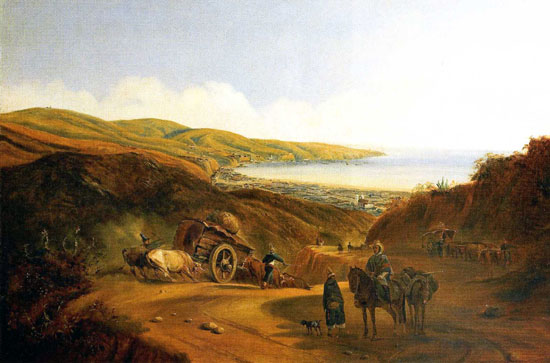
Fig. 4. Johann Moritz Rugendas, La cuesta de Lo Prado entre Santiago y Valparaíso, 1838 – 1942
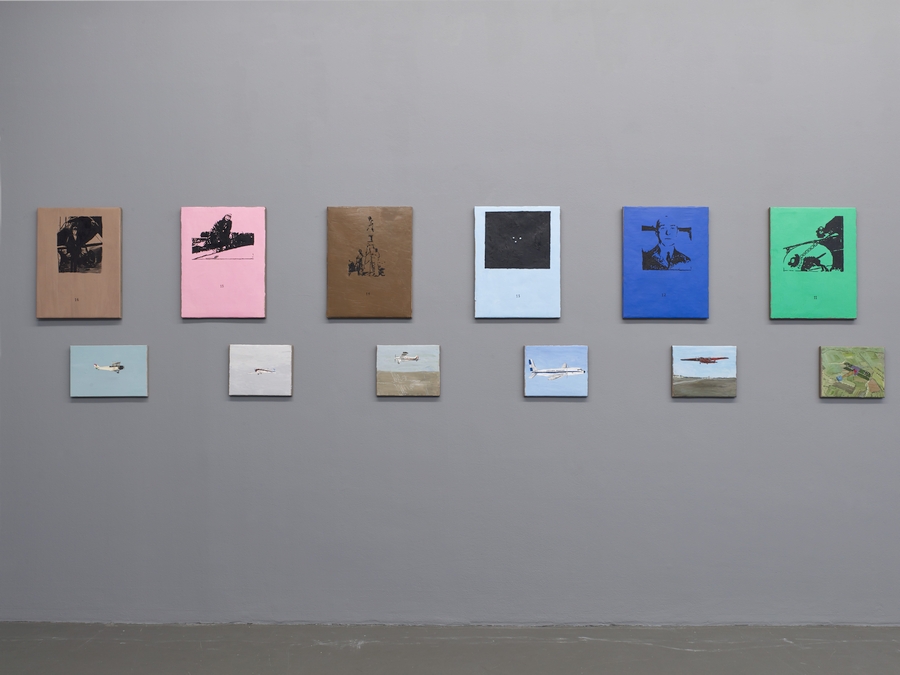
Fig. 5. Christian Vinck, Historia no oficial de la aviación latina. Capítulo 2, 2019-2020
The works of Johann Moritz Rugendas and Christian Vinck therefore allow us to enter into the journey from its place as a narrative figure12Federico Galende interviewing Justo Pastor Mellado mentions the problem of this, in the midst of a conversation about the degree of relevance of the idea of travel in Eugenio Dittborn’s Pinturas Aeropostales. See Federico Galende, Filtraciones, Alquimia Ediciones, Santiago, 2019, pp. 102-103. It is through this gaze that we can examine the literatures of travel, fantasy and scientism, in order to enter with new eyes into the narratives of explorers, discoverers and colonisers, opening doors to imagine new types of temporalities that defy the irreversible arrow of modern time13Bruno Latour, Nunca fuimos modernos: ensayos de antropología simétrica, Siglo XXI Editores, Buenos Aires, 2022, pp. 102-103.
In the third fold we find the work of the Mexican artist Teresa Margolles (1963) and the Ecuadorian artist Adrián Balseca (1989). Not only do the works of both embody and inscribe themselves in the urgent discussions on human displacement, but they themselves are constantly on the move by way of exploration and linkage with their respective case studies. In the case of Margolles, her two large-format photographs record the border situation at the Simón Bolívar Bridge in the city of Cúcuta over two periods of time. Deferred for two years, the artist’s records portray the women who transport goods on the border between Venezuela and Colombia. Carretilleras sobre el Puente Internacional Simón Bolívar (2017) portrays the women who, before the closure of the border between the two countries, were dedicated to moving these goods with wheelbarrows across the bridge. When we go around this photograph and look at its back side, we find Trocheras con Petral (2019), which shows a group of women who, since the closure of the border in 2017, have continued to transport these goods in a clandestine manner through routes known as “trochas”. In contrast to the previous image, these women no longer carry the heavy goods with their wheelbarrows, but with the strength of their own shoulders and the support of a rudimentary cloth and rope garment.
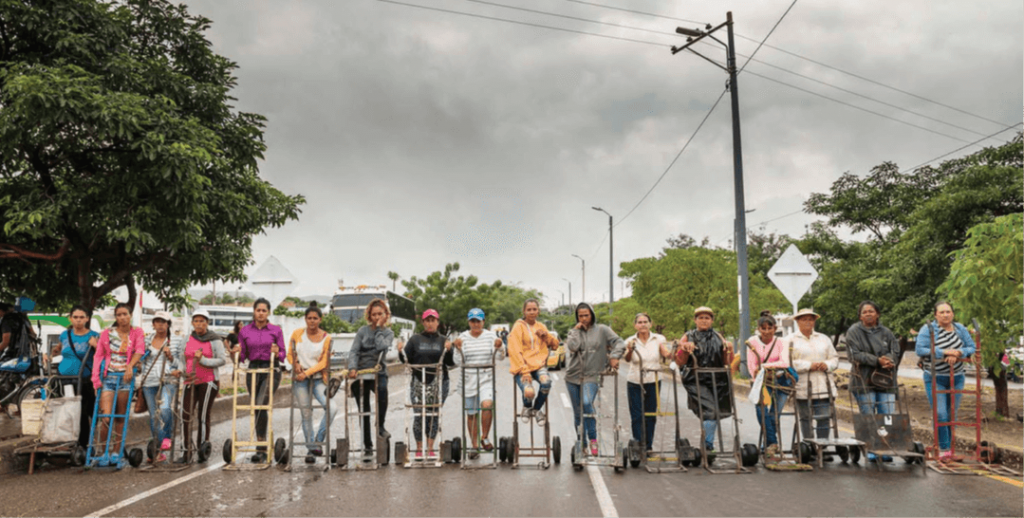
Fig. 6. Teresa Margolles, Carretilleras sobre el Puente Internacional Simón Bolivar, 2017
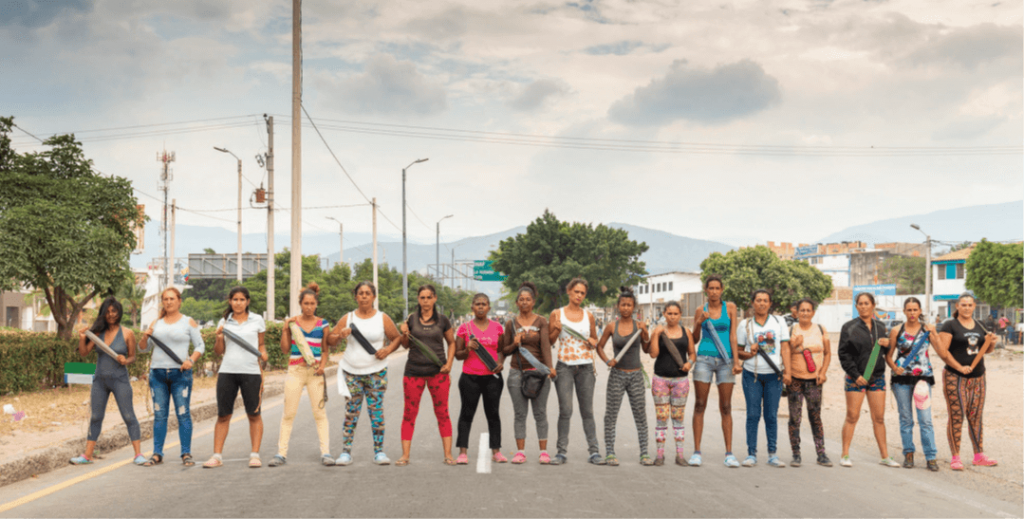
Fig. 7. Teresa Margolles, Trocheras con petral, 2019
Both Margolles and Balseca’s works reveal an altered time in a sudden action. In the case of the Ecuadorian artist, his work is produced in the context of an invitation to participate in the 34th São Paulo Biennial, curated by Jacopo Crivelli Visconti and initially scheduled for 2020. Finally, the Biennial, Though it’s still dark, I sing, opens its doors a year later than expected due to the health emergency caused by the Covid-19 virus. This unexpected confinement cut short the artist’s original plans for the occasion, and made it impossible for him to produce his work in the territory and in contact with the communities he wished to work with: those living in sectors where natural rubber is exploited. BadYear (2020-2021) is, then, the result of years of personal research into the exploitation and manufacture of rubber. Through the exploration of graphic and scientific sources, Balseca compiles an archive of documents that give an account of the ecological and social implications caused by the exploitation of the polymer, as well as its impact on popular culture. For the Biennial, the artist created a large-scale installation composed of forty tyre fragments made of natural rubber. Together they evoke in the viewer a kind of ethnological fiction. Balseca himself comments that during the process of producing the work, in the midst of the sanitary quarantine, there was a general feeling of the end of civilisation. Somehow these earthy and imprecise pieces suggest the potential ruins of a modern society that is becoming extinct14Presentation by Adrián Balseca at Il Posto Research and Documentation Centre in 2023: https://www.youtube.com/watch?v=znbtg8idWeM, the eyes of a new civilisation that observes with attention these traces converted into friezes of an expired mobility, and the beginning of a new journey.
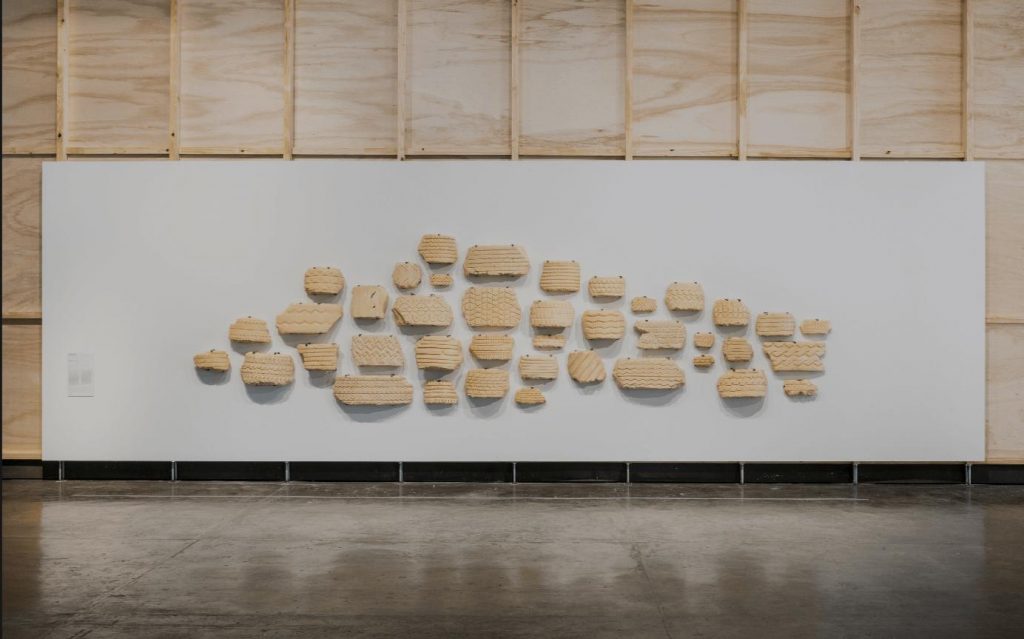
Fig. 8. Adrián Balseca, BadYear, 2020-2021


