

Current Trends in Latin American Art: Toward a Post-Indigenist Art
If we wish to better understand the work of the Maya/Kaqchikel artist Edgar Calel and the Guatemalan artist Naufus Ramírez-Figueroa, we must open up new perspectives on indigenous art, folk art, and Latin American art. The traditional interpretive frameworks used to analyze and disseminate the works of Latin American artists have allowed their artistic interventions to be contextualized within fields of observation and perception that correspond to predetermined anthropological models of global identification and territorialization; however, if we focus on the uniqueness of the work of Edgar Calel and Naufus Ramírez-Figueroa—who seek precisely to challenge these models, without thereby denying their indigenous ancestral ties and territorialities—we can see that this series of historiographical, critical, and curatorial readings is insufficient to address the “essential nature” of their practices. For this reason, by way of introduction, I will offer below a reinterpretation of the concept of Latin American folk and indigenous art. With this, I will attempt to demonstrate that, from this perspective of historiographic art analysis, a colonialist approach to appreciating the work of Latin American and indigenous artists emerges—one that leads us to easily fall into preconceived aesthetic judgments about the anthropological difference present in their practices, products, and interventions, and consequently to view them as mere testimony to the colonial indigenous past and to the symbolic and epistemic wound inflicted upon the ancestral peoples of Latin America.
The uniqueness of the works by Edgar Calel and Naufus Ramírez-Figueroa, therefore, requires us to rethink the conceptual framework that has underpinned reflections on indigenous art. Although it is clearly difficult to shed the historical and epistemic categories used to understand indigenous art and folk art, it is necessary to establish a conceptual framework that allows us to explore each artist’s experiences while also discussing certain ideas related to the concepts of artwork, author, and technique—without relativizing the ancestral traditions and symbols that define their works.
That said, many authors have explored the vicissitudes of Latin American art, particularly the place of indigenous art and its relationship to universal history and modern, Eurocentric art theory. The contributions of Ticio Escobar and Gerardo Mosquera are especially relevant to this inquiry: to a certain extent, it is possible to argue that the texts of both authors offer reflections that define the aesthetic categories of folk and indigenous art based on the singularity and difference of their practices; however, ultimately, their modernist insistence shifts the entire colonial-epistemic burden to the opposite position, identifying Latin American art as the “other” of global art, despite its recognition within the international art circuit1See Ticio Escobar: El arte en los tiempos globales. Tres textos sobre arte latinoamericano, Editorial Don Bosco: Asunción, 1997; Gerardo Mosquera: “God-bye identidad, Welcome diferencia: del arte latinoamericano al arte desde América Latina. Arte en América Latina: Tránsitos globales”, Arte en América Latina y Cultural global, Facultad de Artes-Universidad de Chile: Santiago de Chile, 2002.. Along these lines, one of the central themes that both Escobar and Mosquera establish to define Latin American art in general—as well as the relevance of folk and indigenous art in particular—is the categorical contrast with a certain historical and aesthetic conception of art that is modern, Eurocentric, and universal. Already in his early writings, the first of these authors offers a definition of Latin American and Indigenous art that points in this direction—a definition he would continue to defend throughout his career as a curator and art critic:
“In general, we consider aesthetic phenomena as expressions of their own historical conditions and analyze cultural conflict as the imposition of new norms or as the assimilation of those norms in the context of a distinct cultural development […] we do not intend to present a general overview of precolonial indigenous artistic production. We are interested only in understanding it in terms of its essential characteristics so that we may then contrast it with the culture imposed by the conquest and subsequent systems of Creole colonization”2Ticio Escobar: Una interpretación de las artes visuales en el Paraguay, Servi Libros: Asunción, 1982, 1984, re-edición, 2007, pp. 13 y 18. Translated by the author. .
This definition of Indigenous art, based on its contrast with Western mechanisms of colonization and acculturation, has made it possible, on the one hand, to understand its aesthetic uniqueness in relation to its cultural difference and its radical departure from the idealistic categories of Eurocentric art—which in turn enabled the reinterpretation of Indigenous art beyond mere decorative and substantialist appreciation. However, on the other hand—and this is where the contradictory aspect of these critical analyses lies—that same definition has restricted the possibility of conceiving this singularity through its own cosmological categories. Although Ticio Escobar interprets and conceives of popular indigenous art by highlighting its capacity for “abstraction”—rich in cultural and communal meaning—his reading reveals that the aesthetics of popular indigenous art lack a theoretical conceptualization of their own. This means that indigenous art remains a primarily ethnographic expression, studied and understood primarily through the categories of Cultural Studies and its academic aspects3See Nelly Richard: “La globalización académica de los estudios culturales y su recepción en América Latina”, Arte en América Latina y cultura global, Rebeca León (comp.), LOM ediciones: Santiago de Chile, 2022, pp. 151-166 , rather than through the recursive materiality of a local, technical, and cosmological art form.
It is evident, then, that the material and cosmological difficulties of a post-indigenist art are the very complexities inherent in Latin American art. This is true not only because it has historically been assumed that Latin American art is the modernist mourning of precolonial communal practices, stemming from the processes of cultural homogenization that the nascent nineteenth-century nations imposed on pre-Columbian peoples4See Ivonne Pini: En busca de lo propio. Inicios de la modernidad en el arte de Cuba, México, Uruguay y Colombia, 1920-1930, Universidad Nacional de Colombia: Bogotá, 2000; Jorge Alberto Manrique: Una visión del arte y de la historia, Universidad Nacional Autónoma de México/Instituto de investigaciones estética: México, 2001; Gerardo Mosquera: arte desde América Latina (y otros pulsos globales), Ediciones Cátedra: Madrid, 2020; Carolina Pavez: “Retraso o diferencia del arte modernista latinoamericano. Francisco Brugnoli: ¿Un arte pop?, Panambí. Revista de investigaciones artísticas, Valparaíso, 7, 2018, but also because, perhaps much more explicitly, it seems more plausible to rethink the position and relevance of Latin American art in light of the processes and mechanisms of globalization, within the framework of which the relationship between national identity and cultural difference commodifies and disseminates the originally fragmentary nature of culture in Latin America. This suggests that post-indigenist art is an attempt to understand the local artistic practices of peoples historically displaced by capitalist modernity as a technical diversity within a cosmos, rather than simply conceiving them as dichotomous ethnographic and aesthetic expressions defined by their colonial difference. From this perspective, these practices represent, even more so, unique cosmological experiences that have been ancestrally embedded in millennia-old modes of production and technical applications. They are not, therefore, understood based on a mere alignment between local artistic practices and global, profitable, and communicable aesthetic categorizations of difference—categorizations rooted in the capitalist-cognitive overexploitation of resources derived from deconstruction and Lacanian psychoanalysis.
The dichotomous relationship between Latin American art (the local) and strategic art and cultural industry (the global) is, therefore, an idea that would need to be rethought based on broader frameworks of understanding for local practices. In this regard, Escobar himself notes the following:
“In the pursuit of respect for multiculturalism, our present boasts of having renounced its attempts to construct grand syntheses capable of unifying our understanding of reality. However, the articulating drive that pushes forcefully toward the concentration of symbolic resources establishes a uniform, smooth, global landscape. In this space, devoid of irregularities and boundaries, it is difficult to recognize otherness, despite its being so forcefully proclaimed. And from there, it becomes difficult to make out the strange images flickering beyond the edges and to distinguish the “barbaric” paths that advance against the current of the Enlightened course”5Ticio Escobar: El arte en los tiempos globales. Tres textos sobre arte latinoamericano, Editorial Don Bosco: Asunción, 1997, pp. 55. Translated by the author..
The ethical dimensions of art—those related to the recognition of otherness and the reconstruction of an autonomous territorial reality, among other issues—shift the reflection on the relationship between cosmology, technique, and the ancestral nature of indigenous art toward a cultural problem linked to the recognition of identity and its misalignments with modernity, reducing the deconstructive power of ancestral wisdom to a powerless, spectral awareness of exotic practices. Latin American art, conceived in this way, is constantly being filtered through its textualization and the interweaving of signs that organize reality; this means that the problems of its definition and singularization are not only a consequence of the symbolic fragmentation the continent is experiencing with the advance of global capitalism, but also of the disintegration of the univocal meaning once evoked by a local grammatology. This way of understanding Latin American art as a persistent struggle to safeguard its complex universality—the insistence that it is still an art of “the Latin American,” an art about a particular place—discards the possibility that what is being expressed is precisely the very aspiration toward a radical otherness.
However, continuing to try to adjust or recover the modern spirit as a possibility for Latin American art in the face of the overwhelming postmodern experience of advanced cultural capitalism—as Jameson deciphered it6See Fredric Jameson: El posmodernismo o la lógica cultural del capitalismo avanzado, Paidós: Barcelona, 1991.—is fruitless and illusory. This is clearly reflected in the mechanisms of performance and individualization that global art circuits have developed to commodify difference. In a way, Gerardo Mosquera teaches us to recognize these diffractions and complexities:
“The new attraction of cultural centers toward otherness—a hallmark of global fashion—has allowed for greater circulation and legitimization of art from the peripheries. But all too often, the works that explicitly highlight difference or satisfy expectations of exoticism have been valued […] Autoexoticism underscores a hegemonic framework, but it also reveals the passivity of the utterly complacent subject, or at best indicates a media-driven initiative […] If there is a danger of self-exoticism as a reaction to circuits that demand ‘primitivism’ and difference, there are also its opposites: abstract cosmopolitanism, which flattens differences, and mimetic ‘internationalism,’ which forces the use of a sort of ‘postmodern international language’—akin to an ‘art English’ that functions as the lingua franca of the ever-increasing number of biennials and international exhibitions. The fact that artists from the four corners of the globe exhibit internationally signifies, in and of itself, only a quantitative internationalization. The question lies in how much they are contributing to transforming a hegemonic and restrictive status quo into true diversification, rather than being absorbed by it”7Gerardo Mosquera: “God-bye identidad, Welcome diferencia: del arte latinoamericano al arte desde América Latina. Arte en América Latina: Tránsitos globales”, Arte en América Latina y Cultural global, pp. 126-128. Translated by the author..
The “self-exoticism” Mosquera refers to is a symptom of neoliberalized art—that is, art that privatizes creative capacities while maintaining them within the simulations of political art or cultural criticism. An art that, ultimately, succeeds in commodifying “the Latin American” so that local artists can capitalize on their “I-work” through difference. Thus, the key concept that will guide this essay is not that of “diversity”—the “diversification” of “the Latin American” in art through the artist’s “I-work”—but rather that of recursivity. This means, first and foremost, understanding art as the self-elaboration of a cosmological space.
Jaguar Cosmos. Technodiversity and Ancestrality in Edgar Calel.
Earth and Cosmotecnics: Rediscovering Primordial Magic
Edgard Calel’s work is imbued with an anthropological and poetic character that invites us to rethink the very notion of indigenous art. Rather than relativizing the maternal forms of identification that the artist establishes with his community—his environment, his land, his air, his world—Calel’s work demands a disidentification from the traditional meaning of indigenous art. For this reason, in what follows, we will attempt to explore the relationship between recursion, locality, and technique, considering that, due to their cosmological power, Calel’s works challenge certain universal and homogeneous forms of aesthetic interpretation. This transfiguration of his practice is practically radical, to the point that the artist himself distances himself from the figure of the traditional artist—a modern, European figure who is, incidentally, entirely alien to the notions of aesthetic complementarity established by his worldviews. Calel prefers to identify with the Nahual term no’j, which refers to that transmutation that represents “knowledge, wisdom, and understanding” of his ancestors’ worldview8Agustín Pérez Rubio: “Sanar sobre campos de batalla. A propósito de Sueños guardados en granos de maíz de Edgar Calel”, la_Oficina: Madrid, 2025. https://laoficinagaleria.com/exposicion-6. Therefore, referring to Calel’s interventions and recreations as “artistic practices” seems somewhat imprecise. Rather, they should be understood as an exercise in ongoing cosmological translation activated within his practice—that is, as a “cosmotecnica.”
If we return to the definition of “cosmotecnica” offered by the Chinese thinker Yuk Hui, we can discern an intertwining of art, technique, and cosmos that allows us to delve more deeply into Edgar Calel’s aesthetic exploration. Following this author, the concept of cosmotechnique could be defined as follows: technique is anthropologically universal, but that does not mean that the world’s diverse communities employ the same technique in their cosmological relationship to realize their common goals. Therefore, “cosmotecnica is the unification of the cosmic order and the moral order through technical activities […] it immediately provides us with a conceptual tool with which to overcome the usual opposition between technology and nature and helps us understand the task of philosophy as the search for and affirmation of the organic unity between the two”9Yuk Hui: La pregunta por la técnica en China. Un ensayo sobre cosmotécnica, Caja Negra: Buenos Aires, 2024, p. 34. Translated by the author. .
Another characteristic of cosmotecnica, complementary to this definition, is that, “in the primitive magical moment,” its “original form […] branches into techniques and religions, and in this branching, the two maintain a balance with one another in a constant effort to achieve unity”10Hui: La pregunta por la técnica en China, p. 35. Translated by the author.. Thus, what defines a cosmotecnica is that it establishes a relationship between cosmology and technique: a relationship that is not an instrumental link for governing or dominating entire communities through religion, but rather a way of understanding that the multiple activities of a community, in aesthetic and moral terms, are organized by techniques of assembling meaning.
In relation to the latter, it is important to note that each cosmotecnica is based on a relative perceptual difference from the universal idea of technique: monotecnica. The relativization of this universal, modern, Western, and European concept of technique gives rise to a multiplicity of cosmotecnological relationships, which allows us to conceive of a “tecnodiversity.” This concept is based on an understanding of technical development underpinned by a technological difference. It follows that “every non-European culture must make the effort to systematize its own cosmotecnica and reconstruct its history”11Yuk Hui: Fragmentar el futuro. Ensayos sobre tecnodiversidad, Caja Negra: Buenos Aires, 2020, p. 60. Translated by the author., a process that requires various readily available elements that a human group can deploy. The central issue is that the idea of technodiversity entails a deconstruction of “monotechnical” universality and its mechanisms for associating natural elements with cultural elements. This link is diverse, and never monotechnical.
Now, another key point to consider when defining technodiversity is the relationship between art, technique, and locality. “Technique in the sense that art can also open up the possibility of technique by providing the imagination with a technodiversity”; and, on the other hand, “locality in the sense that […] reopening the question of the unknown through technique amounts to affirming the irreducible difference between the multiplicity of modes of thought (aesthetic, technical, moral, philosophical, etc.) in different cultures and territories”12Yuk Hui: Arte y cosmotécnica, Caja Negra: Buenos Aires, 2025, p. 76. Translated by the author.. In this way, art situated between technology and locality assumes the role of establishing cosmological forms of connection as a technique for exploring the unknown. This also involves conceiving of an original magical relationship —following Simondon13See Gilbert Simondon: “Tercera parte. Génesis y evolución de los objetos técnicos”, El modo de existencia de los objetos técnicos, Prometeo Libros: Buenos Aires, 2007.— in which cosmology is indistinguishable from the cosmotecnology that makes it possible and perceptible, since cosmology is part of the daily lives of those who develop it technically. Therefore, art, after its aesthetic-idealistic journey, returns to the earth to devote itself to the formation of elements of a greater “metaphysical unity.”
This return to earth is one of the central elements that allow us to consider the blurring of the lines between art and technique and, in doing so, to deepen our understanding of Edgar Calel’s works. This is not a mere ethnographic return to an artist’s ancestral roots, but rather the reconstruction of a “metaphysical unity […] a union of theory and practice or, to be more precise, a way of life that maintains the coherence (if not necessarily the harmony) of a community”14Hui: La pregunta por la técnica en China, pp. 47-48. Translated by the author. . This invitation is openly expressed in Calel’s work, although his aspirations go far beyond that. A return to the earth, in his case, means returning to the magical moment of cosmological unity where the separation between the general tasks of his ancestors, the spiritual techniques for interpreting the environment, and his communication with nature were neither dissociated nor exhausted by modern rational dichotomies.
Edgar Calel’s work can thus be interpreted as a kind of aesthetic inquiry into the premodern. However, the performativity of his approach and the aesthetic variations in his installations invite us to view his works as cosmotecnical explorations—understood as metaphysical recreations of both his symbols and his modes of connection to them—and to consider how, at the same time, this recreation alters both the extractivist capitalist reality that has historically plagued the Maya peoples of Central America and colonial history itself. It is precisely this interpretation that we can apply to the work Suspiro de Jaguar (RU KUXLAB’EL RI B’ALAM) (“Jaguar’s Sigh”) (2025) (Fig. 1), which the Il Posto Foundation included in its fall 2026 exhibition, titled Museo Temporal. In this performance, we can observe how the figure of the jaguar takes over Edgar Calel’s body to symbolize the protective role this animal has historically played for the Maya peoples15See El libro de los libros de Chilam Balam (Textos sagrados mayas), Fondo de Cultura Económica: México, 1948. p. 9. If we consider the magical horizon inherent in all cosmotecnics, Suspiro de jaguar would not be a performance in the strict sense, but rather an animal-human transmutation that highlights the millennia-old presence of the jaguar in Mayan communities. This millennia-old bond should not be understood as a relationship of domestication. Quite the contrary: when Calel decides to transmute himself into a jaguar, what he is recreating are the systems of care, protection, and security that the Maya peoples maintained in relation to their non-human environment. In other words, he adopts the jaguar’s perspective. This leads us to ask whether human beings can indeed adopt non-human perspectives. For the Maya peoples, this cosmo-technical transformation is entirely familiar, the result of their millennia-long symbiotic and magical coexistence with their non-human environment—as demonstrated by the “nahuales”16See Roberto Martínez Gónzalez, “el nahualli y lo no-humano”, en El Nahualismo, UNAM-Instituto de investigaciones histórica, México, p. 510..
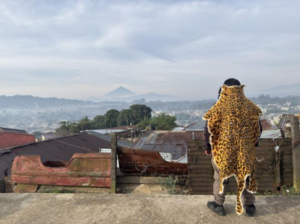
Figure 1. Edgar Calel, Suspiro de jaguar (RU KUXLAB’EL RI B’ALAM), 2025. Il Posto Collection.
The jaguar’s cosmos also invites us to confront the colonial diatribes that, in the first instance, led to the widespread hunting of the jaguar due to its resistance against the conquering powers, which, for their part, portrayed it as an aggressive and exotic animal. The transmutation, then, is twofold: on the one hand, there is the recreation of the jaguar that cares for its people; and, on the other hand, there is the jaguar that demands its symbolic re-territorialization in the face of the extractivist symbols deployed by Eurocentric reason. This can also be seen in the interventions carried out by Calel at the Museum of Modern Art in São Paulo (Fig. 2), as part of the 2020 São Paulo Biennial, and at the Reina Sofía National Art Center in Madrid in 2025 (Fig. 3). In São Paulo, the artist walked through the Biennial pavilion transformed into a jaguar, in an intervention he titled Xar (Sueño de obsidiana) (“Obsidian Dream”). Meanwhile, at the Reina Sofía, the artist carried out a similar intervention alongside his brother, Julio Calel—a collaboration that is of utmost importance in several of his works, reflecting the familial, collective, and collaborative nature of his “artistic” practice. Between the two brothers, the jaguar’s transformation took the form of a protective pack, which sought—like all their other interventions—to assert the importance of the jaguar as a post-aesthetic cosmology.
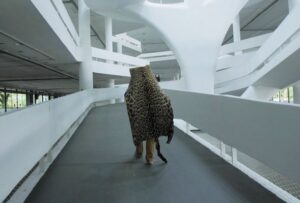
Figure 2. Edgar Calel, Xar (Sueños de obsidiana), 2020
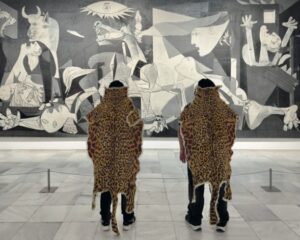
Figure 3. Edgar Calel, Sueños guardados en ganos de maíz, 2025
Technodiversity of Local Worlds
All cosmotecnics presupposes a technodiversity. This means that, while technique, art, and cosmos are not differentiated in a people’s communal life—thanks to the magical metaphysical unity that precedes them—the procedures for generating cosmological meaning are diverse within the ontology of technique and respond to the uniqueness of each human group in its effort to preserve a sense of everyday life. The fact that technology is universal does not mean that all forms of worldview that may exist—and that continue to exist—universally develop the same notion of technology, much less the modern European “monotechnology.” If we adopt Yuk Hui’s definition, technodiversity is the plurality of modes of existence of technical objects, which allow us to differentiate the relationships between humans and non-humans. These relationships imply singularity and locality, as well as transformations and shifts in meaning.
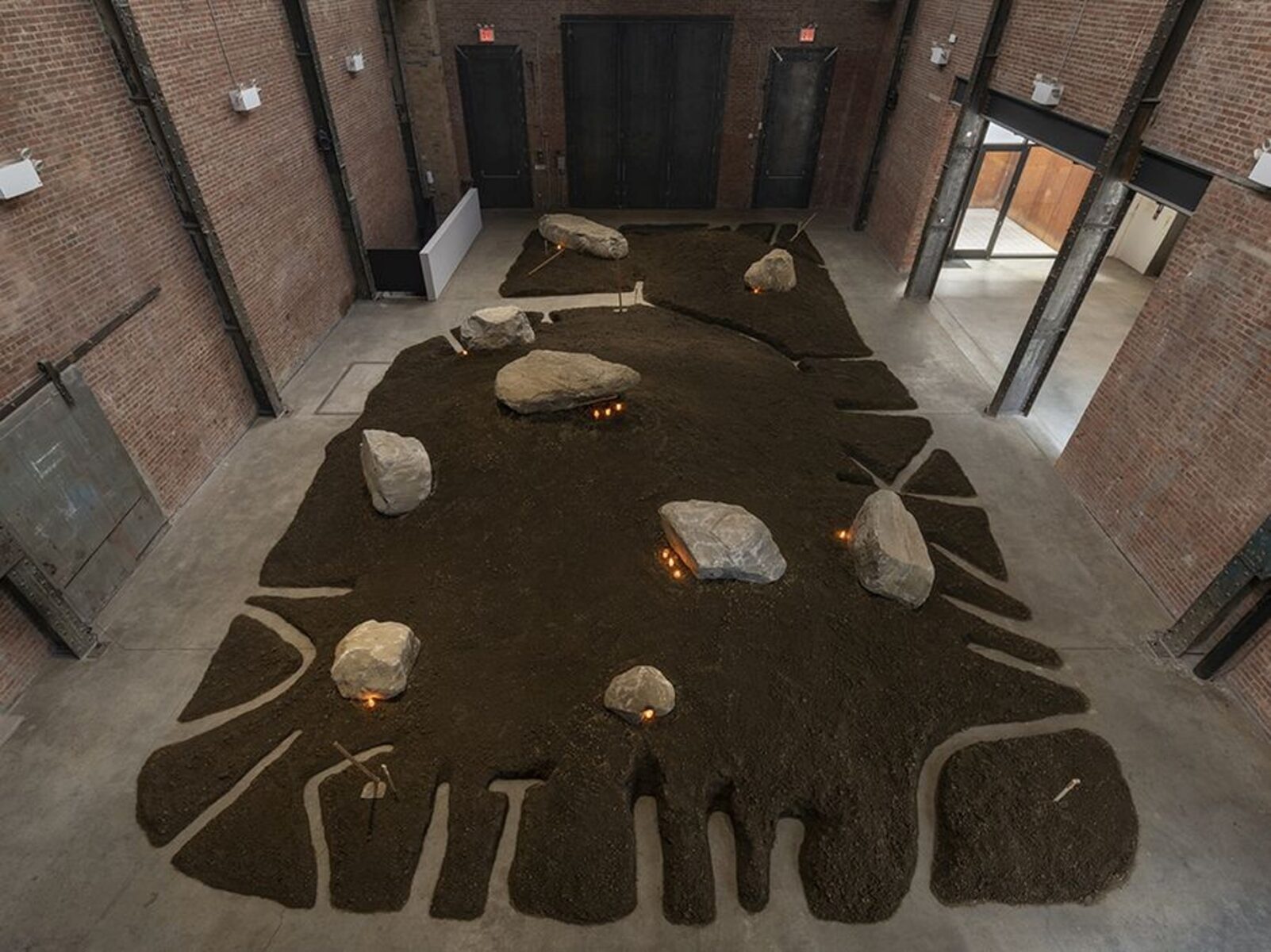
In a way, this technodiversity is also evident in Edgar Calel’s works, for example in the cosmo-technical recreations Piedra del jaguar (B’ALAB’ÄJ) (“Jaguar stone”) (2023) (Fig. 4) and Suena la brisa (NI MUSMUT) (“The breeze blows”) (2024) (Fig. 5). In these installations, the artist creates an imaginary landscape that each visitor can explore to experience an interaction with two sacred elements of the Maya worldview: earth and fire17See Chilam Balam, p. 62. “Guacamaya-de-fuego-de-rostro-solar”, Kinich Kakmó, is the deity of the sun and fire represented—or transmuted—as a macaw, who appears in the prophetic books of the Chilam Balam.. In this way, what is being installed are the hybrid relationships of habitability that Maya communities have established with these elements. The concept of technodiversity implies that, here, the recreation of connections with fire and earth is not aimed at facilitating a mere playful and relational engagement with materials forgotten by modern European urban life, but rather constitutes an artificial exercise whose truth emerges from simple contact with the central elements of each installation—through which an attempt is made to return to the extinct materialities of a particular worldview: the Kaqchikel worldview. Now, if what we are seeing in these works is neither purely art nor purely technique, what exactly are we experiencing? Edgar Calel does not seek to prescribe or impose his people’s worldview. What he seeks, in reality, is to invite us to reflect on the ancestral nature of art itself—that is, to invite us to experience that unconscious dimension of art that maintains a relationship both with the daily activities of a community and with the worldviews that each individual can recreate based on the materialities that exist on the planet. Thus, fire and earth are not merely the primary elements of a particular community here, but rather the active matter from which human beings, in general, have developed life and episteme together.
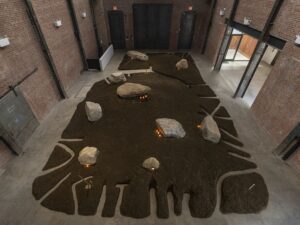
Figure 4. Edgar Calel, Piedra del jaguar (B’ALAB’AJ), 2023

Figure 5. Edgar Calel, Suena la brisa (NI MUSMUT), 2024
Collaborative Aesthetics
As we noted earlier, one of the most significant characteristics of Edgar Calel’s work in his effort to reconstruct his people’s worldview is that this creative process is entirely collective and collaborative. This makes sense when one considers that a cosmotecnica always involves the collective recreation of a metaphysical unity that transcends mere individual presence. Although the artist’s installations are indeed produced by him, these works should be understood as displacements of the constituent elements of a shared cosmology and ancestral heritage. When we observe the installation Madre del fuego (RUTE ‘Q’AQ’) (“Mother of fire”) (2024) (Fig. 6), for example, what we see is the reconstruction of an intimate cosmos—yet one that is no less collective for that: Calel’s grandmother’s kitchen. In this installation, we not only encounter a scenographic recreation of this space that the artist so deeply longs for when recalling his childhood, but we also experience the Mayan culinary tradition that has nourished and delighted his community for many generations. Interaction with the food, utensils, cooking process, and the techniques and preparation of ancestral recipes is by no means imposed; rather, it involves transcultural interaction to exchange flavors and stories, just as happens in any communal kitchen. According to Mayan tradition, this practice involves sitting around the fire and telling stories for therapeutic and spiritual purposes, which can be narrated verbally or through figures, drawings, or sketches. In this vein, one of the interactions proposed by Edgar Calel consisted of inviting participants to engage in shared reflection and contemplation—an act whose circular nature recreates the importance, for the Maya peoples, of sitting around the fire and exchanging dreams, ideas, and visions of the future.

Figure 6. Edgar Calel, Madre del fuego (RUTE ‘Q’AQ’), 2024
The figures of fire, earth, mother, and grandmother are absolutely central to Edgar Calel’s works. We can see this in the work titled Kit-Kit (2014–2016) (Fig. 7), in which the artist painted both the interior and the façade of his studio-workshop, recreating the onomatopoeia his grandmother used to call the birds and feed them (“kit-kit”). The reconstruction of this sound reminds us that a cosmotecnica is not merely a technical matter associated with a craft practice—whose product is a specific object—but can also unfold on a sonic and immaterial level. In this case, the onomatopoeic reconstruction evokes the non-linguistic vocal arts that have been used for millennia to interact with the non-human environment18See Martínez Gónzalez, El Nahualismo, pp. 510-511..
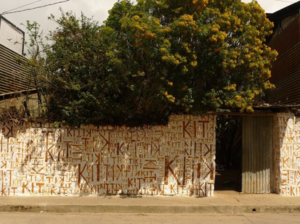
Figure 7. Edgar Calel, Kit-Kit, 2014-2016
Native Speculation. The Speculative Poetics of Naufus Ramírez-Figueroa.
Ontological Shift. Multinaturalism and the Virtuality of Worlds
The work of Naufus Ramírez-Figueroa is characterized by its poetic capacity and a powerful dreamlike estrangement. Through this, the artist seeks to reveal, in each of his interventions, a singularity that goes far beyond the simple psychoanalytic introspection of dreams and images. Regarding this poetic capacity, Josseline Pinto, speaking of the works of both Naufus and Edgar Calel, notes that “to be a poetic Being, one need not be a poet. There is something that transcends us, like dreams that spring from desire or slips of the tongue that create new sounds.” From this perspective, these two artists “are beings who have small things to denounce on a grand scale, through small poetic gestures and grand metaphors”19Josseline Pinto: “Del gesto político al gesto poético. Formas y metáforas en la obra de Edgar Calel y Naufus Ramírez-Figueroa”, VVAA, Agentes culturales: Programa diplomado de formación teórico-práctico; el agente como activador-generador de la cultura en el campo de las artes visuales, Guatemala, Fundación Paiz, 2016. Published online by the Il Posto Foundation, May 2026..
The power of this poetics, in any case, is not merely visual and postliterary; rather, it manifests uniquely in each relationship with objects, reaching unprecedented aesthetic-political dimensions. Thus, the singularity revealed in Naufus’s interventions aims to recover inter-objectual and ontological relationships that allow for the reconstruction of imaginaries for the popular culture of indigenous peoples and the creation of elements for a new nature and temporal experience. Hence the need to aesthetically rethink the relationships between objects, poetics, and reality when engaging with this artist’s work, for which we can draw upon certain concepts from the ontological turn in contemporary anthropology and philosophy.
The so-called ontological turn—whose most prominent precursors include anthropologists Eduardo Viveiros de Castro and Philippe Descola, and sociologist and philosopher Bruno Latour, among others—establishes as a fundamental requirement for studying reality the dismantling of the modern dichotomy between nature and culture, which enables the exploration of new compositions of worlds based on the plural and objectual ontologies that each human group develops. Latour is one of the first thinkers to reflect on this hybrid relationship based on his redefinition of “the modern.” In this regard, he notes the following: “The word ‘modern’ designates two entirely different sets of practices that, to remain effective, must remain distinct even though they recently ceased to be so. The first set of practices creates, through ‘translation,’ entirely new mixtures of beings—hybrids of nature and culture. The second, through ‘purification,’ creates two completely distinct ontological zones: that of humans, on the one hand, and that of non-humans, on the other”20Burno Latour: Nunca fuimos modernos. Ensayo de antropología simétrica, Siglo XXI editores: Buenos Aires, 2007, p. 28. Translated by the author..
For thinkers of the “ontological turn,” it is essential to accelerate hybridizations between humans and non-humans (or objects and things), since they assume that, from these encounters, natures and realities that are entirely novel to knowledge and creation may emerge. Regarding these hybridizations, and in light of his observations of the Achuares’ way of life, Philippe Descola offers the following reflection: “Marital harmony, good relations with relatives and neighbors, success in hunting, the crafting of a beautiful vessel or an effective curare, a garden with varied and abundant crops: all of this depends on the relationships of coexistence that the Achuares have managed to establish with an enormous diversity of human and non-human partners”21 Philippe Descola: Más allá de naturaleza y cultura, Amorrortu, Buenos Aires, 2012, p. 27. Translated by the author.. These forms of coexistence or cohabitation between humans and non-humans are crucial for understanding the inclusion of an entire network of elements and objects that were previously irrelevant to traditional and structural anthropology and that allow us to conceive of genuine agency among pre-modern Indigenous peoples and their modes of existence.
One of the most important authors to have developed these reflections—guiding them from the ontological turn toward a post-anthropological way of thinking—is Eduardo Viveiros de Castro, who proposes an understanding of reality based on two conceptualizations, one derived from the other: perspectivism and multinaturalism. Amerindian perspectivism consists of relativizing the privileged position that the anthropological and scientific gaze—in the broadest sense of the term—has occupied in relation to the gaze of radical otherness of the indigenous peoples of Latin America. As Viveiros de Castro points out, indigenous America
“is filled with references to a cosmopolitical theory that describes a universe inhabited by different types of actors or subjective agents—both human and nonhuman—such as gods, animals, the dead, plants, meteorological phenomena, and very often also objects and artifacts—all endowed with the same general set of perceptual, appetitive, and cognitive dispositions, or, to put it another way, with similar ‘souls.’ This similarity includes a shared, so to speak, performative mode of perception: animals and other non-humans endowed with souls ‘are seen as persons,’ and therefore ‘are persons’; that is, intentional or two-sided (visible and invisible) objects, constituted by social relations and existing in the dual, pre-nominal mode of the reflexive and reciprocal—that is, the collective. However, what these persons see—and therefore what they are as persons—constitutes precisely the philosophical problem posed by and for indigenous thought”22Eduardo Viveiros de Castro: Metafísicas Caníbales. Líneas de antropología postestructural, Katz editores, Buenos Aires, 2010, p. 35. Translated by the author..
It follows from this that the Amerindian is unrepresentable within the framework of classical anthropology due to its virtual multiplicity of perceptions. This requires us to conceive of a different natural relationship among the agencies involved, which may be human or non-human. Consequently, multinaturalism can be understood through perspectivism, since “a perspective is not a representation, because representations are properties of the mind, whereas the point of view resides in the body”23Viveiros de Castro, Metafísicas Caníbales, p. 55. Translated by the author.. Understood in this way, multinaturalism relativizes the conception of culture—as well as the universal character of technology—since it implies that all peoples have culture, even though the worlds engendered by this plurality of cultures do not necessarily reproduce the dichotomy between nature and culture, which renders the sensory experience between “the natural” and “the artificial” hybrid. The distinction between perspective and representation is essential not only for thinking about the anthropological relationship but also for understanding that there is a fundamental chasm between that which can be translated into a representation and that which can only be speculated upon and imagined virtually from a singular sensibility, created from materialities stripped of their signs and symbols, commonly implemented within a space of specific practices.
Speculative Poetics: From Concept to Object.
Based on everything noted above, we could conclude that the poetic exercise in the works of Naufus Ramírez-Figueroa is in fact an aesthetic exercise that entails a multinaturalism and a transmaterial speculative virtuality, and that aims to provoke a collective introspection on Guatemala’s cultural and political memory. If we return to the broad definition of the “ontological turn” that we have examined—particularly the significance it assigns to objects, things, and non-human beings in the composition of a world and a nature—we can see that Naufus Ramírez-Figueroa’s work builds upon the speculative idea that the saturation of materials and objects plays an essential role in his creative process.
Speculation (speculum) is a fundamental philosophical experience developed throughout the history of Western philosophy and refers to the abstract and contemplative dimension required to observe or judge reality beyond its mere physical or scientific composition—that is, beyond its immediate nature. In the context of modernity, it is Hegel, in his Phenomenology of Spirit, who defines the speculative moment of philosophical experience most precisely:
“This opposing [speculative] movement must be articulated; it must not merely be that inner restraint, but this turning of the concept back upon itself must be presented, laid bare. This movement, which constitutes what in ordinary cases is supposed to provide the proof, is the dialectical movement of the proposition itself. Only it is the truly real speculative element, and only the articulation of this movement is the speculative exposition”24G. W. F. Hegel: Fenomenología del espíritu, Gredos: Madrid, 2014, p. 44. Translated by the author. .
The Nahuatl worldview also offers an essential speculative experience, distinct from the one described by Hegel but no less intense or speculative in philosophical terms, especially as it relates to the notion of the poem as understood by the Tlamatinime—the ancient sages, or “those who knew things.” As historian Miguel León-Portilla points out:
“Leaving aside, then, the countless offerings and sacrifices for the public and popular worship of the gods, the Tlamatinime […] experimented with a new method to find a way to speak ‘true words’ about what ‘is above us,’ about the afterlife. Their theory of metaphysical knowledge—which, to use a Western philosophical concept, is rightly so called—is the first milestone in this quest of theirs; it ultimately found an adequate formulation in several of their poems […] because, in any case, true poetry implies a unique mode of knowledge, the fruit of an authentic inner experience, or, if you will, the result of intuition. Poetry thus becomes the hidden and veiled expression that, on the wings of symbol and metaphor, leads man to stammer forth and draw from within himself what he has, in a mysterious and sudden way, managed to perceive”25Miguel León-Portilla: Filosofía Náhuatl. Estudiada en sus fuentes, UNAM: México, 2006, pp. 142-144. Translated by the author..
Thus, when song and poetry articulated cosmological meaning, a different nature of a people’s origins was speculated upon. In this sense, a speculative poetics allows us to understand human ways of being, deploying mechanisms of conceptual abstraction to comprehend elements rooted in a specific cultural practice or in the memory of a people. It is precisely this speculative movement that can be recognized in Naufus Ramírez-Figueroa’s work Breve historia de la arquitectura en Guatemala (“A Brief History of Architecture in Guatemala”) (2010) (Fig. 8), where Mayan Amerindian perspectives—represented by a “classic” Mayan pyramid—are juxtaposed with colonial architecture and its objects. Through this exercise in architectural contrasts, the artist seeks to subvert the commodity-image with which these structures have been associated for tourism purposes. Staging this contrast is, in a sense, a way of virtualizing contradictory objects, with the aim of speculating on another nature of Guatemala’s historical memory—one that transcends its historical colonial confrontation and its ethnocentric commodity-image.
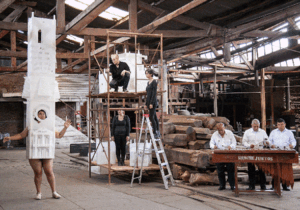
Figur2 8. Naufus Ramírez-Figueroa, Breve historia de la arquitectura en Guatemala, 2010
At this point, it is important to recall that Guatemala’s recent history is marked by one of the cruelest, most xenophobic, and longest-lasting civil wars in modern history. It began in 1954 with a military coup orchestrated jointly by local military forces, the CIA, and the United Fruit Company—one of the largest banana companies in Central America—and led to a massacre of the peasant civilian population, particularly against Mayan communities26 For the 2019 Venice Biennale, Chilean artist Voluspa Jarpa presented the project Miradas Alteradas (“Altered Views”); a project consisting of three works and five installations that showcased her research on South and Central American dictatorships. One of these was titled El hombre hegemónico (“The Hegemonic Man”), which included an installation called Caso 5: Juan Jacobo Árbenz. Fundación de la República Bananera (“Case 5: Juan Jacobo Árbenz. Founding of the Banana Republic”). The work is an installation comprising a map of the world’s largest banana plantations, a PVC book containing a selection of documents on the United Fruit Company and its intervention in the governments of Guatemala and Honduras, and three videos. The videos Chiquita Banana and Journey to Banana Land incorporate archival footage from the United Fruit Company, including the well-known advertising animation featuring the famous jingle I’m Chiquita Banana and several short documentaries aimed at promoting the daily consumption of bananas in the home and within families. The third video, Eat Bananas!, features a reading of a now-declassified document related to Operation PBSuccess and is accompanied by two ceramic banana sculptures and a light box displaying vintage United Fruit Company advertisements. https://bananacraze.uniandes.edu.co/obras/arte,violencias/voluspa-jarpa/. Between 1960 and 1997, this political violence undoubtedly caused a historical and social trauma that left its mark on generations of Guatemalans and, in particular, on the life and childhood of Naufus Ramírez-Figueroa: the civil war forced the artist’s family into exile in Mexico and later in Canada, where he was able to formalize his artistic practice and, at the same time, become acquainted with all the contemporary critical literature that would later enable him to understand Guatemala’s political, social, and cultural reality.
Set against this historical context of violence and xenophobia—which is also very present in the work of Edgar Calel, incidentally—Naufus’s work bears witness to the emergence of another perspective on historical time, where the utterly other reappears virtually to reactivate imaginaries of a future lost as a result of political violence. For example, the work Print of Sleep (2016) (Fig. 9), viewed from the perspective of a multinatural virtuality, seeks to recreate the complexities and contradictions of the connection between historical memory, dreams, and political violence. In it, within a large Brutalist room simulating an old hospital, a series of bodies are shown lying and dreaming on metal beds illuminated by fluorescent lights; some of these bodies bear black marks on their skin resembling printing ink, reminding us that memories are also carried on the body. In this way, the performance explores a poetics of the dreamlike, in which representation reaches its limits and the viewer’s imagination is fully engaged as they seek to delve into the lost dreams of the exhausted bodies.

Figure 9. Naufus Ramirez-Figueroa, Print of Sleep, 2016
In another work titled Para ti el banano madura al peso de tu dulce amor (“For you, the banana ripens with the weight of your sweet love”) (2008) (Fig. 10), the multifaceted relationships with other objects and traditions that have shaped Guatemala’s political history lead Naufus to embrace a bunch of bananas, with the aim of restoring the historical significance of this fruit and its importance to Mayan communities and Guatemalan society27To understand the importance of the banana in Guatemala’s colonial and recent history, see La trilogía del banano (“The Banana Trilogy”) by Miguel Ángel Asturias, winner of the 1967 Nobel Prize in Literature: Viento Fuerte (1950), El Papa verde (1954) y Los ojos de los enterrados (1960). All these works were published by Drácena Ediciones, Madrid.. In this case, the artist’s critical intervention involves a symbolic deconstruction of banana production, given that Guatemala’s raw material extraction practices and Central America’s largest banana company were both complicit in the coup d’état and the subsequent civil war. In this way, Naufus Ramírez-Figueroa, through a performative artistic intervention, restores nature to an object: the banana. By embracing and caressing it, the artist also recalls the speculative importance of cultural respite, while reflecting on political coexistence surrounding one of the most contentious and central natural objects in Guatemalan history.

Figure 10. Naufus Ramírez Figueroa, Para ti el banano madura al peso de tu dulce amor, 2008.
However, this “other nature” can be derived not only from natural objects but also from immaterial objects—that is, from sound pieces or dramatic texts. The concept of “object” should not be understood or reduced solely to a “thing” or to the merely perceptible aspect of “something,” but rather should be understood as follows: “Although there are an infinite number of objects in the cosmos, there are only two types: real objects that exist apart from experience and sensual objects that exist solely within it”28Graham Harman: El objeto cuádruple. Una metafísica de las cosas después de Heidegger, Anthtopos/siglo XXI editores: Barcelona, 2016, p. 45. Translated by the author.. Such is the case with Nafus’s play titled El corazón del espantapájaros (“The Heart of the Scarecrow”) (2015) (Fig. 11), a recreation of another play that was never staged, in keeping with the idea of finding the “real object” of the dramatic work. The original play that Nafus references in this work, also titled El corazón del espantapájaros, was written by the playwright Hugo Carrillo and censored after being performed at a university event in Guatemala City in the 1960s. Thus, what Naufus does is recreate a censored play through poetic virtuality and imaginative speculation, seeking to ground Guatemala’s present rather than adhere to historical fidelity to the country’s recent past. Once again, the artist does not seek to represent; instead, he adheres to the idea of art understood as creation derived from another creation, where representation is neutralized in light of its originality. In a sense, Naufus virtualizes Hugo Carrillo’s play—that is, he creates another speculative nature for this work within a distinct “real object.” In this way, historical memory does not rely on a faithful historical representation of the past. Instead, the intervention aims to virtualize the central elements of a dramatic work in order to explore it in relation to the concerns of the present and, from there, to also explore the aesthetic consequences of that virtuality of the past.
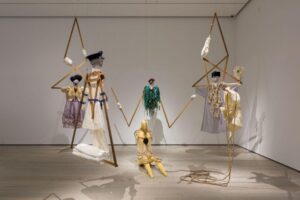
Figure 11. Naufus Ramírez Figueroa, El corazón del espantapájaros, 2015.
Finally, we find a cosmotechnical and multinatural exercise steeped in postcolonial critique in Naufus’s performance Mimesis of mimesis (2016) (Fig. 12)—which is part of the works exhibited by Fundación Il Posto in its Museo Temporal exhibition. In this intervention, dreams and colonial violence intertwine in a pacified unfolding of colonial history. There, Naufus settles in the midst of the Royal Tropical Institute—the former colonial institute in Amsterdam, an institution that embodies Europe’s aesthetic and epistemic violence against the peoples of the global tropics—in order to rest and dream once more, reclaiming another historical memory for Guatemala. The cosmotecnica at work here does not seek to reconstruct an ethnographic cosmos. Rather, it aims to reconstruct a memory and a form of violence in order to engage in dialogue on another aesthetic plane—one closer to the metaphysical and the speculative—rather than insisting on the endemic violence of mimesis as Europe’s preferred mode of approaching other peoples.

Figure 12. Naufus Ramírez Figueroa, Mimesis of mimesis, 2016. Il Posto Collection.
Concluding Remarks
Art, Cosmopolitics, and Planetary Thought
One of the first conclusions we can draw after applying this speculative theoretical framework to the works of Edgar Calel and Naufus Ramírez-Figueroa concerns the planetary imprint of their artistic interventions. In contrast to the idea that Latin American art must globalize the local, this planetary thinking posits that works which, from a particular cosmotecnic perspective, visualize diverse modes of existence and coexistence with situated environments, objects, and non-human beings, do not project a global identity, but rather the planetary aesthetic relationship that each artist—or individual—maintains with the materials and also with the immaterial components of their interventions. Therefore, this is a capacity that anyone can develop based on their environment, techniques, and traditions, according to the mode of existence historically developed by a specific human—or non-human—group.
In this way, both Edgar Calel and Naufus Ramírez-Figueroa avoid the artist’s “self-exoticism” that proliferates in the international art market through the narcissistic profit-making mechanisms arising from the fragmentation of difference29Valérie Arrault & Alain Troyas: El narcisismo del arte contemporáneo, La Cebra: Buenos Aires, 2020.. Instead, they develop artistic interventions that alter, from within, the global strategies of art’s internationalization, resisting being reduced to the all-consuming production of a marginalized and peripheral Latin American art. This process of altering the modes of identification of their artistic practices draws precisely on the technodiversity they develop to establish a genuine and vicarious bond with the objects and elements involved in their creative processes, to which they confer a certain theatricality. This technodiverse characteristic circumvents the global, capitalist mono-technique, according to which objects, environments, materials, and things are elements that do not participate in the creative processes of art but are simply at the disposal of an exclusively human artistic practice—that is, they function merely as tools.
The political dimension of the works by Edgar Calel and Naufus Ramírez-Figueroa—which, through this planetary perspective, introduces a new system of art—can thus be conceived as a cosmopolitics. That is, a politics that is not limited to denouncing the atrocities historically suffered by the indigenous peoples of Latin America, but also reveals, through a process of displacement, the sensuous unity that allows us to recognize a way of life and existence (a cosmos) that is not co-relative to the mechanism of recognizing difference as a residue of the Eurocentric and global order—a mechanism that is always filtered through a monotechnical approach to art. This cosmopolitics is also a politics that organizes existence beyond the human realm and through a technodiversity of elements30Monserrat Cañedo Rodríguez (edit.): Cosmopolíticas. Perspectivas antropológicas, Editorial Trotta: Madrid, 2013.. Hence its collaborative nature, which implies not only creative association among human artists but also networked collaboration among non-human agents.
From Representational Art to Art as Multinatural Artificiality
Another issue that emerges from this analysis of the works of Edgar Calel and Naufus Ramírez-Figueroa relates to the abandonment of representational art, evident in the practice of both artists. It is well known that representational art—that is, mimesis—has shaped the history of art, which for a long time conceived of works as devices for the faithful representation of reality or nature. But we must ask: what reality is being represented when it has been historiographically constructed from a single perspective? In this vein, when Erich Auerbach defines mimesis in the epilogue of his book of the same name, he does so by highlighting the power and significance of Western literature as an organizer of reality, thereby dispelling the idea that mimesis is a kind of “photo-noetic camera” through which humanity captures and reflects reality31Erich Auerbach: “Epílogo”, Mimesis. La representación de la realidad en la literatura occidental, FCE, México, 1993.. This means that mimesis has not only shaped Western literary forms but has also molded the perceptual and identity-forming frameworks through which we organize global political, cultural, and economic reality.
If we understand mimesis in this way, we can argue that the works of Edgar Calel and Naufus Ramírez-Figueroa are grounded in a post-mimetic conception of art. On the one hand, Calel rejects the modern, European, and masculine idea of the traditional artist and embraces the Nahuatl term no’j, which represents the sage in the Mayan worldview. This means that he represents neither the cultural and social reality of his people nor the metaphysical customs that characterize his community; rather, he artificially re-creates a new natural relationship through the ancestral objects with which his forebears mapped out the meaning of their existence. In this way, Western mimesis—through which the European world has portrayed all spheres of life—ceases to be the mechanism by which the art system relates to the artist and his place of origin. Rather than being a purely territorial matter, the locality of Calel’s art is at stake in a diatribe against the logics that map out and delineate the values through which technodiversities are invoked and interpreted.
On the other hand, Naufus Ramírez-Figueroa, through his speculative poetics, shows us how the multinatural relationship with objects can construct another nature without turning it into a new, purely human aesthetic object—that is, without “naturalizing” it32Mario Perniola: “artisticidad, artificación, artistización”, El arte expandido, Casimiro libros: Madrid, 2016, p. 42. . This speculative exercise allows us to understand that we are currently facing an excess of signs and meanings, which leads to a collapse of realities. In this scenario, what characterizes Naufus Ramírez-Figueroa’s dreamlike poetics is the staging of an infinite reality—and, consequently, of a nature that is equally infinite and irreducible.
Rethinking the History of Art in Conjunction with the History of Technology
To conclude, one final conclusion that can be drawn from this essay relates to the attempt made by both Edgar Calel and Naufus Ramírez-Figueroa to blur the boundary between art and technology. As is well known, the Greek concept of art, associated with téchne (τέχνη)33Aristóteles: Poética, 1447a, Gredos: Madrid, 1974., made no distinction between this “know-how” and other activities of collective interest aimed at the construction of morality and beauty; this means that art was not detached from the sensory processes and constructions that held the community together on an aesthetic level. It follows that rethinking the history of art in light of a history of technique involves tracing a trajectory of forms of sensory construction beyond the notion of the artist’s sovereign freedom—a notion that gives meaning to the practical anthropological differences between humans and non-humans, or between humans, things, and objects. Along these lines, the works of Edgar Calel and Naufus, in their cosmo-technical development, commit their own existence and bodies to the ancestral, cultural, and social concerns of their peoples—even more so than the inert materials and objects anonymously arranged for individualized artistic creation.
In our view, rethinking the history of art in conjunction with a history of technology can be understood in at least two ways. First, there is a perspective, known as anthropotechnics, that allows us to view art history through the lens of a “second art history.” This is what Peter Sloterdijk understands as “art that takes man himself as its material—dealing with man, according to Trotsky, ‘as a product, both physically and psychologically, still in the making.’” In this regard, the author notes:
“…the time has come to present the oft-told history of the visual arts and music in modern times as a history of artistic asceticism […] what I call the second history of art would, therefore, be primarily concerned with the training processes of artists in their respective disciplines […] With this dual focus, it would shift attention from the work of art to the figure of the artist, by defining the production of art producers as a dimension inherent to art history—which, incidentally, is the opposite of conventional biographical approaches”34Peter Sloterdijk: Has de cambiar tu vida. Sobre antropotécnica, Pre-textos: España, 2013, pp. 430-461. Translated by the author..
This anthropotechnical perspective on art allows us to understand the artistic interventions of Edgar Calel and Naufus Ramírez-Figueroa as human exercises grounded in symbolic interactionism, which means that what is truly human in art occurs in an interaction with immaterial elements that also constitute a specific, sensitive, and collective environment. In other words, the anthropotechnical aspect of art is the technical and performative form through which the human articulates with the non-human.
However, as we noted above, there is also another perspective that allows us to understand the history of art and technology together, as seen in Yuk Hui’s interpretation of the subject. It is grounded in a redefinition of the cosmic, which the author conceives as the moral and environmental order that precedes both human and non-human forms of existence. This ancestral idea of the cosmos as that which explains the raison d’être of things and beings is what the sciences have sought to embody—in their original quest—through the epistemic colonization of the non-European world. However, the cosmological transcends the sciences in its explanation of how a cosmos operates and affects us on both cultural and biological levels.
Here it is important to note that the dichotomy between ancestral cosmological reason and modern scientific reason establishes an insurmountable distance between technology and the cosmos. Based on this opposition, it is presumed that technology is a purely productive and modern aspect, instrumentalized by the sciences, and that the cosmos is a kind of metaphysical composition or perception of premodern peoples. Yuk Hui observes that, in the face of this dichotomy, “art cannot be fully grounded in science,” but must “rather, […] attempt to transform science, render the necessity of science contingent before making that contingency necessary once again.” He then adds:
“…Nietzsche returns science to a broader reality called art, or artistic creation, and furthermore returns art to another broader reality called life […] this relationship between art and the cosmos becomes more evident when we recall Kandinsky’s ‘Cologne Lecture,’ where he states that ‘the genesis of a work of art is cosmic in nature’ [Thus] Kandinsky seeks to paint another cosmos to resist the nineteenth-century legacy of Galilean nature”35Yuk Hui: Arte y cosmotécnica, pp. 147-149. Translated by the author..
Following this interpretation, we can conceive of the works of Edgar Calel and Naufus Ramírez-Figueroa as artistic interventions that construct cosmoses and natures distinct from those of the sciences and which, for that very reason, do not engage in aesthetic experiences that condescend to the historical linearity of Western mono-techniques, by virtue of which art would be nothing more than an instrument for continuing to decorate and fill the world with disposable objects. Through their practice, both artists develop divergent speculative and cosmotechnical forms capable of altering the systems of performance in contemporary art. In Calel’s case, as we have seen, this divergence is grounded in the creation of disruptive atmospheres through which the artist recreates the technical and magical experiences of his ancestors—that is, an ancestral cosmos that resists the extractivism of capitalism and of the art circuit itself, which absorbs difference and raw materials into the new logics of the market. Similarly, though with a fully poetic-speculative sensibility, the work of Naufus Ramírez-Figueroa reworks Guatemala’s memory and historical past through a new dreamlike archive, where the act of imagining new aesthetic forms gives rise to “multinaturalities” and artificial environments that activate a new way of relating to objects.


