

This is Santiago at the turn of the 20th century. In 1930, the Chilean writer Rosamel del Valle (1901–1965) wrote the book Eva y la fuga. My dear friend Ignace della Faille had already recommended some of this author’s works to me, and some time later, this unusual copy found its way into my hands. It was a true testimonial account of early-20th-century Santiago or, as literary critic Anna Balakian puts it, “a surrealist cartography of 1930s Santiago” or “a Rosamelian topography resembling Santiago”1Rosamel del Valle, Eva y la Fuga, Santiago, Ediciones La Pollera, 2017, pp. 7–8.. To my surprise, the book was first published as late as 1970—not in Chile but in Venezuela, specifically in the city of Caracas by the Monte Ávila publishing house. The Chilean poet and diplomat Humberto Díaz Casanueva was in that city around 1938 on a university mission and, from there, corresponded with Rosamel del Valle, who sent him a draft of this manuscript. A few years later, Rosamel passed away, and his wife, as his executor, gave the go-ahead for its posthumous publication. It wasn’t until 2017 that Editorial La Pollera published this book for the first time in Santiago, Chile—87 years after it was written in that very city.
Rosamel del Valle—the pen name of Moisés Filadelfio Gutiérrez—always felt a strong inclination toward surrealism, and this is evident throughout these pages in the character of Eva, one of the book’s protagonists. The author describes her as “the radiance of a long-lived day,” a presence that appears and vanishes, drawing the narrator into a sensory whirlwind in early-20th-century Santiago. Eva moves through anecdotes at the foot of Santa Lucía Hill, in Santiago’s now-defunct Luna Park, the Plaza de Armas, Merced Street, and among the narrator’s friends. Thus, as Rosamel makes his way through Santiago, he gradually reveals a map of the city to the reader. Among the Santiago itineraries, Ignacio Brandez also stands out—a bearded man whose presence amazes the narrator and leads him to reflect, through imagery and beauty, on the domestic sphere as a refuge from the world: a space where we create another intimate microcosm, seemingly lifeless at first glance, that accompanies us and, at other times, spurns us. About his dear friend Brandez, he writes:
“Sometimes I see him enter my room, and his little beard obscures the world for a moment, only to wash it away and let me see it again, now transformed. Around him, I have encountered seaweed swaying in the water, which is like a dream”2Ibíd, p..
Following that passage, the narrator offers the following reflection on the World of Objects—a subject that has been deeply moving me for several months now and which I aim to shed light on in this essay, using the following quote as my starting point:
“(…) Thanks to its magic, I have been able to penetrate the secret transformation of objects—those that live, like us, in a space where they become honorable beings, where they greet one another, sit down, and converse. I have seen them stretch their legs by the fire, curl them up, spread them apart, and then begin to tell stories of the human beings they serve, whom they care for, and whom they love or despise. For them, the causes are the same, the effects identical, as if in a state of constant despair. One day a man or a woman arrives, and upon seeing them there—always so calm in their static existence—they recover something of what they have lost within themselves and gaze at them, dust them off, caress them, move them to a new spot, and lead them to believe that only they await something akin to a kind of invulnerable loyalty. It is love. Another day, a man or a woman suddenly approaches them, and in their sweet solitude they see that the animated world is far too hostile to them; that the hostile gaze pursues them, reflected in everything; that it is impossible to keep one’s thoughts from being witnessed; that still life, too, rages against them with its own anguish. So they are thrown into the back of closets, into drawers, into corners, or smashed against the floor. And that, too, is love. Only they know that human beings are weak, fickle, small, and useless. And no one dares to abandon them for good”3Ibíd, p..
This passage resonated deeply within me, both for its poetic prose and for the agency it ascribes to objects—to the universe of objects we keep, create, and collect—to the liveliness and companionship they offer us, and to the way we form powerful bonds with them throughout our lives. This Rosamelian topography, where still life and the inert come to life to shield us from a hostile world, served as an unexpected lens for me and helped me realize that this secret transformation was not, in reality, limited to literary imagination in the cold Santiago of the 1930s, but was rather a genuine act of survival in the face of the World. In an effort to unravel this matter of “Objectuality,” my writing builds a bridge to the Caribbean to explore two Venezuelan artists born nearly a century apart: Wiki Pirela (Caracas, 1992) and Armando Reverón (Caracas, 1889–1954). Curiously, the latter brought this very “World of Objects” to life with his own hands on the coasts of Venezuela at the very same time that Rosamel del Valle was writing about it in the south of the continent. Then, closing a geographical and temporal arc, Wiki Pirela reincarnates this creative spirit in the 21st century, constructing his own “World of Objects” in an attempt to bring his home on the “La Unidad” hill in Caracas back to Santiago, Chile.
With these Rosamelian resonances as my compass, the dialogue I seek to establish thus charts a journey that brings these two artists together, despite the historical distances between them. To unravel this path, I first focus on the “Desire for Home,” briefly delving into the transitional and reparative function that psychoanalysis assigns to Objects. Next, I follow the trail of collecting—whose resonance I find in the American verb pepenar—through Ursula K. Le Guin’s The Carrier Bag Theory of Fiction, observing how Armando Reverón and Wiki Pirela salvage and work with their materials. This leads me, later on, to delve deeper into the practice of assemblage and the term “bricolage” proposed by Claude Lévi-Strauss, which will allow us to understand the magical component that emerges in the act of creating Objects and endowing them with utility, memory, and the power of contemplation—as is the case with Reverón’s Castillete on the coast of Macuto, Venezuela, and in Wiki Pirela’s House-Studio in the Cumming neighborhood of Santiago. To ground this idea in our own context, I also draw on the reflections developed by Valentina Montero in her essay Hechizos para salvar el mundo, a key text for translating the notion of bricolage into a more familiar, specifically Latin American, framework. Finally, to conclude this essay, I pause to consider a beautiful contemporary coincidence that seems to bridge the historical distance separating Reverón and Pirela: in 2026, the works of both artists will be exhibited in Caracas. In a way, these “Objects” have managed to come together just a few blocks apart, in the very city where their creators were born.
Part One. The Desire for Home
“The light never went away—at least in the water, it never went away (…) the sun was beautiful, and the fish would come up to the shore to find you,” recalls my grandmother Margris about her days strolling through the coastal town of Macuto, in La Guaira state. Exiled in Santiago, Chile, for eight years now, neither she nor I have been able to return to the Caribbean’s luminescence, to our cuisine, to our colors, or to our temperatures and that distinctive humidity. This essay began innocently as an attempt to reconnect with the Caribbean, inspired by the writings of Rosamel del Valle, viewed through the lens of one of my recent pursuits here in Chile: aesthetic research. As I mentioned, this author’s work prompted me to delve into a reflection on Objects that straddle the boundary between the inanimate and the living—those we create to accompany us as we inhabit the world, with which we converse, and which, deep down, also help us build a home.
Borrowing from psychoanalysis the concept of the transitional object developed by Donald Winnicott (and its reparative function), we can understand that our relationship with matter plays a fundamental role in human development and in the process of personal individuation. Indeed, it is through these objects that we are able to cope with the first instance of maternal “abandonment.” When the mother leaves the baby for the first time, the first thing the baby does—to avoid sinking into tears and the trauma caused by the separation—is to cling to an object in search of comfort: the baby grabs a blanket, a stuffed animal, or whatever is at hand, creating a symbolic bond with this material object to help cope with the separation. Thus, the Object allows, in the first instance, not only to prevent a rupture in the infant’s psyche but also to rework an experience based on something tangible and alive.
In a private conversation, the critic and curator Justo Pastor Mellado cautioned me against the romanticism of my desire to engage with the Caribbean through this essay, weaving together Winnicott’s theory with my own experience as a migrant. According to him, I—like the infant separated from its mother, and perhaps like the artists I intend to study—am also creating, through this writing, an Object to cope with the trauma of separation from my homeland. In my dreams, I see myself being swept away by the strong southern winds that carry me across the seas and gently wash my body ashore on the Caribbean coast. Faced with the impossibility of making that journey physically, I clung to the material works of Wiki Pirela and Armando Reverón to feel closer to the Caribbean—to its light, scent, sound, and accent.
There is, then, a need to mobilize certain feelings and reflections to the point of giving them a physical existence. So that they are not merely pulsing within us, we turn them outward through matter. Before the Object emerges, there is, therefore, a mobilizing force that I would like to call Desire for Home —an expression I borrow from Justo Pastor Mellado’s essay titled El deseo de casa: El lugar de Armando Reverón en las inflexiones metodológicas habilitadas por las curatorías de infraestructura (“The Desire for Home: Armando Reverón’s Place in the Methodological Inflections Enabled by Infrastructure Curatorships”). It is that which drives us to give expression to what we feel and to shape it into physical forms, and which also brings to life the longing to build a refuge from the world—a place that shelters us. I believe that both Reverón and Wiki Pirela are driven by this impulse, creating their own Objectual World through domestic attire that protects them.
In Reverón’s specific case, this refuge of Objectualities does not actually stem from forced banishment, but rather from a radical and voluntary exile. Born in Caracas in 1889 into a well-to-do family in rural Venezuela—a country still recovering from the wars of independence and whose elite had their sights set on Europe—the artist studied at the Academy of Fine Arts in Caracas and in 1908 traveled to Spain, where he was influenced by painters such as Francisco de Goya and Ignacio Zuloaga. Like many of his peers, he returned to Caracas as a sort of intellectual ambassador for Spanish art, befriending Romanian and Russian painters such as Samys Mützner and Nicolás Ferdinandov, who introduced him to the Impressionist movement. However, a few years later, Reverón grew weary of this life and undertook a second migration, this time within Venezuela. It was then that he settled in Macuto, on the Caribbean coast, where he began building with his own hands a house he named El Castillete (“The Castle”) (Fig. 1), which he filled with objects he had also crafted himself. There he would live with Juanita, a young mestizo woman—it is worth noting that Venezuelan society was still divided by caste—whom he met at the La Guaira Carnival, a fact that caused quite a stir in the intellectual circles of the time. He would live there until the end of his days, devoting himself to painting and immortalizing the characteristic light of the Caribbean coast on his canvases. Alfredo Boulton, an art critic and friend of the artist, described it during one of his visits:
“The center of the lot was occupied by a spacious, tall thatched hut covered with palm leaves. The walls were made of cane fences and large hemp-woven curtains that served to filter the light. The floor was made of packed earth and was very clean. The entire structure was built from wood cut from nearby forests. […] Pieces of tulle hung from the beams, and light filtered through the slits in what he called ‘the arbor.’ On one side was the platform where the models posed reclining on multicolored cushions stuffed with dry leaves. Light entered through a circular opening separating the ceiling from the partition walls; this opening was covered with a fisherman’s chinchorro net. On that platform, Reverón prepared the setting where the figures would rest. He cut bouquets of onoto, palm leaves, and lechoza leaves, which he placed around the subject to serve as chromatic references […]”4Alfredo Boulton, La Obra de Armando Reverón. Caracas, Fundación Neumann, 1966, pp 52-56. Cited in: Jens Andermann, “Reverón: El Paisaje Evanescente”, in Los márgenes, las orillas, los bordes. Tópicos del Seminario, 29, Zurich, 2013, p..
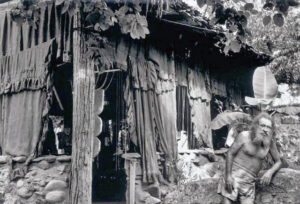
Figure 1. Armando Reveron’s El Castillete de, undated.
Absolutely everything in Reverón’s Castillete was made by his own hands using materials he found: those washed up by the Caribbean Sea and those he himself collected on the shore and in the surrounding area. From the walls and ceilings of the house to the objects inside, which included masks, instruments, crowns, small tables, trunks, chests, candelabras, decorative elements, and other artifacts that we can conceive of as materialized fictions brought to life. Added to all this were the protagonists of some of his portraits, which he created himself by stuffing rags with soft materials. I am referring to the so-called Dolls (Fig. 2), a term I cannot help but question when I notice the liveliness they radiated within the space—whether due to their human-scale size, their clothing, or their appearance—which prevent us from viewing them as mere toys or mannequins and clearly transform them into presences that engage in dialogue with the rest of the “Object World” that constituted Reverón’s home-castillete-studio and which, I dare say, in some way also resided there.
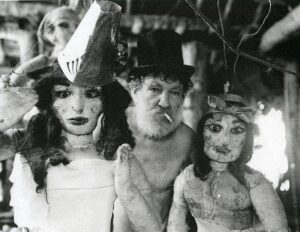
Figure 2. Armando Reverón, Dolls, undated.
In 2001, Justo Pastor Mellado attended the exhibition El lugar de los objetos at the National Art Gallery in Caracas, one of the few shows held at the time that, rather than focusing on Reverón’s paintings, centered on the objects the artist created during his years at El Castillete. As a result of this experience, the critic also debated the use of the label “Muñecas” and wrote the essay cited above, which he presented at a symposium held at the same gallery. Mellado recalls that the museum space was completely transformed for this exhibition, transporting the viewer into Reverón’s intimate space. All the “Objects” from inside his home were on display there, and the dolls hung from the ceiling, just as the artist had arranged them at El Castillete, as can be seen in the 1952 short film by Venezuelan director and screenwriter Margot Benacerraf (Fig. 3). In addition, a grand dinner inspired by the cuisine of Macuto in the 1950s was held as part of the exhibition—a true spectacle of flavors that included fried fish, tostones, and chipichipi broth.
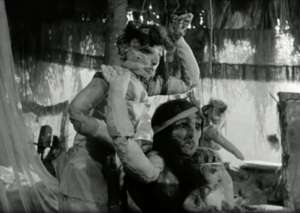
Figure 3. Dolls in Benacerraf’s short film, 1952
In his essay, Mellado agrees with the exhibition’s curator, Luis Enrique Pérez Oramas, that “for Reverón, the house is the foremost of all objects”5Justo Pastor Mellado, El deseo de casa: El lugar de Armando Reverón en las inflexiones metodológicas habilitadas por las curatorías de infraestructura. Caracas, Unpublished text, 2001, p. 48. . This, according to Mellado, is the diagrammatic condition of the artist’s work, insofar as his desire to establish a refuge from the world was what enabled him to bring his entire body of work to fruition. Here, the critic offers an important caveat: beyond any psychoanalytic interpretation that might be drawn from the schizophrenia with which the painter struggled for many years, it is important to pay attention to the materiality of his work. The material from which his “raw” Objects and canvases are made is precisely what illuminates his creative process, for the Objects also produce meaning through the materials and procedures by which they are created:
“[Reverón] conveys meaning through the parodic materiality of his creations, playing down the significance of the studio space itself. Courbet does not go far enough. Neither does Bellmer. His disarticulations stem from a technological model linked to ceramics, polychrome wood, and the imagery of doll-making. Reverón belongs to another technological complex; to another material episteme”6Idem.
When Mellado mentions that these figures belong to “another material episteme,” he is referring to the fact that they were stuffed with jute, fabric, wire, wick, newspaper, and pigments. This reveals that Reverón’s Desire for Home was also a reaction, a distancing from the intellectual elite. By erecting a fortress of objects on the seashore, turning his back on the modern city, the artist sought to protect himself from European modernity as a system of tastes, techniques, and customs, and, furthermore, from the rise of oil extractivism at the time. He thus found a refuge to do “his own thing”—his own home, his own castle, his own hideaway from the world: El Castillete.
This explains why it would be a mistake to classify Reverón as a failed Impressionist or even as a Post-Impressionist. He was nothing more and nothing less than a Caribbean man, a Creole who captured on the shores of the Caribbean that characteristic light of that landscape as no other artist or technique could. If there is one word suitable for classifying Reverón’s work—irony aside—it is “Reveronian.” Only that term can give a name to the light he captures on the canvas—and which even escapes him—the light that permeates everything with its rays and gradually reveals the pristine sea, and through which the entire imagination of the Caribbean seeps into the artist’s home and into the very materiality of his domestic Objects. Here I am thinking of Jens Andermann’s essay Reverón: El Paisaje Evanescente, which quite accurately identifies the uniqueness of the artist’s style, noting that his personal quest in self-imposed exile—and in open contrast to his contemporaries—was what allowed him to achieve it:
“Based on some paintings, photographs, and accounts that have survived from that era, this is also the moment when Reverón embarks on a curious personal quest—which he seems to have taken much more seriously than his occasional bohemian visitors from Caracas—for an archaic indigenous past, posing himself in a loincloth and armed with spears and arrows, or portraying Juanita dressed as an Indian queen. It is, perhaps, a sort of escape back in time, discarding the Hispanic references of his Caracas period in favor of an imaginary pre-colonial indigenous tradition—an alternative world to the real history of conservative and dictatorial modernization. But it also represents—along with his coastal isolation in Macuto—the conceptual framework that would allow Reverón to purge his painting of allegorical elements and Hispanic cultural baggage, moving toward an uninhibited quest to capture the Caribbean landscape and its extreme luminosity with radical literalism”7Jens Andermann, “Reverón: El Paisaje Evanescente”, in Los márgenes, las orillas, los bordes. Tópicos del Seminario, 29, Zurich, 2013, p. 44. .
Reverón’s survival depended, then, on that coastal isolation, on the voluntary construction of this anachronistic refuge that distanced him from the elite, from extractivism, and from modernity. But what happens when it is the territory itself that expels you? A century after Reverón, that same Desire for Home that drives his work takes on new meaning in Wiki Pirela’s practice, set against another context of vulnerability. For her, the refuge is not a stand against modernity, but rather a way of grappling with the experience of exile, the loss of home following migration, and the stereotypes associated with poverty.
Born in 1992—more than 100 years after Reverón—Wiki spent her childhood and adolescence on the “La Unidad” hill in Caracas, a fundamental part of her work today. Driven by creativity, she enrolled in the Fine Arts program at the National Experimental University of the Arts of Venezuela and graduated in 2016, after which she was forced to migrate to Santiago, Chile, the following year due to the political and social situation in her country. In Chile, she continued to develop a body of work deeply connected to the notions of “Home” and “Objects,” managing to establish herself in the local art scene despite having little familiarity with the area, through self-organized workshops and the creation of performances and installations in public spaces that evoke the ideas of home and domestic space, primarily through the use of cardboard. Thus, like Reverón, Wiki must also make a home for herself in this new territory—a space from which she reflects and invites us to reflect on diaspora, racism, and xenophobia, but also on community and the practices of care that emerge in the open air, where the body becomes a home.
This sense of urgency to materialize a home in response to the experience of uprooting has resonated strongly within the contemporary art scene. Indeed, Pirela’s Desire for Home has expanded through residencies in Chile and Uruguay, and her work has been featured on major international platforms such as the 14th Mercosur Biennial (2025), the Museum of Contemporary Art in Buenos Aires (2023), and the Haus der Architektur in Germany (2024), as well as in solo exhibitions such as La Reina (Abra Gallery, Caracas, 2024) and Cascarón (Patricia Ready Gallery, Santiago, 2023). Even during her recent exhibition at the Il Posto art space (2026), Wiki has consolidated a visual art practice that springs from the very core of her life story. As the theorist Oriana Mejías Martínez describes: “Daughter of Luisa, a native of Caracas, a woman, an artist, a Black woman, a sister, an aunt, a migrant; she is a body, she is a house, she is a body-house, she is a meeting space to discuss sites of enunciation, she is a reflective body, she is a noble smile. Wiki is a torrent of words, of ideas, of concerns”8Oriana Mejías Martinez, “Wiki Pirela: La Reina”, in Artishock, June 19, 2024 [https://artishockrevista.com/2024/06/19/wiki-pirela-la-reina/]..
Wiki’s research, as we mentioned, began precisely with the exploration of domestic spaces, taking her own home—number 11 on the “La Unidad” hill in Caracas—as its core and starting point. With a clear political purpose, this work introduces into this space situations and objects that are not typically intended to exist in an atmosphere marked by violence and conflict. In this regard, the Abracaracas gallery notes that “the poetry that intervenes within her installations and specific objects functions as a form of resistance to that environment”9Acto de fe, Caracas, Galería ABRA, 2026. Exhibition Catalogue [https://abracaracas.com/exposicion/acto-de-fe-wiki-pirela/].
Wiki’s house and objects travel with her when she emigrates to Chile, where the need to rebuild the four walls of a home becomes palpable—but not simply as an empty space. For it is also the objects—the paintings, the details, and absolutely everything we accumulate and assemble in life—that make up the home, that await us, and that also protect us, as Rosamel del Valle reminds us. To understand what these Objects that protect us are made of, I turn once again to Chilean literature. In her essay “Desecho neobarroco: costra y adornos” Nelly Richard highlights a personal note from Diamela Eltit to Federico Galende in the Revista de Crítica Cultural, drawing on passages to convince us of the political possibilities inherent in the practice of working with found objects. I find the following quote particularly illuminating because of the spirituality Eltit ascribes to the Objects that no longer serve the productive machine:
“Modernity will see the uncomfortable presence of waste triumph all around it—an unexpected accumulation of disused objects and spirits devoid of domestic practicality that will resist being discarded and threaten to burst into the present in order to redeem the memory of a captive temporality”10Nelly Richard, “Desecho neobarroco: costra y adornos”, in Residuos y metáforas: ensayos de crítica cultural sobre el Chile de la transición, Santiago, Editorial Cuarto Propio, 1998, p. 77. .
I had the privilege of meeting her at her home here in Santiago. Before reaching her neighborhood, I was enveloped by the gray autumn landscape; it hadn’t rained in Santiago for the first time in a while, and the city was covered in a thick layer of smog that contrasted with the tall, equally gray mountains. I arrived at her all-white building located near the Cumming metro station; however, upon reaching the fifth floor where Wiki lives, it was like stepping into a kind of portal.
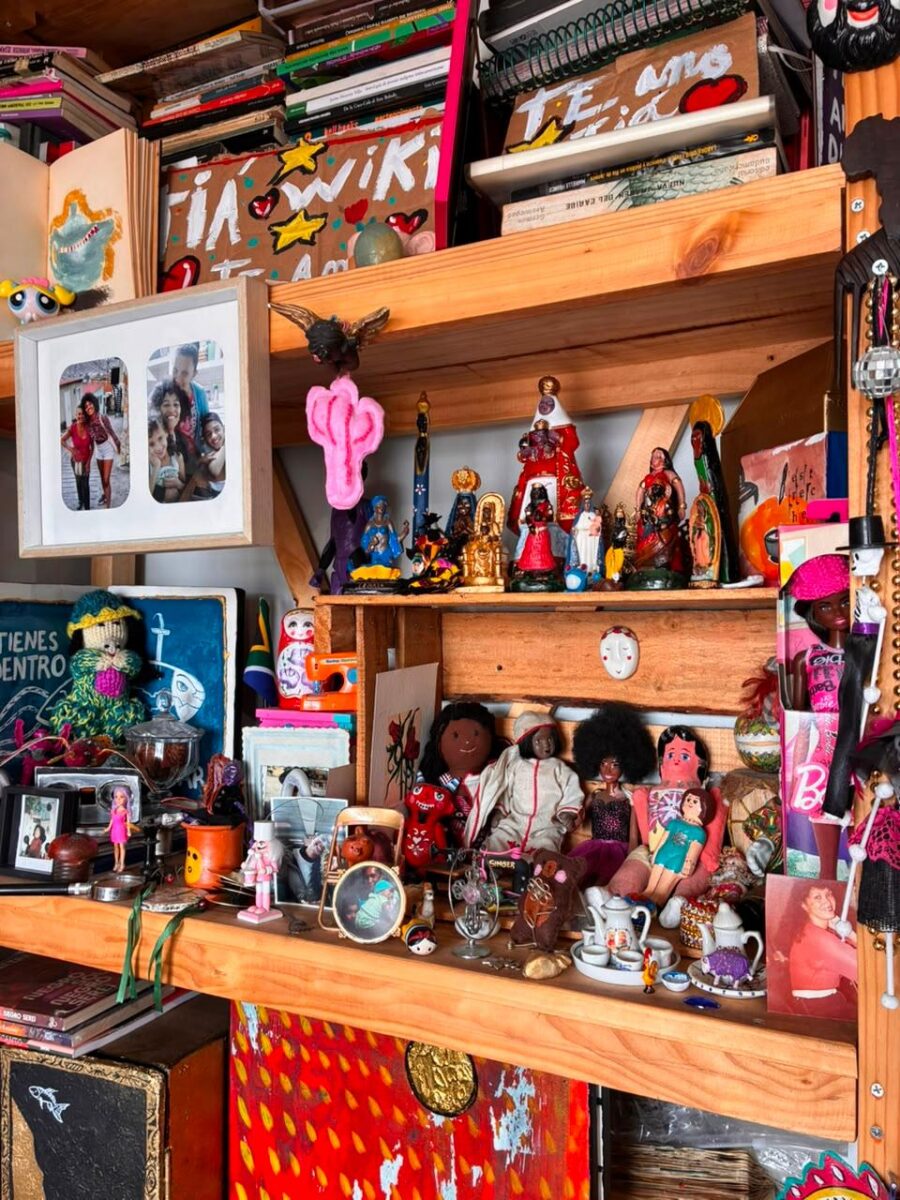
We noted earlier that if Reverón isolates himself from modernity, from Caracas’s intellectual circle, and from the echoes of European painting—in what critic Marta Traba identifies as a radical act of self-absorption and resistance in the face of a Latin American art obsessed with “keeping up with the times”—it is to make something greater possible: to turn his eye and hands toward the landscape, to immerse his body in it, and to project that territory onto his canvases and into the entirety of the “Objects” that make up El Castillete. Well, the same is true in the case of Wiki Pirela, who lives and works in a house-studio located in the heart of the bustling city, in the Cumming neighborhood of Santiago. It is an apartment on the fifth floor of a building clad in white cement, whose narrow slits barely reveal the mountains of the Andes. I remember the first time I visited it. Before arriving, I was enveloped by the gray landscape of autumn in Santiago, completely shrouded in a thick cloud of smog. However, upon entering Wiki’s home, a sort of portal opened up: her works and parts of her installations then came into view, blending into the domestic space (Fig. 4). They were in the kitchen, on the balcony, on the bathroom floor, and in the bedroom—cardboard pieces painted in vivid hues with phrases written on them. A large shelf filled with scraps and found objects from the artist’s travels coexisted and shaped her world—this object-based universe that is her home. There was, for example, a small stool with an alligator head made of wood and cardboard, and a black radio constructed from the same materials. It’s difficult to adjust one’s gaze to distinguish which objects are fictional and which are real or functional. Just as was the case at El Castillete, Wiki blurs the boundaries between what is a work of art and what is an object.
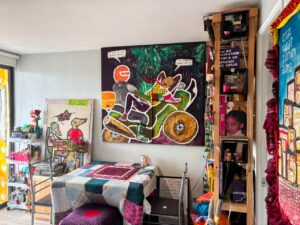
Figure 4. Wiki Pirela’s home-studio in Santiago, 2026. Photograph by the author.
Turning our attention briefly back to Reverón, I find it particularly relevant to mention here the case of La Pajarera (“The Birdcage”) (undated), an object made of bamboo, rubber-coated wire, thread, pigments, crayon, cardboard, and metal that contained eleven life-size little birds, each with its own feeder (Fig. 5). It was an “Object of Contemplation” that evoked live birds with which Reverón likely conversed. Therein lies the fundamental detail: the inanimate began to disappear only at the very moment these “Objects” were treated as living presences. It is precisely at that threshold that the boundaries for classifying them begin to fade.
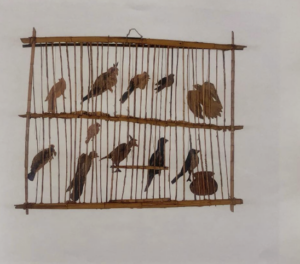
Figure 5. Armando Reverón, La Pajarera, undated
As we have seen, Reverón’s house was almost a museum-like dwelling or, viewed from a contemporary perspective, a large, perennial installation—alive in the sense that it was constantly changing and taking shape over the years. Wiki, perhaps without realizing it, transforms her own refuge into something similar: a livable museum where artworks and household items blend together. She then consciously applies this same logic to her exhibitions, blurring the boundaries between her home and the “body-houses” that are her installations. Consider, for example, the exhibition Todo cuidado é pouco (2026). There, the artist presents a video installation titled Relación Caníbal (“Cannibal Relationship”) to evoke, once again, a house—for which four walls are not enough; rather, what matters are the objects that inhabit the interior of this space (Fig. 6). Among them we can make out a table, a lamp, a plate of food, a calendar, and a red radio, all made of drawn cardboard. In other words, utilitarian objects that come to life and shed their inert state as they enter into a dialogue with the space, just as happens in the artist’s apartment in the Cumming neighborhood.
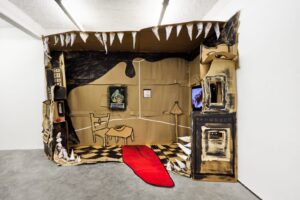
Figure 6. Wiki Pirela, Relación Caníbal, 2026
The curation of this exhibition focused on care work in general, particularly those tasks that become invisible in contemporary society. For this reason, Wiki decided to create a jagged house, reflecting on how homes appear to be a safe place but, at the same time, can be rife with violence and exploitation, especially when it is only one person—the female subject—who takes on the responsibility of keeping the house running, whether by cleaning it, watering the plants, dusting the corners, or feeding and raising the children who live there. Within the house, then, power dynamics also arise—a hunter-prey dynamic that Wiki sought to expose by suggesting that the dwelling also feeds off its inhabitants, even to the point of becoming humanized. In this way, the boundaries between objects, the body, and the house once again become blurred, transforming the latter into a bodily space we can enter.
The Desire for Home in Wiki, as we have seen, materializes as a refuge from the helplessness caused by migration. A helplessness that, it must be remembered, is not only institutional but brutally material, since it involves the loss of a roof over one’s head, uprooting from the land, and the exposure of one’s roots to the cold. Following the rupture caused by this traumatic event, there arises an urgent need to cling to a restorative Object in order to rework the experience. In this artist’s case, this impulse translates, literally, into the creation of Objects: assembled pieces that speak to the need to be and to make a Home in the midst of uprooting, which brings us back to what Rosamel del Valle observes: Objects, when we dust them off and move them to a new place, can help us recover something lost within ourselves, demonstrating unconditional loyalty. They thus become accomplices in providing shelter, silent guardians when the animated world feels too hostile to us. Thus, I dare to assert that, in Wiki, just as in Reverón, there is a shared domestic map that finds its counterpart in the aesthetic treatment they give to Objects.
Part Two. Contain – Scavenge – Bricolaging– Spell
To understand the relationship that Armando Reverón and Wiki Pirela maintain with matter, some of the theories of the American writer Ursula K. Le Guin may be illuminating. In her essay “The Theory of the Fiction Bag” (1986), Le Guin argues that humanity’s progress does not necessarily stem from the development of military attire, hunting, or violence, but rather from what I would like to call here the “Containing Gesture.” It is, in fact, baskets, nets, and vessels that have allowed us to stock up on resources for the future, store seeds, or transport food. It is this gesture of gathering the “remnants of the world” and then preserving them that I wish to highlight here, since both Reverón and Wiki work by collecting elements regurgitated by the territory—discarded by the modern city or the Caribbean coast—to safeguard them in a large container: their homes, always driven by the desire to resurrect their existence.
Let us now consider how Wiki and Reverón’s hands operate in their artistic production processes, specifically in the initial stage—the act of gathering. To reflect on this practice, Agnès Varda’s documentary The Gleaners and I (2000) can be illuminating. In it, the filmmaker travels through cities and countryside in France, observing contemporary glaneurs or gleaners: those who collect misshapen potatoes rejected by the market or who salvage objects from the trash to give them a new life. Varda takes the practice of gathering even further and, camera in hand, becomes a gleaner herself, collecting images, patiently approaching people, and capturing narratives that would otherwise be lost.
Now, for the purposes of this essay, we need to ground this concept in the Latin American context. Paradoxically, the key to doing so came from the translation of Varda’s film itself. As I watched it, my attention was drawn to the verb used in the subtitles to translate the act of gleaning to spanish: pepenar. To my surprise, the term comes from Nahuatl, a macrolanguage belonging to the Uto-Nahuan language family spoken by various indigenous peoples in Mexico and Central America. Its root is pepenaní, which literally means “gatherer.” Far from the traditional image of someone gathering wheat stubble in a French field, a pepenador is someone who rummages through trash or discarded materials in order to recycle or reuse them. This notion, which aligns with the Dictionary of Americanisms (ASALE), involves picking something up from the ground, searching through leftovers, and salvaging discarded objects that still retain a purpose, a utility, or a spark of possibility. At the same time, “pepenar” also implies selecting from what is scattered about—a nuance that strikes me as revealing when considering the practices of the artists I propose to study. In a conversation with Wiki, we both agreed that “taste” is not innocent and that all those materials we scavenge from the landscape are chosen by our hands for a reason. The Object Worlds of this artist and of Reverón arise strictly from their own inventions and from what they have consciously scavenged. Consider Wiki’s Sewing Machine, exhibited in the show La Reina (“The Queen”) (2024) at Galería Abra, assembled from wood, cardboard, glue, and tempera (Fig. 7). Or consider Reverón’s Caballete con Parasol (“Easel with Parasol”) (1928), constructed from linen, burlap, and wood, and his Portapinceles (“Brush Holder”) (undated), made of jute, fiber, and thread (Fig. 8).
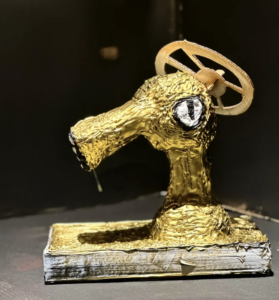
Figure 7. Wiki Pirela, Sewing Machine, 2024
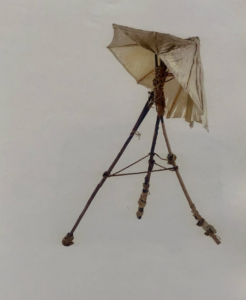
Figure 8. Armando Reverón, Caballete con Parasol, 1928
At this point, the concept of bricolage emerges as a fundamental notion for understanding the practices of these two artists. The term was coined in 1962 by the Belgian-French anthropologist and philosopher Claude Lévi-Strauss in his book The Savage Mind, specifically in its first chapter, “The Science of the Concrete.” There, the author takes us on a narrative journey to demonstrate that the scientific/logical thought of the Western world is not, in reality, inferior to the magical/mythical thought characteristic of the world’s First Nations, such as those of the Americas. While history has sought to downplay these forms of thought, imposing the colonizers’ sciences upon them, in this text the philosopher makes an effort to blur the hierarchies of thought.
Regarding bricolage, Lévi-Strauss argues that the bricoleur’s instrumental universe is closed and that his maxim is “to make do with whatever (…) he has.” Bricolage, then, involves working with “a set—at every moment finite—of tools and materials, which are moreover heterogeneous, because the composition of the set is not related to the project at hand […] but is rather the contingent result of all the opportunities that have presented themselves to renew or enrich its existence, or to preserve it with the remnants of previous constructions and destructions”11Claude Lévi-Strauss, El pensamiento salvaje, México, Fondo de Cultura Económica, 1992, p. 37.. Both Reverón and Wiki put into practice this act of assembling the remnants offered to them by contingency—the former working with “natural debris” from the Caribbean, and the latter using materials regurgitated by the city, such as cardboard. Moreover, both breathe new life into these materials through assemblages, “tinkering” and enriching their existence to give shape to Objects, which then find a place within their Homes. Once again, it is Lévi-Strauss who finds the exact words to describe this creative act when speaking of the bricoleur:
“Let us observe him in action: excited by his project, his first practical action is, nevertheless, retrospective: he must turn to an already constituted set, composed of tools and materials; take, or retake, inventory; and finally, and above all, establish a sort of dialogue with it (…) All these motley objects that make up his treasure trove are interrogated by him in order to understand what each of them might ‘signify’12Ibid., 38. .
It is important to remember that what Lévi-Strauss seeks first and foremost is to equate the magical-mythical act of bricolage with scientific thought. Beyond any hierarchy, the author contrasts these two forms of knowledge without finding, in many passages, a common ground, until he finally identifies in the figure of the artist a possibility for an alliance between the two, noting: “Art lies halfway between scientific knowledge and mythical or magical thought; for everyone knows that the artist is, at once, part sage and part bricoleur: using artisanal means, he crafts a material object that is at the same time an object of knowledge”13Ibid., p. 44. .From this perspective, it is possible to argue that Pirela and Reverón are not mere bricoleurs; in every piece they create, these artists weave together utility, materiality, functionality, and magic, forming an open system that transforms Objects into forms of presence.
Regarding the magical element, I believe it is of the utmost importance to once again apply these Western conceptualizations to South America. Valentina Montero, in her essay Hechizos para salvar el mundo (2016), analyzes bricolage from this perspective, noting that, while there is no literal translation for this word in our language—as noted in the footnotes of all the Spanish-language editions of The Savage Mind that I have read—we do have our own terms to describe this same process of assembly carried out by Wiki Pirela and Armando Reverón in their works and also by us, as Latin Americans, in our daily lives. In the specific case of Venezuela, one form of bricolage might be “parapetos,” a term we use when we make an improvised repair. In this sense, “we’re parapeteando” means improvising with materials to try to fix something and restore its function; using whatever we have on hand and our quick wit to bring it back to life and keep it going for as long as possible.
In Chile, people also take refuge behind something, although the word used to describe this act is different—one that strikes me as far more accurate and with which Lévi-Strauss might be more comfortable: the hechizo, or spell in English. According to Montero, this process consists of creating or repairing Objects whose functionality is called into question: so we cast spells on them, improving them so as not to discard their usefulness. These assemblages also carry political weight, which allows us to connect Montero’s reflections with Richard’s position. Indeed, this idea of sorcery can be identified with what Walter Mignolo calls “epistemic disobedience”—that is, an act that contributes to the denaturalization of universalist modern knowledge exercised through the dominant hegemonic logic, in order to offer, instead, a horizon of life that functions as a critical alternative to modernity and neoliberal civilization14Valentina Montero, Hechizos para salvar el mundo, Santiago, 2016, p. 3. . Although the act of shielding or casting a spell does not generally stem from a choice but rather from a necessity, it can then be transformed into a conscious political exercise—for example, by being transferred to the realm of art as a tool for dissemination.
To illustrate how a “spell” might be perceived, we can revisit the catalog for Reverón’s exhibition El lugar de los objetos (Fig. 9). There we recognize various musical instruments—an accordion and a cuatro, for example—as well as several masks, candlesticks, hats, and decorative objects such as bouquets of flowers, necklaces, a small knife, and a fan, all made from whatever materials the artist had on hand at the time: rope, jute, natural pigments, etc. To a certain extent, Reverón’s paintings also had a certain “magic” to them, especially when we consider that the artist worked on unprimed canvases, leaving them raw. Let’s return, for example, to his oil on linen painting Puerto cerca de la Guaira (“Port near La Guaira”) (1942–1945) (Fig. 10): along with observing how the pigments blend with the canvas, we can also see a carefully crafted frame, made of twigs delicately tied by hand. Reverón also used “sticks” to construct the Skeletons of his dolls or his Hunting Nets made of vine and cabuya. The first step in the process of creating all these Objects was, therefore, to take a walk through the small town of Macuto and gather—first with his eyes and then with his hands reaching into his pockets—tree branches, before arriving at El Castillete to build a home using the collected Objects.
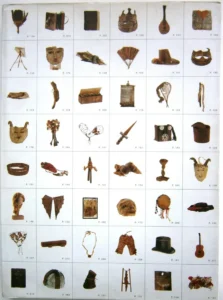
Figure 9. Objets by Reverón in the exhibition catalog El lugar de los objetos at Galería Nacional de Arte de Caracas, 2001
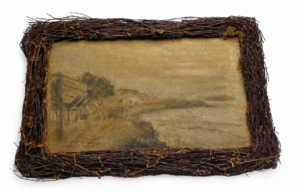
Figura 10. Armando Reverón, Puerto cerca de la Guaira, 1942-1945
Part Three. The Creation of “Objects”: In Response to What?
As I mentioned above, Armando Reverón grew up in a Venezuela that was changing rapidly. In this regard, Luis Enrique Pérez Oramas notes that, while the artist was building his “Castle”—a refuge of palm trees and stones—his country was rapidly discovering and embracing the face of modernity. His move to the Macuto coast, around 1922, coincided in fact with the first oil well discoveries in Zulia state: first the Zumaque I well (1914), and then the Barroso II well (1922), a monumental event that demonstrated the immense wealth of Venezuela’s subsoil and attracted various international corporations to the country. Later, in the artist’s final days, the dictatorship of Marcos Pérez Jiménez handed over the oil business to these foreign companies—the Creole Petroleum Corporation and Royal Dutch Shell—and used the royalties to invest in infrastructure, transforming oil wealth into major public works, most of them made of concrete. Among these were the Humboldt Hotel, the Rómulo Gallegos Highway, the El Silencio Housing Development, and the Sabana Grande Boulevard.
Upon arriving in Caracas after his trip through Europe, Reverón—who, as we’ve already mentioned, came from a well-to-do family—might have immersed himself in the habits of the Caracas elite, who enjoyed that icy brutalism as a refuge from the sun. He might also have flaunted the Goyaesque academicism he encountered in Spain and copied French Impressionism stroke by stroke, a style that still enjoyed great popularity in the city. However, the artist decided to turn his back on all of this to revel in his Castillete, even as he removed his work from any existing categorization. Marta Traba notes that even before Reverón’s time, there were other artists who were moving in the same direction by voluntarily isolating themselves, including Pedro Figari (Montevideo, 1861) and Wifredo Lam (Cuba, 1902). But the truth is that Reverón came to stand out among his “modern” peers thanks to his extraordinary lucidity, which was perhaps granted to him by that very light that blinded him—the light that, according to many, fried his brain. It is here that the paradigm of “mismatch” announced by Traba unfolds in all its weight:
“Reverón is the paradigm of dislocation; he embodies evasion and captures in his painting the vision of a nature that is empty, bewildered, and stunned. He represents a deliberate return to barbarism at the very moment when society was being forced at a rapid pace into a supercivilization propelled by oil wells toward a brilliant yet uncertain future. Reverón’s subject matter is detached from any context; it is the primal conception of man who ends up naked, bearded, stubbornly confined to sustaining the relationships of existence at their most elemental level”15Marta Traba, “Capítulo IV: Problemas de influencias, de universalismo y localismo, de técnicas y de significados en la obra de Andrés de Santamaría”, in Historia abierta del arte colombiano, Bogotá, Universidad Nacional de Colombia, 2016, p. 136..
In this same essay, Marta Traba alludes to how, in Reverón’s desert-themed canvases, light operates with an effect that annihilates matter, establishing a new American aesthetic order. Although I agree with this assertion, I believe that, rather than a new aesthetic order established through painting, it is a new aesthetic order grounded in a way of life. Traba asserts that, as a result of the blinding power of light, the Objects in Reverón’s paintings seem to glide by with almost no material presence, subtly emerging only from surviving details: a gleaming white sheet, the faint outline of a mountain, a shape that fades into the luminous immensity of the beach… but this sort of indifference that, according to Traba, Reverón displays toward the Objects in his painting has a flip side in the materiality of El Castillete. Yes: Reverón makes objects disappear through light in his paintings; however, he then brings them into being with his own hands. As Oramas states, El Castillete is the first of these objects. It is the result of that grand act of scavenging that becomes sorcery and allows all the other objects to come to life. A piercing birth, strictly political. And here I return to Traba’s reflections, for it is Reverón’s encounter with the forces of nature that allows everything to be thrown completely off balance. As the author states, by virtue of this encounter, Reverón delves into a “lucid anarchy,” resisting the new transculturations that economic prosperity was ushering in within his own country: “(…) Reverón projects his barbarism as a challenge when modern Venezuelan history, abruptly breaking away from the history of the continent, places itself under the sign of the oil dollar and the danger of cultural opportunism begins to loom over it”16Ibid., p. 145..
Let us now consider how Wiki Pirela creates her Objects. In the exhibition La Reina, for example, the artist decides to build a castle for her mother, once again using mixed-media materials—such as cardboard—that are durable yet humble (Fig. 11). What seems to interest her here is the possibility of enchanting Objects to challenge certain ideas and prejudices about life in the hillside neighborhood. In more than one conversation, Wiki and I agreed that there are many stereotypes about life in the hills, when the fact is that the homes built there—despite having been constructed by the residents themselves—stand firm, function well, and are also spaces where diverse emotions come to the surface. These are not merely spaces of violence and conflict, but also places where people live and dwell with dignity. Thus, the exhibition is titled La Reina precisely to question why one could not feel valued in spaces like these.
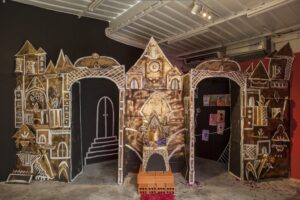
Figure 11. Wiki Pirela, La Reina, exposición held at Galería Abra Caracas, 2024
In another conversation, Wiki and I briefly compared his work to the artistic practices reflected in the clothing of the “dandis” of the Congo—a subculture found in both the Republic of the Congo and the Democratic Republic of the Congo. These are workers who wear extremely expensive designer clothes (such as Gucci, Prada, or Armani) to peacefully and proudly resist the stereotypes surrounding their way of life and to seek dignity in the midst of poverty. Even in the most progressive circles, this practice is heavily criticized in the West, as it is assumed that in territories impoverished by the Global North there is no room for the practice of elegance or that the people living there “shouldn’t dress that way.” However, this hegemonic narrative fails to take into account everything that lies behind this subculture: the curation of the wardrobe, the research conducted and the style proposed, the investment of time, attention, and creativity that can be recognized in every form of expression. Just like Wiki with her “Cardboard Castle,” these dandies are also challenging their reality. As she herself explains:
“And that’s exactly what interests me: why can’t I talk about royalty in a neighborhood—I mean, why can’t I feel like a queen in a small bed shared with three people? Why can’t I? I mean, what makes me less capable of feeling ‘such-and-such in such-and-such a space’? My work speaks a little to that, and that’s also why it has this element of magical realism—because it’s obviously made with found materials—there’s the theme of collecting again—it’s made with low-cost materials, and it’s very playful too. I’m very interested in play; I’m interested in this idea of fiction, because I believe that imagination is one of the few things they can’t charge us for”17Wiki Pirela, Interview with the author, 2026..
Part Four. On Earthquakes and Superstitions
While I was writing this essay, the two bodies of “Objetualities” that I set out to study and compare here—the one produced by Armando Reverón during the first half of the 20th century and the one being produced, a century later, by Wiki Pirela—came together, perhaps for the first time, on Venezuelan soil. The encounter took place in 2026 and, to my surprise, occurred in Caracas, the city where both artists were born.
On the one hand, the Abra Gallery once again opened its doors to Wiki with the exhibition Acto de fe (“Act of faith”), a show in which the artist elevates the experience of migration to a celestial plane (Fig. 12). There, she features the “Virgin of the Cockroaches” as the central figure—a deity who began appearing to her in dreams after she settled in Santiago. Wiki began to pay attention to her clairvoyance and, through a process of inference and speculation, concluded that this must be the patron saint of migrants. According to the artist, she appears “draped in a black velvet cloak that protects and conceals her eight legs, dressed in a deep green gown, and crowned by a large halo of gold-colored cardboard that restores sacredness to that which has been discarded”18Acto de fe, Caracas, Galería ABRA, 2026. Exhibition Catalogue [https://abracaracas.com/exposicion/acto-de-fe-wiki-pirela/]. Thus, Wiki reimagines the figure of the cockroach here: a bastardized, disgusting creature that everyone avoids or seeks to exterminate because it is considered a pest—a caricature that, incidentally, resonates with that of displaced peoples who are marginalized. However, there is also another, perhaps more interesting, similarity between these subjects and cockroaches, which has to do with resilience, the ability to adapt to change, and this insect’s extraordinary power of survival in the face of natural and epochal disasters. Certainly, in both cases, one can consider the idea of a plague that everyone wants to eradicate but that continues to multiply.
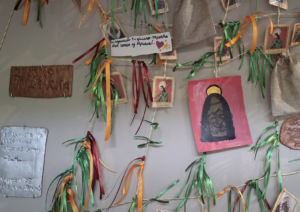
Figure 12. Wiki Pirela, Acto de Fe, exhibition held at Galería Abra Caracas, 2026
In Wiki’s case, of course, this refers first and foremost to the Venezuelan diaspora, which today constitutes nearly one-third of the country’s total population, with 8.7 million Venezuelans living outside Venezuela as a result of a dictatorship whose foundations were first laid with Hugo Chávez’s rise to power in 1999. For this leaderless exodus, Wiki creates a patron saint. In her installation, the artist venerates this little virgin, hanging prayers and plaques of gratitude on her. In addition, she performs a piece to emulate her, in which she dons a green tunic, puts on a golden halo, and extends the little arms of a cockroach from her body. Together with singer-songwriter Lupe Guillén, Wiki also composes a song for this “Virgin of no one / Virgin of nothing / who blesses even those who curse the plague.” The song traverses a host of experiences that we migrants survive: borders, apathy, xenophobia, homesickness, the lost home, and the compass that is our feet. Along this path, we also go about living our lives, and it is the Virgin who accompanies and cares for us, “the invisible ones,” “those who do not exist.”
The Virgin thus becomes a new Object created by Wiki: a rather divine Object, evoked through faith and which, perhaps, could also have been imagined by someone like Rosamel del Valle, whose lexicon for referring to Objects overflows with the inert—in the sense that he presents the Object as the container, the place where all the scavenged items, the assemblages, and the feelings that motivate those assemblages—whether earthly or heavenly—end up. In the middle of the gallery, Wiki once again places what at first glance appears to be a house, although in this case it is a structure the artist titles La Cueva (“The Cave”) (2026), also made of cardboard, where believers pay homage to their patron saint (Fig. 13). There is a self-portrait of the Virgin, a bedside table, a bed, a chair, a lamp, a bathroom with a vanity, and a decorative piece bearing the inscription: “My defense is poetry.” The House-Cave and these Objects, all made of cardboard, manage to rise up, blurring the boundaries of faith and challenging xenophobic discourses that treat Venezuelan migrants as a “plague,” while simultaneously reframing migration as a space or instance where Objects that function collectively can emerge—and where community, care, and hope also manifest in the face of uprooting19Idem. This reminds us of something that continues to resonate in Winnicott’s theory of the transitional object: when we leave our home, our motherland, we also need to create a new container, a great Object that cradles the newcomers—in other words, we once again need Objects and must bestow affection upon them in the hope of coming back to life as we once did. Along these lines, the song “Virgen de las Cucarachas” concludes with the line: “Your home has become the world, and you can no longer help but move.”
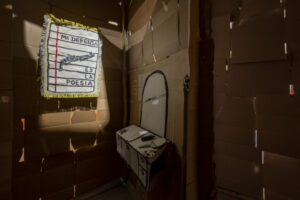
Figure 13. Wiki Pirela, La Cueva, 2026
As I noted above, concurrent with this exhibition by Wiki, just a few blocks from the Abra Gallery, an exhibition of Armando Reverón’s work was also held. This exhibition took place at the Caraca Museum of Contemporary Art, located in the Parque Central complex, which for many years bore the name of its founder—the journalist and champion of Venezuelan culture Sofía Imber—but today bears the painter’s name. Titled Armando Reverón: Una mirada tropical, this exhibition brought together more than 43 works: nudes, landscapes, portraits, and also Objects that function as compasses for navigating the light of the Caribbean.
However, just as I was reflecting on this extraordinary coincidence, on June 24, 2026, a tragedy struck: two earthquakes ravaged Venezuelan territory, particularly affecting Caracas and La Guaira, an area that was practically destroyed in its entirety by the sheer number of collapsed buildings. We still cannot be certain of the extent of the damage: as of the date of this writing, there are still thousands of people trapped in the rubble, thousands of dead, and orphaned children, abandoned by a government that offers no response to the catastrophe and has only intervened to block humanitarian aid from abroad and from the people themselves; the latter being the only aid we have relied on during these 26 years of dictatorship. José Luis Pérez Oramas—the same curator who in 2001 taught us that the house, in Reverón, is the “first of the Objects”—wrote an enlightening piece on this subject a few days ago, titled “Venezuela and the Cannibal State,” in the Spanish newspaper ABC. Twenty-five years after curating the Objects of El Castillete, facing a desolate landscape filled with destroyed homes and lives left adrift, the author returns to Reverón, finding there a figure from whom we can still learn how to relate to the Objects and, together with him, crafting a critique of the illusion of “Venezuelan Modernity,” which now, in light of the collapses and state neglect, is exposed as a deception. In these days of extreme despair and mourning, it is the heroic civil society that, amid tears and rubble, searches for the missing and rebuilds the destroyed homes. And in this scene, under the sun of La Guaira, a Reverón-esque gesture emerges: to sift through the landscape once more and make the remains the center of life. As Pérez Oramas points out:
“Perhaps we Venezuelans have not yet internalized Reverón’s lesson: that it is possible to attain the light of modernity without possessing a death-wish-like will to power; that it is possible to be modern without authoritatively imposing any aspect of that modernity on anyone; that it is possible, from the margins, to raise the most emblematic of banners.”
And he continues:
“Where Reverón lived, nature, with its indifferent fury, has already struck twice, tracing yet another somber arc of death and destruction, wiping that artist’s home—and every roof, every shelter, every plot of land around it—from the face of the earth. Time—which does not exist in the basic equations of reality, the time that we humans project onto the world’s duration to impose upon it the fiction of a direction—would suggest that this arc marked, between 1999 and 2026, the birth and death of the cannibal state, of the government that feeds on its people, nourishing itself on their starving entrails and surviving at the expense of decay, or of the endless flight of its organic subjects, the Venezuelans”20José Luis Pérez Oramas, “Venezuela y el Estado caníbal”, in ABC, June 30, 2026 [https://www.abc.es/internacional/luis-perezoramas-venezuela-estado-canibal-20260629031407-nt.html].
Let us pause to consider those two occasions when, according to Pérez Oramas, nature has taken its toll on the Macuto area: the first was in December 1999—the same year Hugo Chávez rose to power—when the Vargas landslide buried the coastline and wiped from the face of the earth what remained of El Castillete, the first of the Objects, Reverón’s first house; the second is now, in June 2026, when there is no longer a Castillete left to wipe out and the rubble consists of all the homes of the Venezuelan people. The temporal arc traced by Oramas is precise and chilling: the period of the dictatorship opens with the destruction of the artist’s House and, perhaps, will close with the destruction caused by these two earthquakes. As if the Cannibal State had needed, in order to be born, for the very refuge that taught Venezuela it was possible to live differently to first disappear.
Evoking our Brazilian brothers and their anthropophagic manifesto, Pérez Oramas then argues that there are two ways of devouring: that of the Cannibal State, which swallows its people and regurgitates nothing (only ruin, exodus, rubble); and another form that I have attempted to trace in this essay: that of the Caribbean Sea, which regurgitated wood and fibers onto the beach for Reverón to find and use to build a house, or that of the bustling city that today regurgitates cardboard for Wiki to assemble his own. We will therefore have to feed on this horrific disaster, devour our remains to regurgitate them transformed into something else: into Objects. This scavenger-like anthropophagy is what can stand against state cannibalism. We have only our hands to rebuild, from the rubble, new enchanted Objects. Because the light—the one my grandmother Margris remembers over the waters of Macuto, the one Reverón pursued until it blinded him, the one no dictatorship has ever known how to manage—continues to fall each morning upon the rubble. The light never went away. And upon it, Venezuelans will once again raise the World of Objects.
Final Section: Alejandra Otero, “A Country That Is Made and Unmade”
“In the midst of this catastrophe, all of us Venezuelans have had to step up and contribute through our respective professions due to the lack of state support we are experiencing,” says documentary photographer, journalist, and professor Alejandra Otero. Faced with an absent state, no one has stood idly by. Teachers have had to build makeshift schools with their own hands and the debris left behind by the destruction, so they can continue educating students. Camps like “Ciudad Carpita” in La Guaira have become homes for many disaster victims, who have named these shelters after their collapsed homes. Doctors have had to set aside their regular work to care for the victims of the twin earthquakes, doing what they can despite the lack of supplies. Owners of heavy machinery have offered their equipment to clear debris and rescue those who were trapped and are still alive, or to recover the bodies of those who have died and return them to their families so they can give them a dignified funeral. For Alejandra, the conclusion is clear: “The orphaned community ends up fending for itself in the absence of an institutional framework,” even with the arrival of foreign humanitarian aid.
From the perspective of photography and documentary journalism, Alejandra felt compelled to go out and document the disaster: “For me, there was no other choice.” Amid this situation, she began working with foreign and local organizations to document the voices and lives of those who have lost everything, creating—through dialogue, interviews, and images—an institutional archive of what happened on June 24. At the same time, Alejandra is also building a much more intimate archive: as a photographer, she has managed to delve into the nooks and crannies of the disaster, looking beyond the jarring image that halts reflection due to the pain it causes. When visiting destroyed or damaged homes, she witnesses the emergence of another narrative. She positions herself behind the “front lines” of the tragedy’s early days and begins to portray a different world: the one that emerges after Mother Earth—that first Home—is destroyed. A sad everyday reality, yet one in which, little by little, certain glimmers of joy reappear. There, the victims gather to watch the World Cup soccer matches; girls play at braiding each other’s hair; classes at school continue (Figs. 14, 15 and 16). And amid all the pain, the Objects—physical, clairvoyant, and communal—re-emerge. Alejandra notes that, while no one is prepared to experience a natural disaster in a country that has been bleeding itself dry for decades, amid that sense of loss, what is inherently human emerges: flashes of calm, camaraderie, compassion, and even enthusiasm to rebuild from the ruins left by the destruction.
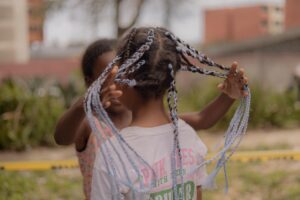
Figure 14. Alejandra Otero, Un país que se hace y se deshace, 2026
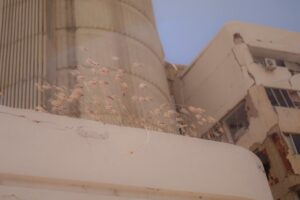
Figure 15. Alejandra Otero, Un país que se hace y se deshace, 2026
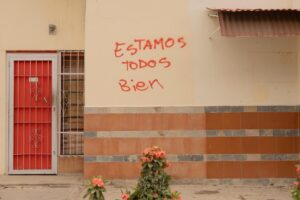
Figure 16. Alejandra Otero, Un país que se hace y se deshace, 2026
In a nod to the poem La isla en peso (1943) by Cuban writer Virgilio Piñera, Alejandra has titled this personal photographic series Un país que se hace y se deshace (“A Country That Is Made and Unmade”). This is significant because Piñera’s text was published as a direct and antagonistic response to the vision of Cuba promoted at the time by the famous literary group “Orígenes,” led by José Lezama Lima, which portrayed the country as a paradise, extolling the exotic landscape and the Caribbean light as the solution to every problem. In contrast to this optimism that looked toward the spirit and the light, Piñera forced the reader to look down at the ground, toward the mud and the flesh, and to recognize themselves as surrounded by a vast pool of water that isolated and bred misery, poverty, and disease. Thus, Alejandra’s quotation is a gesture intended to prevent her photographs from being read as a mere representation of a pristine Caribbean landscape where pleasure is the central focus. Instead, what these images seek to show is rather how this joy emerges, by force, from the margins. It does not appear as if by magic, but springs from the drive of people who, drawing on their own remnants of energy and the rubble of the landscape, struggle with all their might to rise again.
I cannot help but be struck by the fact that, within the verses of La isla en peso, “Objects” also make an appearance, pointing to how, in the Cuban territory, everything passes through the body and the sense of touch. Indeed, in Piñera’s writing, the island’s inhabitants do not feel love in their souls; they feel it in the material world. The body and matter thus become, once again, living presences that offer companionship. The makeshift home becomes eternal for a few days to ensure survival in the midst of a suffocating country: as Piñera says, “may the chaotic symbols of love be the first objects you touch”21Virgilio Piñera, La isla en peso: un poema, La Habana, Tipografía García, 1943. Consulted in Internet Archive. [https://archive.org/details/la-isla-en-peso].
References
Acto de fe, Caracas, Galería ABRA, 2026. Exhibition Catalogue. [https://abracaracas.com/exposicion/acto-de-fe-wiki-pirela/]
Jens Andermann, “Reverón: El Paisaje Evanescente”, in Los márgenes, las orillas, los bordes. Tópicos del Seminario, 29, Zurich, 2013.
Claude Lévi-Strauss, El pensamiento salvaje, México, Fondo de Cultura Económica, 1992.
Oriana Mejías Martinez, “Wiki Pirela: La Reina”, in Artishock, June 19, 2024 [https://artishockrevista.com/2024/06/19/wiki-pirela-la-reina/].
Justo Pastor Mellado, El deseo de casa: El lugar de Armando Reverón en las inflexiones metodológicas habilitadas por las curatorías de infraestructura. Caracas, Unpublished, 2001.
Valentina Montero, Hechizos para salvar el mundo, Santiago, 2016.
José Luis Pérez Oramas, “Venezuela y el Estado caníbal”, in ABC, June 30, 2026 [https://www.abc.es/internacional/luis-perezoramas-venezuela-estado-canibal-20260629031407-nt.html]
Virgilio Piñera, La isla en peso: un poema, La Habana, Tipografía García, 1943. Consulted in Internet Archive. [https://archive.org/details/la-isla-en-peso]
Nelly Richard, “Desecho neobarroco: costra y adornos”, in Residuos y metáforas: ensayos de crítica cultural sobre el Chile de la transición, Santiago, Editorial Cuarto Propio, 1998.
Marta Traba, “Capítulo IV: Problemas de influencias, de universalismo y localismo, de técnicas y de significados en la obra de Andrés de Santamaría”, in Historia abierta del arte colombiano, Bogotá, Universidad Nacional de Colombia, 2016.
Rosamel del Valle, Eva y la Fuga, Santiago, Ediciones La Pollera, 2017.


