

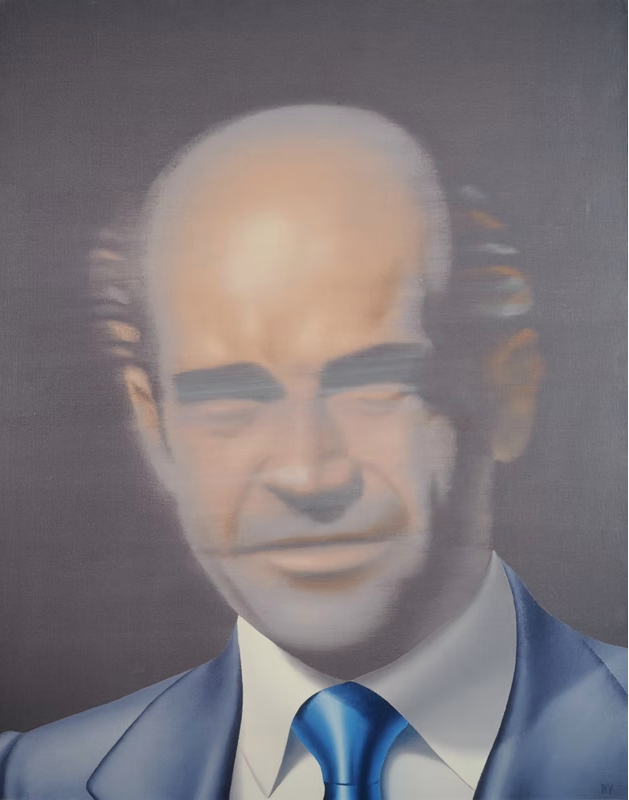
“In their poses, all those portrayed embody the ultimate expression of a destiny that is not only individual but also collective, as it is etched into history”1Bru, Roser. 1977. Kafka y nosotros. Santiago de Chile: Galería Cromo. 12.
Nelly Richard
“His tie is my Gordian knot
His Falabella suit is my backdrop”2Lihn, Enrique. 1983. El paseo Ahumada. Santiago de Chile: Ediciones Minga.
Enrique Lihn
254 Ahumada Street
Galería Cromo opens its doors in the heart of a former furniture store located on the mezzanine level of 254 Ahumada Street. It was 1977, and as Carlos Altamirano recalls, amid the construction work to turn the street into a pedestrian walkway, “people walked on makeshift sidewalks made of planks while their ears were bombarded by the drills tearing up the pavement”3Altamirano, Carlos. 2021. Unas fotografías. Ediciones Universidad Diego Portales. 87.. Directed by Nelly Richard, who had arrived in Chile just seven years earlier, the gallery inaugurated no fewer than six exhibitions over the course of nearly a year, featuring Carlos Altamirano, Luz Donoso, Pedro Millar, Eduardo Vilches, Roser Bru, Benjamín Lira, Francisco Smythe, and Ricardo Yrarrázaval. Thus, printmaking, photography, and painting converged in this space where contemplation was ultimately disrupted by the incessant clamor of the construction work that, throughout that year, sought to transform one of the Chilean capital’s main thoroughfares into a pedestrian promenade.
In the words of Nelly Richard, the purpose of Galería Cromo was none other than to “create a network for the dissemination of artworks that would foster an understanding of them,” to “present a coherent vision of national visual art, based on the recognition of works according to the significance of the phenomena they embody and the breadth of the trajectories they encompass”4Raveau, Nicolás. 2010. “Ficha bibliográfica Galería Cromo 1977”. Archivo. Prospectos de arte. Santiago de Chile: Centro de Documentación de las Artes ÍNDICE. 99.. Consequently, each of these exhibitions is accompanied by a carefully curated catalog that not only “seeks to define the meaning of the work, but [also] the way it is interpreted”5Raveau, Nicolás. 2010. “Ficha bibliográfica Galería Cromo 1977”. Archivo. Prospectos de arte. Santiago de Chile: Centro de Documentación de las Artes ÍNDICE. 99.. Hence, according to Tomás Peters, in Galería Cromo’s catalogs, critical reflections on the exhibitions are articulated through a chain of thought constituted by “a pattern of collaboration between the intellectuals and artists involved in these themes”6Peters, Tomás. 2025. Un devenir oblicuo. Itinerario intelectual de Nelly Richard. Ediciones Metales Pesados. 45.. According to Richard, the aim is to offer the viewer a series of critical inputs capable of ensuring an “opening up of their successive readings”7Raveau, Nicolás. 2010. “Ficha bibliográfica Galería Cromo 1977”. Archivo. Prospectos de arte. Santiago de Chile: Centro de Documentación de las Artes ÍNDICE. 99. regarding each of the works exhibited there. That is, to outline, in broad strokes, what “the rules governing its operation” consist of and what, in turn, are “the relationships it maintains with the context” in order to “finally define the scope of its interventions”8Raveau, Nicolás. 2010. “Ficha bibliográfica Galería Cromo 1977”. Archivo. Prospectos de arte. Santiago de Chile: Centro de Documentación de las Artes ÍNDICE. 99..
Inspired, then, by the mission that Nelly Richard pursued nearly five decades ago as director of Galería Cromo, I am interested in revisiting, throughout this essay, the pictorial work of Ricardo Yrarrázaval. I am thinking, however, not so much of the works of his that were included in the 1977 exhibition Cinco expresiones de la figuración en Chile: Dávila, Lira, Yrarrázaval, Bru, Smythe (“Five Expressions of Figuration in Chile: Dávila, Lira, Yrarrázaval, Bru, Smythe”) at Galería Cromo (fig. 1)9 As Ricardo Yrarrázaval recalls, although Juan Dávila was supposed to be part of the exhibition, he ultimately failed to submit his works, which is why his name was ultimately removed from the catalog that had already been printed., but rather, more broadly, on his pictorial output from the 1970s and 1980s, which, I argue, demands to be viewed in light of the series of exhibitions that Richard curated at that gallery. In this way, as if observing the ripples from a stone falling into water, I am interested in examining the impact that Yrarrázaval’s time at Galería Cromo had on his work—not so much to distinguish a before and after, but rather by taking this milestone as the center of the pictorial universe the artist developed between 1973 and 1990: a sort of unplanned mandala around which the multiple figures the painter tentatively explores, groping his way through the gloom of dictatorship, become critically legible. In the following lines, therefore, I focus on the visual work Yrarrázaval devoted himself to during those two decades—consisting primarily of oil paintings and pastels—in dialogue with two of the catalogs Nelly Richard published under the gallery’s auspices: I am referring, specifically, to those of Roser Bru, Kafka y nosotros (“Kafka and Us”) (1977); and Carlos Altamirano, Santiago de Chile (1977).
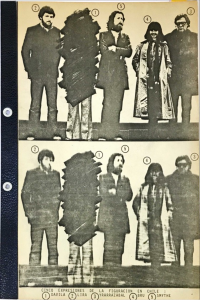
Fig. 1. Catalogue of the exhibition Cinco expresiones de la figuración en Chile: Dávila, Lira, Yrarrázaval, Bru, Smythe, Galería Cromo, 1977. Il Posto Archive.
Ultimately, what I aim to do in this essay is nothing less than to critically reimagine the exhibitions and catalogs of these three shows at Galería Cromo in terms of a sounding board and, also, as a prism. I am thinking, for starters, of a reverberating space in which, in light of the critical reflections that Nelly Richard and Adriana Valdés write about Roser Bru’s exhibition Kafka y nosotros (“Kafka and Us”), the artistic explorations of the pictorial portrait to which Yrarrázaval devoted himself beginning in 1973 find an echo. Although, at the same time, it occurs to me that the gallery also functioned for the artist as a prism capable of redirecting his work—until then centered on the interiors of homes and offices—toward the urban outdoors: as if, in the light of Carlos Altamirano’s photographic wanderings, Yrarrázaval himself had been irresistibly seduced into observing those fleeting bodies that, in those years, were rushing through the city.
Confined faces: (counter)portraits for an urban scene
Santiago, Chile. September 1973. Just a few days after the coup d’état, many relatives of political prisoners, uncertain of their loved ones’ whereabouts, gather in the vicinity of the National Stadium. Carrying passport-sized photos or even old postcards snatched from their family albums, those who have come there try to gather any information that might help them locate their loved ones or, at the very least, get some news of them. For it was, first as an urgent search and later as a means of furious protest, it was through this civic practice that—as Ángeles Donoso Macaya posits—this practice “made the crime of forced disappearance visible in the public sphere [during the years of the dictatorship],” while also “enabling the creation of a counter-archive of repression”10Donoso Macaya, Ángeles. 2021. La insubordinación de la fotografía. Santiago de Chile: Metales Pesados. 27..
From then on, Ricardo Yrarrázaval painfully inhabits a city populated by spectres, since, in the streets of the country, the crowds—who during the three years of the Popular Unity proudly marched down the Alameda—can barely be discerned in the blurry likeness of the photographs that their relatives hold aloft as a last, desperate resort in the face of their uncertain disappearance. And I say blurry not only because, as Donoso Macaya recalls, the poor quality of these images stolen from domestic privacy is such that, since 1976, the Vicaría de la Solidaridad has had to enlarge and even reconstruct the faces of the disappeared on more than one occasion in order to file the complaints among its cases11Donoso Macaya, Ángeles. 2021. La insubordinación de la fotografía. Santiago de Chile: Metales Pesados. 103; but also because, these likenesses are merely the incriminating traces of all those bodies that, in full view and with the knowledge of the entire citizenry, the military makes disappear.
In light of this urban landscape, I would argue that the figurative impulse running through Yrarrázaval’s work from the 1970s is closely linked to the countless photographic portraits that, in the wake of September 11, swarm the streets of the country. For in that tireless effort to outline human faces, the horrific flip side of a national portrait—until then unimaginable—seems to take shape: a sort of ominous counterpoint where political violence takes form not in the absent gaze of the disappeared, but in the distorted grimaces of those who, obliquely, have orchestrated their abduction. For while, from a formal standpoint, the pictorial genre chosen by Yrarrázaval finds an echo in the insubordination of the aforementioned photographic archive, the silhouettes that populate his work seem to openly parody it, in that they do not embody any victims, but rather the perpetrators of their disappearance. As, in fact, is evidenced, with great irony, by Retrato de un conocido (“Portrait of an Acquaintance”) (1978) (fig. 2), an oil on canvas whose title lexically highlights the parodic dialogue established by portraying, precisely, one of those privileged individuals who, after the Coup, take delight in their disappearance.
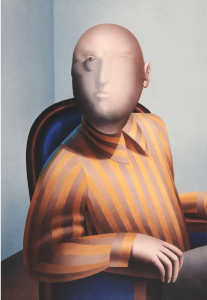
Fig. 2. Ricardo Yrarrázaval, Retrato de un conocido (“Portrait of an Acquaintance”), 1978
I am referring, in the artist’s own words, to those “men in suits and ties” whom he associates “with the usual rulers,” since “the military dictatorship marked the return of those well-dressed gentlemen”12“Conversación con José Zalaquett”. Ricardo Yrarrázaval: 1952-2014. Santiago de Chile: Foramen Acus. 28.. But why the return and not simply the arrival? Because, between 1973 and 1990, Yrarrázaval experienced the Chilean civil-military dictatorship less as a radical sociopolitical shift than as a traumatic return to the family conservatism that marked his childhood: that rigid domestic world ruled by a father who worked on the Santiago Stock Exchange and who, as he himself recalls, forced him to wear a tie on Sundays at lunch13 Personal interview with Ricardo Yrarrázaval. December 18, 2025.. Hence, in an interview with Verónica Waissbluth, the artist insists on noting that “the return of these men in ties” constitutes a true regression to “the world in which [he] was born”14Waissbluth, Verónica. 2012. Grandes artistas Contemporáneos Chilenos. Ricardo Yrarrázaval. Santiago de Chile: Galería Cecilia Palma. 42..
Also of great interest are Con el crédito en la boca (“With Credit on the Lips”) (fig. 3) and De cuello y corbata (“In a Suit and Tie”) (fig. 4), two pastels he created in 1976. As in Retrato de un conocido, the faces of the subjects are blurred to the point that, in each case, one of their eyes disappears, rendering them unrecognizable behind a deceptive, ghostly veil. For, in stark contrast to the colorful stripes of the ties and the shirts that constrain their bodies, the defiant gaze of these men—which, undaunted, seems to challenge their viewers—blurs in the heat of that grotesque grimace that distorts them. As in a sort of perverse sfumato in which the intended effect, however, is the exact opposite of that in Leonardo’s Renaissance painting, since the spectral contours to which Yrarrázaval gives life seem to imbue the portrayed businessmen with an air that distances them from reality. Their faces are thus a silhouette that, I insist, becomes doubly diffuse when contrasted with the voluminous attire their bodies display as the undeniable mark of class privilege, where the colors contrast with the chromatic precariousness of those somber black-and-white photographs scattered throughout the city. For the great irony of the portraits this artist has produced since 1973 lies in his revival of the quintessential bourgeois genre (I am referring to the painted portrait), but reimagined in the diffuse light of the photographic portrait—the one that, just days after the coup, casts a ghostly shadow over all of Chile by serving as the only visible trace of the political detainees who, in accordance with the regime’s policy, were made to disappear.
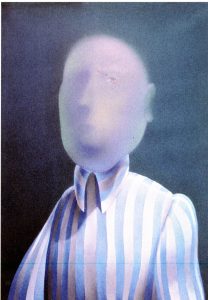
Fig. 3. Ricardo Yrarrázaval, Con el crédito en la boca (“With Credit on the Lips”), 1976
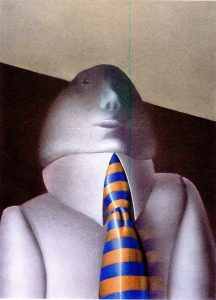
Fig. 4. Ricardo Yrarrázaval, De cuello y corbata (“In a Suit and Tie”), 1976
In Ricardo Yrarrázaval’s visual work, therefore, state terrorism takes shape not through its victims, but through its perpetrators. Or, rather, in the unblemished image of that business elite which, in the name of neoliberalism, is complicit in the policy of extermination that, between 1973 and 1990, claimed the lives of more than three thousand people throughout Chile15Website of the Museum of Memory and Human Rights.. Before his astonished gaze, the unflinching elite to which the artist belongs by kinship serves in his 1970s portraits as a metonymy for those dictatorial agents charged with repressing, torturing, and annihilating. Or perhaps it is more accurate to view the portraits of these men in ties as the flip side or the negative of that photographic archive of disappeared detainees. Meanwhile, the spectral silhouette of those portrayed already foreshadows, in its very specter, the accumulation of those human remains that are, ultimately, what sustain and ensure their political and economic triumph. The deformity of their faces, then, reveals itself less as a loss of identity than as a material indication of that political violence which, despite being celebrated with indifference, the elite takes great pains to sweep under the rug. Hence, these three businessmen are depicted with a single eye, as if the wink through which they become one-eyed were nothing but the materialization of their monstrous complicity.
I would like to point out, in this regard, that the full political potential of the portraits Ricardo Yrarrázaval worked on after the coup can be examined in retrospect through the lens of the reflections included in Kafka y nosotros (1977), the catalog of Galería Cromo’s second exhibition dedicated to the work of Roser Bru (fig. 5). I am referring, specifically, to the outstanding essays by Adriana Valdés, “Los ojos de los enterrados” (“The Eyes of the Buried”), and Nelly Richard, “El trabajo de la memoria en la pintura de Roser Bru; en su ejercicio y representación” (“The Work of Memory in Roser Bru’s Painting; in its exercise and representation”), in which the critics observe how, in the work the Catalan artist exhibited at Cromo in early 1977, the genre of portraiture—both pictorial and photographic—allows her to obliquely revisit the policies of human extermination orchestrated during the Holocaust (1941–1945). What I mean is that, read in the light of these seminal reflections, the visual work Yrarrázaval produced during the first five years of the dictatorship reveals itself to be close to Bru’s in its imperious defiance in revisiting History—with a capital H—through certain faces.
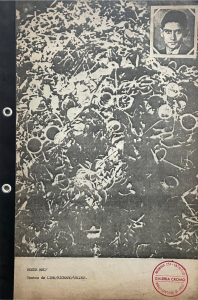
Fig. 5. Catalogue of the exhibition Kafka y nosotros, Galería Cromo, 1977. Il Posto Archive.
In her essay on Bru’s painting (fig. 6), to name just one example, Nelly Richard highlights this “retrospective mode” through which the artist “captures situations and destinies—as witnesses or as victims of the unfolding of history, of the unfolding of their remembered stories”16Richard, Nelly. “El trabajo de la memoria en la pintura de Roser Bru; en su ejercicio y representación”. Kafka y nosotros. Santiago de Chile: Galería Cromo, 1977. s/p.. In her case, however, it is the photographic portraits of the Czech writer Franz Kafka, his correspondent Milena Jesenská, and Anne Frank, the famous German-Jewish diarist and victim of the Nazi regime, that are summoned to be transformed by the work and magic of the brush. It is through these portraits that Richard observes how they all “condense, in their pose, the definitive expression of a destiny that is not only individual but collective, since it passes through History”: a destiny whose “fatalism […] is absorbed in their eyes, in the first direction of their photographed eyes, facing the camera, in the second direction of their now-painted eyes, facing our eyes as viewers of Roser Bru’s painting”17Richard, Nelly. “El trabajo de la memoria en la pintura de Roser Bru; en su ejercicio y representación”. Kafka y nosotros. Santiago de Chile: Galería Cromo, 1977. s/p.. Adriana Valdés also refers to this same gaze in “The Eyes of the Buried” (fig. 7), when she notes that the eyes of those portrayed—whose “gaze scattered through time” converge, at the same time, in “a time traversed by those gazes”—create the viewer’s place: that “uncomfortable place of someone who is being watched—intently—by the dead”18Valdés, Adriana. “Los ojos de los enterrados”. Kafka y nosotros. Santiago de Chile: Galería Cromo, 1977. s/p..
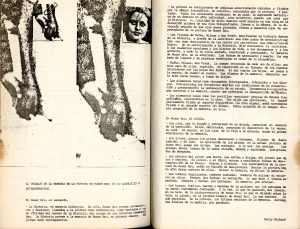
Fig. 6. Essay by Nelly Richard published in the catalogue of the exhibition Kafka y nosotros, Galería Cromo, 1977. Il Posto Archive.
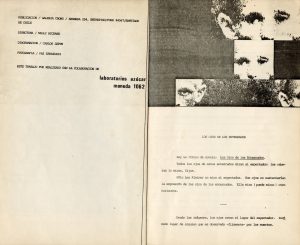
Fig. 7. Essay by Adriana Valdés published in the catalogue of the exhibition Kafka y nosotros, Galería Cromo, 1977. Il Posto Archive.
The macabre wink that disfigures the gentlemen painted by Yrarrázaval thus takes on a new depth. A grimace that, as I have indicated, endows them with a grotesque aura by ghosting faces whose edges the artist has set out to blur. Just like Bru’s paintings, where, in the words of Adriana Valdés, “the faces that gaze resemble one another”19Valdés, Adriana. “Los ojos de los enterrados”. Kafka y nosotros. Santiago de Chile: Galería Cromo, 1977. s/p., the effigies of these businessmen merge into one another, united by a sinister family resemblance. But also, as Valdés notes regarding Bru, all those portrayed “resemble one another in death; they gradually become transparent in the face of the death they carry within,” for “it is death that erases them: through them, it is death that looks”20Valdés, Adriana. “Los ojos de los enterrados”. Kafka y nosotros. Santiago de Chile: Galería Cromo, 1977. s/p.. A doubly blurred death, insofar as these spectral subjects are, in Yrarrázaval’s work, the proud visible flip side of all those corpses made to disappear by the civil-military dictatorship. As they stand proudly before the viewer, their disdain can be interpreted less as indifference than as boastfulness, while the neatness of their attire reveals the social privilege that secures their economic and political status. For all these men in white shirts—who pose imaginatively, dressed to the nines—know full well that their distorted profiles conceal an even greater deformity: that of a disfigured country in which the disappeared citizens have no face other than that of the photographs which, driven by unfathomable despair, their relatives begin to collect.
Now, if their faces are the faces of death, the brush that portrays them is undoubtedly that of oblivion. But it is a form of oblivion that stands in stark contrast to the one Bru imbues in her portraits of Franz, Milena, and Ana. For if, in the words of Nelly Richard, “the tools of Roser Bru’s painting serve the function of un-painting,” through a process characterized by “erasing the paint until only traces of it remain,” in a process where “the brush, or the pencil, comes to manifest forms of the image’s decomposition”21Richard, Nelly. “El trabajo de la memoria en la pintura de Roser Bru; en su ejercicio y representación”. Kafka y nosotros. Santiago de Chile: Galería Cromo, 1977. s/p., in Yrarrázaval’s portraits only the faces—the hallmark of identity—fade, but not the shirt and tie—the hallmark of class—which, in fact, take on relief in their voluminous and sharp materiality. As if to suggest that each of these men is nothing more than a sophisticated cog necessary in the machinery of the brutal repressive apparatus. Or perhaps to remind us that, within the Chilean jet set, family credentials—surname and first name—are inherited like a noble title, ensuring among them a first-class citizenship that Yrarrázaval seems to condemn. Or even to accuse them that, in their stock market greed, the identities of these successful men are monstrously diluted to the counting of pesos and dollars, through financial transactions where the only thing that matters, in the end, is the profit figure. For we recall that none of these figures has a name: not because torture, as in the case of the “disappeared detainees,” makes it difficult, if not impossible, to identify them, but because, terrified by the reality surrounding him, the painter himself (who has also distorted his own surname22 According to the artist himself, it was he who, when signing his work, decided to change the first letter of his first surname, swapping the “I” for a “Y”—a gesture that not only allows him to symbolically distance himself from his father figure but also from the aristocratic origins associated in Chile with the surname Irarrázaval. It is worth recalling, without going any further, that among the most important entailed estates established in Chile during the colonial period, the Irarrázaval estate stood out for its wealth, and remains present even today among the national ruling elite (see “The Chilean Aristocracy of the 18th Century” on the Memoria Chilena website).) categorically refuses to identify each of these men, who appear to him as the various facets of a single complicit constellation.
A few years later, Yrarrázaval even revisited the titles of his 1977 pastels to name, this time, two new works: Con el crédito en la boca (“With credit in the mouth”) (1978) (fig. 8) and De cuello y corbata (“In a Collar and Tie”) (1979) (fig. 9), oil paintings on canvas in which he once again portrays two men in ties. The first monstrously blurred, the second grotesquely distorted, yet both prisoners of their silky ties, these new subjects do not even dare to meet the viewer’s gaze. Although perhaps this indifference is nothing more than the display of a class pride bordering on audacity, as is also clearly evident in Muerto de risa (“Dying of Laughter”) (1977) (fig. 10), an oil on canvas where the painter’s irony reaches an even greater climax, insofar as the grimace has been replaced by a deathly laugh. A burst of laughter that, this time, is reinforced by the scathing title of the work, a daring calembour through which the everyday metaphor (“dying of laughter”) once again points, quite literally, to the sardonic insolence of the perpetrators. For by portraying the character’s Goyaesque laughter at the very moment of his fading away, the painting imagines mockery under the guise of a modesty that, as we know, barely makes an effort to conceal itself.
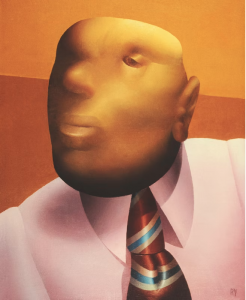
Fig. 8. Ricardo Yrarrázaval, Con el crédito en la boca (“With Credit in His Mouth”), 1978
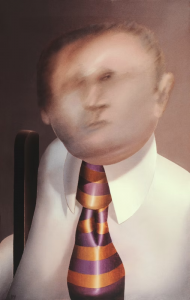
Fig. 9. Ricardo Yrarrázaval, De cuello y corbata (“In a Suit and Tie”), 1979
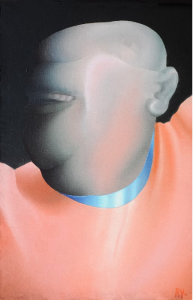
Fig. 10. Ricardo Yrarrázaval, Muerto de la risa (“Dying of Laughter”), 1977
The deformities of these three faces inevitably reflect the thousands of acts of torture and murder that underpin their political supremacy. And, just as in Bru’s portraits, in this case “the strokes, traces, marks, and smudges of the paint”—in the words of Nelly Richard—“are the stigmata of the flesh, punished once again”23[Richard, Nelly. 1977. “El trabajo de la memoria en la pintura de Roser Bru; en su ejercicio y representación”. Kafka y nosotros. Santiago de Chile: Galería Cromo. s/p./mfn]. Physical torment that, through a second-degree laugh, Yrarrázaval himself hurls at that entire elite that justifies it or at least feigns indifference, imprinting on their faces the violence of that torture they refuse to grasp. It is no coincidence, in this sense, that, to disfigure their faces, the painter resorts not only to the various tools—such as scrapers and spatulas—available in his studio, but also to his own hand. Or at least that is what he confesses regarding Propuesta rechazada (“Rejected Proposal”) (1980) (fig. 11), recalling: “I didn’t like how it was turning out, so I put my hand over it to deform the face. And although I finished it carefully afterward, it retained the distortion”23Waissbluth, Verónica. 2012. Grandes artistas Contemporáneos Chilenos. Ricardo Yrarrázaval. Santiago de Chile: Galería Cecilia Palma. 41.. Imprinted by his own hand, the deformation of the face conceals, from the viewers’ eyes, the violent secret of its origin, in a sort of displaced scene that diagrams, on an artistic scale, the artist’s own sense of powerlessness in the face of reality. Born of exasperation, the scratch that disrupts the subject’s identity serves, in this work, as the materialization of political frustration, or perhaps of a painful helplessness in the face of what his terrified gaze beholds. For even if in each portrait the horrific national reality seems to remain off-screen, the truth is that, ominously, it takes shape in each of these faces rescued beneath the visible signs of deformation. The fact is that, in its erasures and blurring, the identity of each model has been violently disrupted, revealing itself as the artist’s oblique rejection of the torture and murders that, during those years, the dictatorship took pains to conceal. Thus, the rejected proposal by Yrarrázaval is none other than that of a country politically disfigured by the din of shrapnel: a Chile whose image takes shape in the violent deformations that scar its portraits, those that make this gallery of effigies a chilling collection.
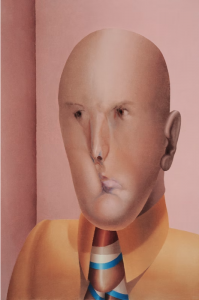
Fig. 11. Ricardo Yrarrázaval, Propuesta rechazada (“Rejected Proposal”), 1980
Faces on the run: the ghosts of the city
Six years after its spectacular inauguration as a pedestrian avenue, Enrique Lihn published El paseo Ahumada (1983), in whose verses the poet—who identifies himself as “a regular on the Paseo since the very day of its founding”24 Lihn, Enrique. 1983. El Paseo Ahumada. Santiago de Chile: Ediciones Minga. s/p.—wanders the streets of downtown Santiago to lose himself in the teeming bustle of hurried passersby swarming through the city. Contrary to what the planners of its renovation might have imagined, however, what attracts the writer is not so much the glitz of the modern shops as the beggars crowding their doorsteps, since, in his words, “the Paseo [is] nothing [but] the pavilion where the collapse of the economic model is on display,” while “the storefronts raise prices to infinity and importers of cheap trinkets at bargain prices flood the street, doing their business”25 Lihn, Enrique. 1983. El Paseo Ahumada. Santiago de Chile: Ediciones Minga. s/p.. It suffices to recall, for now, that on the back cover of this booklet—whose design physically mimics the disposable newspapers hung daily at the newsstands on that street—the writer warns: “Paseo Ahumada was supposed to be the runway for economic takeoff, a space for urban decongestion. The aim was to cultivate a pedestrian oasis in the midst of a city as prosperous as it is heavily guarded. Surveillance [indeed] is the only thing left of the project, [since] it is maintained with weapons and police dogs26 Lihn, Enrique. 1983. El Paseo Ahumada. Santiago de Chile: Ediciones Minga. s/p.”..
For Enrique Lihn, therefore, it is precisely “economic reasons that have turned the Paseo, built with less interesting objectives, into the Grand Theater of national and popular cruelty, where all the trades of survival are practiced, from the most spectacular to the most secret, without any of them escaping public view”27 Lihn, Enrique. 1983. El Paseo Ahumada. Santiago de Chile: Ediciones Minga. s/p.. Economic reasons, no doubt, but not the best ones. Hence the great irony that runs through and underpins these free verses—“‘(something that is!)’,” notes Lihn—in which, “fascinated by the destitute grandeur of the spectacle”28 Lihn, Enrique. 1983. El Paseo Ahumada. Santiago de Chile: Ediciones Minga. s/p. that Ahumada offers to passersby, the poet fixes his gaze on the gaunt silhouette of the Penguin, that young beggar who appears in the photograph by Paz Errázuriz that graces the book’s cover (fig. 12). With his gaze lost in thought, the boy furiously beats out a rhythm on his tambourine capable of countering the passersby’s haste and stirring their pity, as indicated by the modest sign placed at the foot of his makeshift podium where, to the rhythm of “God will reward you,” his “wages” are revealed to be made up of “donations.”
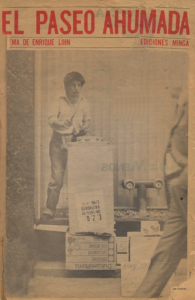
Fig. 12. Cover of El Paseo Ahumada by Enrique Lihn, 1983. Photograph by Paz Errázuriz.
On the right side of the photograph, meanwhile, a blurred silhouette interrupts the spectacle of this eccentric young man: I am referring to the figure of that gray-haired man in a suit who, with his hands in his pockets, is about to cross the scene. Unlike the Penguin’s rapturous face, however—whose whitened eyes function as the image’s punctum—the identity of the man in the tie is lost in anonymity. Likewise, we have no certainty as to where his hurried gaze is directed, making it impossible to say whether he is paying attention or is indifferent to the “buzzing fly of [that] epileptic chant”29 Lihn, Enrique. 1983. El Paseo Ahumada. Santiago de Chile: Ediciones Minga. s/p. with which the beggar seeks to stir his charity. For this man’s identity ultimately merges with that of the many fleeing passersby who, with a suspiciously hurried pace, cross Paseo Ahumada following its renovation. Ricardo Yrarrázaval knows this well; in the early 1980s, he approached this very street in Santiago, camera in hand, to photograph those passersby who would later appear in his paintings. “They often scolded me,” the artist recalls, “but I kept using the camera because I wanted to capture that cold, everyday reality”30Waissbluth, Verónica. 2012. Grandes artistas Contemporáneos Chilenos. Ricardo Yrarrázaval. Santiago de Chile: Galería Cecilia Palma. 42.. And he immediately reflects on this: “I’ve always been very withdrawn, but events forced me out onto the street”31Waissbluth, Verónica. 2012. Grandes artistas Contemporáneos Chilenos. Ricardo Yrarrázaval. Santiago de Chile: Galería Cecilia Palma. 42..
It is interesting to note, in this regard, that during his very brief stint on the mezzanine of Ahumada 254, where Galería Cromo was located, Yrarrázaval became intimately acquainted with the artistic reflections sparked by the exhibitions organized by Nelly Richard and her avant-garde catalogs. I am thinking, without going any further, of the works that Francisco Smythe, Carlos Leppe, and Carlos Altamirano exhibited at the gallery in 1977, insofar as—in the words of Tomás Peters—“it is possible to discern [in all those exhibitions] a common element: the experiences of displacement and the transformation of bodies within the urban landscapes of the military dictatorship”32Peters, Tomás. 2025. Un devenir oblicuo. Itinerario intelectual de Nelly Richard. Ediciones Metales Pesados. 37.. For the purposes of this essay, however, I am interested in specifically examining Yrarrázaval’s visual production in light of the reflections prompted by Altamirano’s exhibition, Santiago de Chile (1977) (fig. 13), whose catalog delves into the “relationships inscribed in the urban landscape”33Altamirano, Carlos. 1977. Santiago de Chile. Santiago de Chile: Galería Cromo. s/p. through photographs of the recently inaugurated Metro line: an urban landmark that, despite having been planned in the late 1960s (since in 1968 Eduardo Frei Montalva signed the decree that, the following year, initiated construction34“Nuestra Historia”. Metro de Santiago’s Website.), was not completed until three years after the coup, in the midst of the civil-military dictatorship, when the first section of the Metro, running from San Pablo to La Moneda, began operating. And, in fact, it was in March 1977, while renovation work was underway on Ahumada and Cromo’s first exhibition was opening on the mezzanine of 254, that the adjacent station—“Universidad de Chile”—opened its doors as part of the first extension of Metro Line 1.
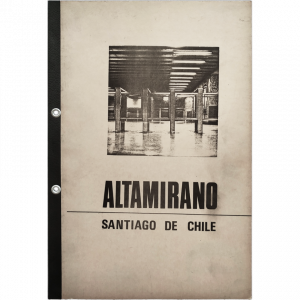
Fig. 13. Catalogue of the exhibition Santiago de Chile, Galería Cromo, 1977
With this in mind, the catalog for Altamirano’s exhibition reads like a set of instructions for use—an unplanned urban manual that invites visitors to leave the mezzanine level of Ahumada 254 and venture into the heart of the city. Through the pages of Santiago de Chile, the photographs of the Metro can well be seen as an invitation to explore that outside of the art institution. Or, indeed, as a provocation to begin conceiving of an art capable of connecting with the public right at the heart of the besieged city (as CADA would begin to do two years later, in 1979, and, more broadly, the entire Avanzada Scene). An art capable of transcending the narrow limits of a cultural institutional framework that, during the seventeen years of the regime, fell victim to a flagrant military intervention. As we are reminded, for example, by the hasty raid on the Museum of Fine Arts on September 11, 1973, as well as the subsequent resignation and departure from the country of its director, Nemesio Antúnez35 In an interview broadcast by UCV TV in the late 1980s—donated by the artist’s widow to the Audiovisual Archive of the Documentation Center (CEDOC) at the National Museum of Fine Arts of Chile—Nemesio Antúnez recalls his arrival at the museum on that September 11, recalling how, following an apparent telephone tip that people were hiding inside the building, army tanks arrived and began firing, damaging both the palace’s façade and some of the works on display there..
Now, in a letter dated November 13, 1983, Ricardo Yrarrázaval writes from Santiago to Antúnez to tell him not only of the enormous effort required at that time to complete his works, but also to emphasize how the “Chilean situation” “deeply affects” both him and his artistic work36Yrarrázaval, Ricardo. Letter to Nemesio Antúnez. November 13, 1983. Fundación Nemesio Antúnez Archive.. When referring to the figures that populate his visual work from those years, the artist notes: “They are the men who try to create an artificial, distorted, false world. The men who, regardless of the means, seek power. Power means the bomb, war, pollution, hunger, hatred, the destruction of nature, the destruction of reality”37Yrarrázaval, Ricardo. Letter to Nemesio Antúnez. November 13, 1983. Fundación Nemesio Antúnez Archive. And, he adds immediately afterward, the difficulty of portraying the sinister world around him: “My intention was to paint the reality we live in. I didn’t succeed—reality is so powerful! I’ll keep trying; I feel a pressing need to capture even a glimpse of that terrible reality”38Yrarrázaval, Ricardo. Letter to Nemesio Antúnez. November 13, 1983. Fundación Nemesio Antúnez Archive..
As for glimpses, Ricardo Yrarrázaval certainly knows a thing or two by then, given that it is precisely to capture fleeting everyday scenes that, following the renovation of Ahumada, the artist walks the pedestrian promenade with a small camera, thus abandoning “his introverted and abstract world” to “capture life out there”39Yaconi, Ana María. 2014. “Presentación”. Ricardo Yrarrázaval: 1952-2014. Santiago de Chile: Foramen Acus. 10.. And suddenly, the painter finds himself out in the open, in the midst of a bustling street populated by countless businessmen who, impeccably dressed in ties, hurry along among the other passersby, blending in with those shoppers who, drawn by the gleaming merchandise displayed in the shop windows, have also gathered there. And whose brilliance, undoubtedly, evokes the then-glistening Santiago Metro, whose modern layout can be imagined, in the words of Pedro Lemebel, as “the disciplined evidence left to us by the dictatorship”40Lemebel, Pedro. 2010. “El metro de Santiago”. De perlas y cicatrices. Santiago de Chile: Seix Barral. 245.. Those suspiciously fleeting bodies that, like a sort of spectral apparition, leave behind barely a luminous trail. As is further evidenced by the photographs of Paseo Ahumada taken around 1983 by Paz Errázuriz (fig. 14), included in the first edition of Lihn’s poem. And in which the spectral fleetingness of those who wander with remarkable haste contrasts, to a large extent, with the starched little groups of gentlemen ostentatiously dressed with orderly neatness (fig. 15). Who else but those men in ties who, in Yrarrázaval’s 1980s painting, do indeed appear under the sinister halo of suspicion, true emblems of that gray world which, as we have seen, the artist set out to portray following the Coup.
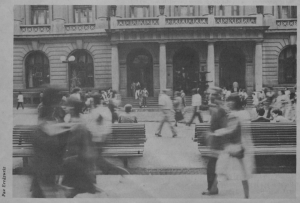
Fig. 14. Photograph by Paz Errázuriz reproduced in Enrique Lihn’s El Paseo Ahumada, 1983.
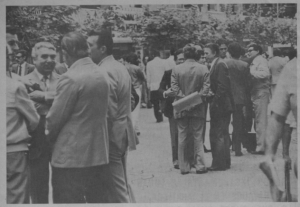
Fig. 15. Photograph by Paz Errázuriz reproduced in Enrique Lihn’s El Paseo Ahumada, 1983.
From this perspective, I critically highlight the exhibitions at Galería Cromo as a true prism capable of reframing Yrarrázaval’s work, as the artist leaves behind the interiors depicted in his early portraits to plunge headlong into the city streets. To this end, he turns to photography: an artistic device that not only allows him to visually capture some of the fleeting glimpses he sees during his zigzagging walks through downtown Santiago, but also enables him to later spectralize his paintings through the distorted projection of those images onto the canvas. And I say fleeting because, read in the light of Lihn’s verses, the walks that Ricardo Yrarrázaval took along the Paseo Ahumada in the late 1970s and early 1980s are revealed to us as streaked by the specter of disappearance, which, in this case, refers fundamentally to the loss of one’s own identity. A dispossession characteristic of the modern city which, as Altamirano comments in an interview for Cromo in May 1977, invites us to reflect on the relationship established between “man,” the “urban landscape,” and “asphyxiation” in the oppressive urban horizon of the “anonymizing” modern world”41Altamirano, Carlos. 1977. Cuatro grabadores chilenos. Santiago de Chile: Galería Cromo. s/p..
Because these men in suits and ties walking along Paseo Ahumada appear in Yrarrázaval’s 1980s work always distorted and cropped, just as is the case with the human bodies photographed inside the Santiago Metro in the catalog of Altamirano’s exhibition (fig. 16), emphasizing how modernization operates like a straitjacket—an oppressive framework, by turns corporeal and urban—that crushes any hint of singularity in the modern subject. Except, of course, for those who have been pathetically relegated to the margins, and whose misaligned silhouette takes shape in the Penguin’s animalistic, beggarly shuffling as, amid the indifference of other passersby, he parades his pathetic spectacle before the eyes and patience of those hurrying past him. For, just as the stiffness of movement that every tie imposes on its wearer, the standardized subway routes are revealed to us, through the photographs of Santiago de Chile, as the forced bodily discipline that they truly are. An illumination that, for its part, Yrarrázaval himself also incorporates into his paintings from that period, not only through the frantic haste that distorts the silhouettes of the pedestrians, but, above all, through the uncertain halo of suspicion that crosses their faces.
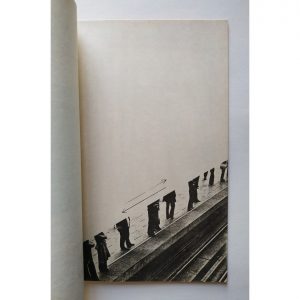
Fig. 16. Interior of the catalogue of the exhibition Santiago de Chile, Galería Cromo, 1977
As Verónica Waissbluth recalls, the artist “began painting over those photos projected onto the canvas, which is why his work became more raw and realistic”42Waissbluth, Verónica. 2012. Grandes artistas Contemporáneos Chilenos. Ricardo Yrarrázaval. Santiago de Chile: Galería Cecilia Palma. 42.. But it is a realism that is by no means alien to the unreal touch that characterized his portraits from the previous decade, insofar as their silhouettes appear out of focus, as if blurred by the standardized modern haste that the city imposes on their bodies. As is the case, for example, in a 1980 oil on canvas titled Con la calle puesta (“Wearing the street”) (fig. 17), where the stiffness of the immaculate tie adorning the man’s neck—that “Gordian knot,” in Lihn’s words43Lihn, Enrique. 1983. El paseo Ahumada. Santiago de Chile: Ediciones Minga. s/p.—contrasts radically with the blurriness of a body so blurred that it takes on a ghostly quality. Moreover, lost behind the hat, the man’s strange gaze is obscured by those thick glasses that disrupt his face, as if disfiguring him. Perhaps seeking to emphasize, in this way, a sort of strangeness in the eyes of such an elegant gentleman. There are even cases where passersby become distorted through a perverse play of perspective when the negatives are projected onto the canvas, as happens, for instance, in an untitled oil on canvas from 1980 (fig. 18), based on the same photograph by Yrarrázaval that serves as the basis for Clipper class (fig. 19), another oil on canvas from 1983.
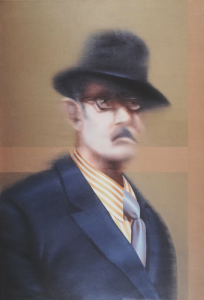
Fig. 17. Ricardo Yrarrázaval, Con la calle puesta (“Wearing the street”), 1980
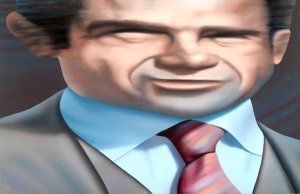
Fig. 18. Ricardo Yrarrázaval, Untitled, 1980
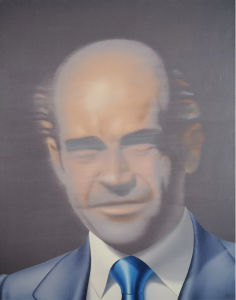
Fig. 19. Ricardo Yrarrázaval, Clipper class, 1983. Il Posto Collection.
For the most part, however, these are no longer—as in the portraits of the 1970s—depictions of a disfigured face that seems to be defying the regime’s inhumanity, but rather a sfumatto that leaves the ambiguous traces of an irremediable suspicion. For Paseo Ahumada is populated by pedestrians who keep turning around again and again, perhaps panicked by the possibility of being pursued, or perhaps because they are, rather, persecutors seeking to go unnoticed among the crowd. As in Retorno (“Return”) (fig. 20), that 1980 oil on canvas in which the frantic turn of the man depicted—this time wearing a white polo shirt with horizontal stripes—causes his right arm to blur, as if wanting to hide—I imagine—some pistol or revolver. Or like the woman who stars in El peso de su convicción (“The Weight of Her Conviction”) (fig. 21), an oil on canvas from the same year, in which thick dark glasses seem, suspiciously, to hide something more than her identity. A critique that, incidentally, the artist raises much more openly in El informante (“The Informant”) (1983) (fig. 22), an oil on canvas in which the very title denounces the perversity of any undercover agent, since, in that work, the faces of two men in ties overlap through a pictorial interplay of transparencies, without our being able to tell clearly which of the two is the pursuer and which the pursued.
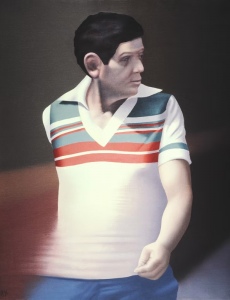
Fig. 20. Ricardo Yrarrázaval, Retorno (“Return”), 1980
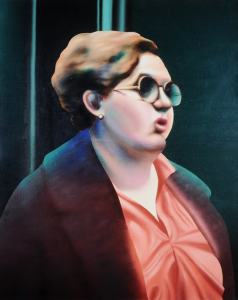
Fig. 21. Ricardo Yrarrázaval, El peso de su convicción (“The Weight of Her Conviction”), 1980
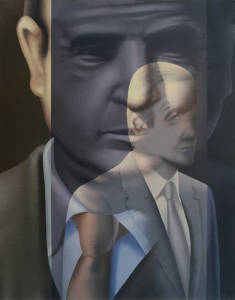
Fig. 22. Ricardo Yrarrázaval, El informante (“The Informant”), 1983
The absolute paranoia experienced by city dwellers under Chile’s dictatorship, right in the heart of the Chilean capital—a city under siege—is captured, I would argue, by none other than the back cover of the Altamirano catalog, which depicts an urban map overlaid with a large black square (fig. 23). What is happening on the streets of Santiago de Chile during the 1980s, especially on Paseo Ahumada? What secrets do its hurried, anonymous passersby hide—those whose faces we can barely glimpse due to the rapid pace with which they traverse the city? It is, therefore, a paranoid gaze that Ricardo Yrarrázaval sketches out in his paintings from those years, once he, following Altamirano and Lihn, dares to go out into the street to thus practice an “aesthetic of the vivac”44Lihn, Enrique. 1983. El paseo Ahumada. Santiago de Chile: Ediciones Minga.. But a paranoia, let’s say, that is entirely realistic, given that, following the discovery of fifteen skeletons in Lonquén in late 1978, the policy of extermination that the Chilean dictatorship had sought to conceal until then began to become increasingly evident45In November 1978, five years after the coup d’état that ushered in Chile’s civil-military dictatorship, a large number of human remains were discovered inside an old lime kiln in Lonquén, a rural Chilean town located in the Talagante district, near Isla de Maipo, in the south-central part of the Metropolitan Region. Following the discovery, the Vicaría de la Solidaridad—an organization of the Catholic Church of Chile created to defend human rights during those years—took charge of verifying and reporting the incident to the Supreme Court, which ultimately determined that the remains belonged to fifteen people detained by the Carabineros de Chile at the Isla de Maipo police station on October 7, 1973. (See “Lonquén Ovens. Year 1978” on the website of the Museum of Memory and Human Rights).
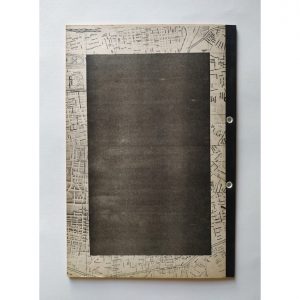
Fig. 23. Back cover of the catalogue of the exhibition Santiago de Chile, Galería Cromo, 1977
From face to trace
In August 1973, just a few days before the coup d’état, the exhibition La Imaginación es la loca del hogar (“Imagination is the madwoman of the house”) took place at the National Museum of Fine Arts, featuring works by Ricardo Yrarrázaval, Juan Pablo Langlois, Roser Bru, and Nemesio Antúnez. Among the human silhouettes that Yrarrázaval exhibited in this group show (where, as Antonio Echeverría notes, the artist “for the first time, [exhibited] institutionally and in Chile”46Echeverría, Antonio. 2025. Ricardo Yrarrázaval. Tres décadas. Santiago de Chile: Il Posto. 7.), the glaring absence of faces stands out. As evidenced, for instance, by Su Ego (“His Ego”) (1973) (fig. 24), an oil on canvas included in the exhibition Ricardo Yrarrázaval. Tres décadas (“Ricardo Yrarrázaval. Three Decades”) (2025), recently shown at Il Posto. This leads us to conclude that Yrarrázaval’s subjects take on a face precisely at the moment when, through bullets and excesses, the country’s institutional framework is disfigured beyond recognition, in an artistic shift that, like his painting of the same name (fig. 25), has no turning back. For it is then that, according to Ana María Yaconi, “the first explicit human figures” appear in his work, sporting faces “barely sketched and certainly undaunted by what the country was experiencing at that moment”47 Yaconi, Ana María. 2014. “Presentación”. Ricardo Yrarrázaval: 1952-2014. Santiago de Chile: Foramen Acus. 9..
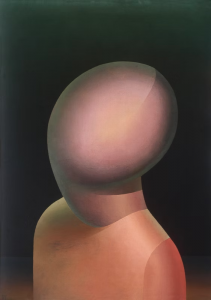
Fig. 24. Ricardo Yrarrázaval, Su ego (“His Ego”), 1973. Bartholdson Collection
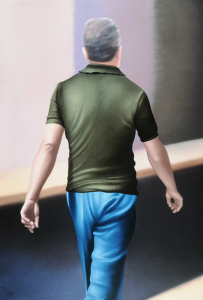
Fig. 25. Ricardo Yrarrázaval, Sin vuelta atrás (“No turning back”), 1980. Bartholdson Collection
This unmistakable figurative impulse that begins to take shape in Yrarrázaval’s work after the Coup—and which gives a face to his subjects—is by no means devoid of an irresistible compulsion to disfigure; by dialectically striating his work, this compulsion leads him to smudge those faces and silhouettes that he pursues with unbridled zeal. And of whose identity, incidentally, barely a miserable trace remains. Hence, in the pastels and oil paintings the artist produced in the 1970s and 1980s, reality is evidently portrayed to the letter, yet simultaneously smudged in a gesture of hallucinatory torpor. And I say stupor because, as in the worst of nightmares, Yrarrázaval’s work seems rather to portray the reality that is perhaps experienced, obliquely, on the fringes of dreams, when everyday life is turned upside down by our most intimate fears. A nightmare that, as we have seen, is even more sinister when we realize that, after all, it is absolutely real, since the disfigured silhouettes of the sinister men in ties take shape on the streets of Santiago. And the lesson, without a doubt, can be read in the light of the artist’s very brief stint at Galería Cromo, back in ’77, on the mezzanine of Ahumada 254: that refurbished furniture store whose thick walls separated its occupants from the horrendous city clamor, but into which the sinister urban clatter seeped through a relentless drilling that echoed with military shrapnel.


